PuniCodex

Extended Lore

π’€­π’…Ž Adad

Etymology Β· Phonology Β· Orthography Β· Cultural Legacy Β· Primary Sources

Tier 2 Adad
Adad β€” Storm, Thunder
01

Quick Facts

Essential information about Adad, Storm, Thunder

Original Scriptπ’€­π’…Ž
Unicode RestorationAdad
Reconstructed Pronunciation/ˈa.dad/
PantheonMesopotamian
DomainStorm, Thunder
MeaningThe thunderer
ClassificationTier 2
Primary DomainAdad
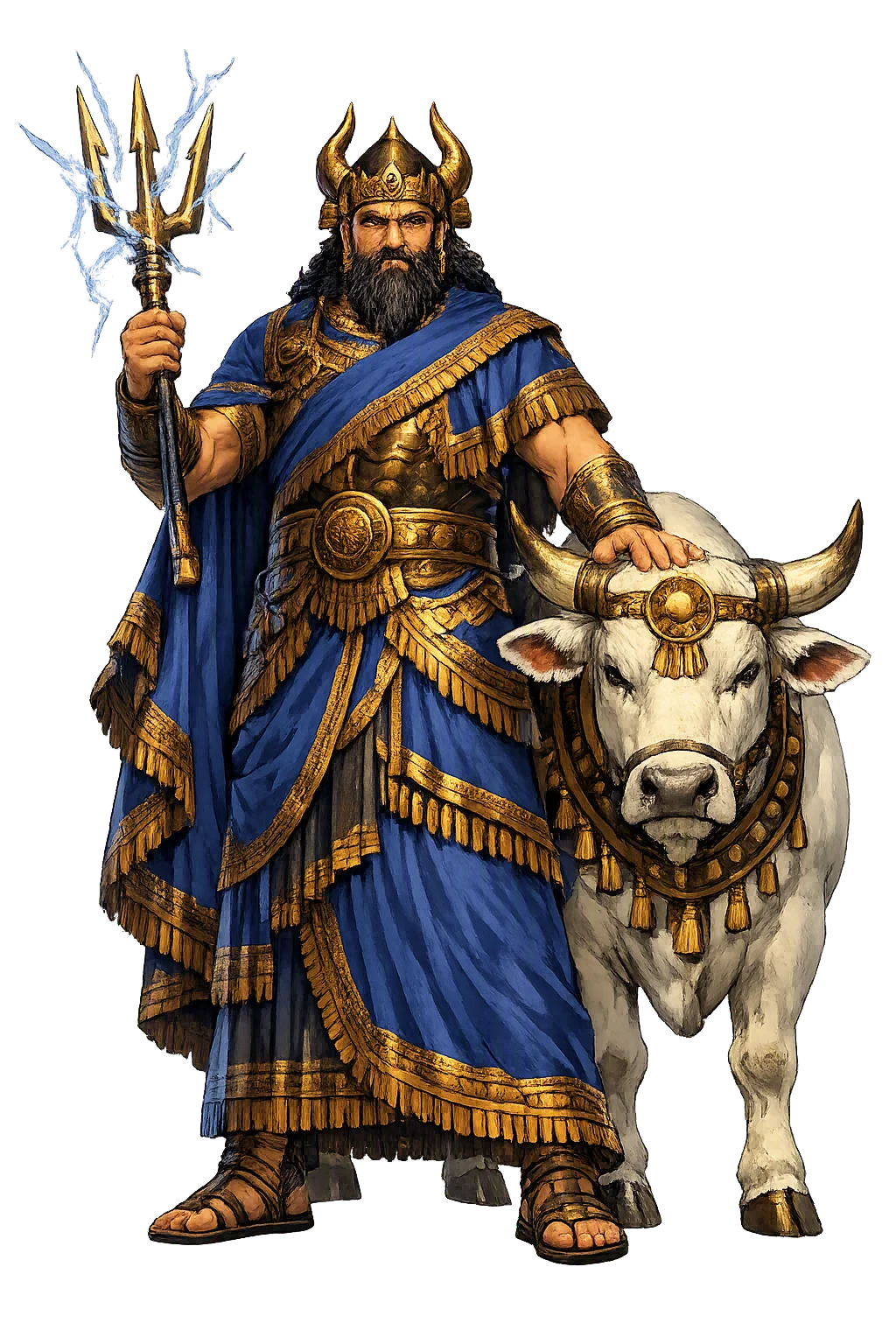
Sacred SymbolsForked lightning, Bull and lion, Rain and flood waters, Thunderbolt or mace, Storm cloud
02

Etymology & Word Family

From original script to Unicode restoration

Original Script π’€­π’…Ž Adad β€” "The thunderer"
Unicode Restoration Adad Restored stress, length, and script
Modern ASCII adad Plain-ASCII fallback

Adad is Tier 2: the Unicode restoration adds only capitalization and preserves no distinctive diacritic or non-Latin letter. The ASCII form 'adad' is historically identical to the standard Assyriological transliteration. PuniCodex keeps the capitalized form Adad as the canonical display name, but the temple is a reconstruction hub for the Mesopotamian storm god rather than a claim of domain ownership.

03

Unicode Character Breakdown

Character-by-character philological analysis

CharacterUnicodeNameBlockPhonetic Role
AU+0041Latin Capital Letter ABasic LatinSame, capitalized
dU+0064Latin Small Letter DBasic LatinSame
aU+0061Latin Small Letter ABasic LatinSame
dU+0064Latin Small Letter DBasic LatinSame

The Tier 2 classification reflects how much of the original phonology this restoration preserves β€” stress and vowel length for Greek names, distinctive letters and diacritics for every other tradition.

04

Cultural Significance

From ancient cult to modern Unicode

Ancient Domain

Adad is the Akkadian storm god, the lord of thunder and the divine voice that speaks in wind, rain, and lightning. In Sumerian he is IΕ‘kur; in the West Semitic world he is Addu or Hadad. Where EnlΔ«l governs the wind and the cosmic decree, Adad is the storm's immediate, destructive, and life-giving power: the thunder that splits mountains, the flood that renews the plain, and the rain on which every Mesopotamian harvest depended.

This temple is a domainless flagship: the ASCII adad.com is unregistrable, so the restoration is displayed here without claiming ownership. The page functions as a philological and atmospheric reconstruction hub for one of the ancient Near East's most widely worshipped deities.

Adad in Later Traditions

The Sumerian storm god IΕ‘kur and the Akkadian Adad were identified with one another from an early date; in bilingual texts and god lists they function as a single deity with two names. In the West Semitic world he was Addu or Hadad, a major god of Aleppo and the Syrian steppe, and his imagery influenced the Canaanite storm-god Baal. The Hurrian and Hittite storm god TeΕ‘Ε‘ub was equated with Adad in diplomatic and religious correspondence. In later periods Adad's thundering role was absorbed into Marduk (as Ramman in the Enuma Elish) and, through cultural diffusion, into the broader ancient Near Eastern image of the storm-god who rides the clouds and wields the lightning.

Modern Legacy

Adad's legacy is the idea that weather is a form of speech. In Mesopotamian thought thunder was not mere noise but the god's voice; rain was not mere hydrology but a divine gift. This theology shaped royal ideology across the Near East: the king who maintained Adad's cult could claim that the skies themselves endorsed his rule. The name survives in biblical and later Semitic studies as Hadad/Adad, and the imagery of the storm-god β€” bull, lightning, and rain β€” passed into Canaanite, Israelite, and eventually classical iconography. PuniCodex restores Adad as a Tier-2 reconstruction: there are no hidden diacritics, only the name itself, still rolling like thunder across four thousand years.

Unicode Restoration as Cultural Act

Restoring Adad in a domain name is more than orthographic accuracy. It is a statement that the internet should recognize the full range of human writing β€” not only the ASCII keyboard.

05

Frequently Asked Questions

Common questions about Adad, Storm, Thunder, and Unicode restoration

01How do you pronounce Adad?

In reconstructed pronunciation, Adad is /ˈa.dad/ β€” approximately 'AH-dad' β€” stress the first syllable; the name is short, sharp, and rolls like distant thunder..

02What does Adad mean?

Adad means The thunderer in the mesopotamian tradition.

03What are the symbols of Adad?

Adad is associated with Forked lightning (The visible sign of Adad's power and his weapon against chaos), Bull and lion (The animals that embody the storm's roaring voice and untamed force), Rain and flood waters (The life-giving and destructive aspect of the storm; the source of agricultural fertility), Thunderbolt or mace (The weapon with which the storm god strikes mountains and enemies), Storm cloud (The chariot or throne from which Adad makes the heavens thunder).

04Why restore Adad in Unicode?

Plain ASCII adad strips the stress, length, and script that make the name specific. Unicode restoration returns the name to its original written dignity.

05What is the most important myth about Adad?

The Akkadian Hymn to Adad describes the god's arrival in the storm: the heavens thunder, the earth shakes, and his lightning flashes from one horizon to the other. He rides the storm winds; the mountains tremble before him. When Adad speaks in thunder, both gods and mortals listen. The hymn is not only praise but propaganda for kings who ruled by the god's mandate: to control Adad's cult was to claim access to the storm itself.

06

Scholarly Sources

The philological foundations of this restoration

Every claim on this page is grounded in established scholarship. The orthographic restorations follow disciplinary convention. The etymological chain follows the best available reference works. This is not invention β€” it is resurrection through scholarship.

β—ˆ

Lexicography & Philology

  • ETCSL
  • Black-Green
β—Ž

Primary Texts

  • Enuma Elish
  • Epic of Gilgamesh, Tablet XI (Standard Babylonian flood account)
  • Atrahasis (Akkadian Flood Story)
β—‰

Archaeology & Art History

  • Material evidence β€” iconography, inscriptions, and temple archaeology β€” for Adad and related cults.
  • Storm-god imagery is widespread across Mesopotamia and the Levant. At Aleppo, the temple of the storm god Addu was a major Bronze Age sanctuary; cylinder seals and stelae show the god brandishing a forked lightning or standing on a bull. In Assyria, Adad appears in royal inscriptions and palace reliefs as a patron of the king's wars. Cuneiform copies of the Enuma Elish and Akkadian hymns from Nineveh, Assur, and Babylon preserve the theological tradition by which Adad's thunder was transferred to Marduk as the name Ramman.
✦

Religious Studies

  • ETCSL (Electronic Text Corpus of Sumerian Literature)
  • CAD (Chicago Assyrian Dictionary)
  • Black & Green, Gods, Demons and Symbols of Ancient Mesopotamia
  • Foster, Before the Muses
  • Dalley, Myths from Mesopotamia
  • Akkadian Hymn to Adad (storm-theophany hymns in royal and cultic context)
  • Royal archives of Mari (letters invoking Addu of Aleppo and storm-oracles)
Return

The Surface Awaits

You have traced the name from its earliest attestation to its Unicode restoration. Now return to the myth. The story is where the name lives.

Back to Lore
Adad mascot