PuniCodex

Extended Lore

Ἀχέρων Achérōn

Etymology · Orthography · Cult · Iconography · Reception · Sources

Tier 1 Achérōn.com
Achérōn — River of Woe
01

Quick Facts

Essential information about Achérōn, River of Woe

Original ScriptἈχέρων
Unicode RestorationAchérōn
Reconstructed Pronunciation/a.kʰé.rɔːn/
PantheonGreek
DomainRiver of Woe
MeaningRiver of woe
ClassificationTier 1
Primary DomainAchérōn.com
Sacred SymbolsDark water, Cypress and willow, Charon's boat, Reeds and marsh
02

Etymology & Word Family

From original script to Unicode restoration

Original Script Ἀχέρων Achérōn — "River of woe"
Unicode Restoration Achérōn Restored stress, length, and script
Modern ASCII acheron Plain-ASCII fallback

The name Achérōn carries the orthographic signature of the greek tradition: Ἀχέρων. Unicode restoration recovers what ASCII flattens.

03

Unicode Character Breakdown

Character-by-character philological analysis

CharacterUnicodeNameBlockPhonetic Role
AU+0041Latin Capital Letter ABasic LatinA uppercase
cU+0063Latin Small Letter CBasic Latinc same
hU+0068Latin Small Letter HBasic Latinh same
éU+00E9Latin Small Letter E with AcuteLatin-1 SupplementAcute on e
rU+0072Latin Small Letter RBasic Latinr same
ōU+014DLatin Small Letter O with MacronLatin Extended-AMacron: long vowel
nU+006ELatin Small Letter NBasic Latinn same

The Tier 1 classification reflects how much of the original phonology this restoration preserves — stress and vowel length for Greek names, distinctive letters and diacritics for every other tradition.

04

Cult & Worship

How the sacred was kept — rites, sanctuaries, remains

The Cult

The Acheron's cult was a cult of the dead: an oracle of the dead, the Nekromanteion, stood above its Thesprotian bank at Ephyra — the “oracle of the dead on the river Acheron” where Herodotus (5.92) sends Periander in the sixth century BCE. Excavated by Sotirios Dakaris from 1958, the Hellenistic sanctuary, with an earlier Archaic phase, centres on a hall set over dark underground corridors and chambers where consultants, on the usual reconstruction, descended after purification and incubated through the night awaiting the dead. The landscape itself was the instrument: the river's cold springs plunge into the gorge, and the Acherusian lake, where Plato says the souls gather, has silted to marsh. The oracle's interpretation has been honestly debated; what is not debatable is that for centuries the living came here, as to one fixed address, to speak with the dead.

In the Earth

The material anchor of the myth is the Nekromanteion of Ephyra, excavated by Sotirios Dakaris at Mesopotamos above the Thesprotian Achérōn from 1958 onward: a fortified Hellenistic sanctuary with an earlier Archaic phase, its central hall set above an underground labyrinth of dark corridors and cells where consultants, after ritual preparation, awaited contact with the dead. Nearby, the river’s springs at Glyki issue cold from cliff caverns and vanish into underground channels — the observed hydrogeology that fed the belief that the Achérōn descended to Hades. Roman travelers made the site famous: Pliny places the Acherusian lake near the river’s mouth, and Pausanias describes the region’s gloom. The sanctuary’s destruction in the late Roman period closed the oracle, but the gorge it overlooked still runs black in winter flood — the original exhibit of the underworld’s front door.

05

Iconography

How Achérōn was imaged across the ages

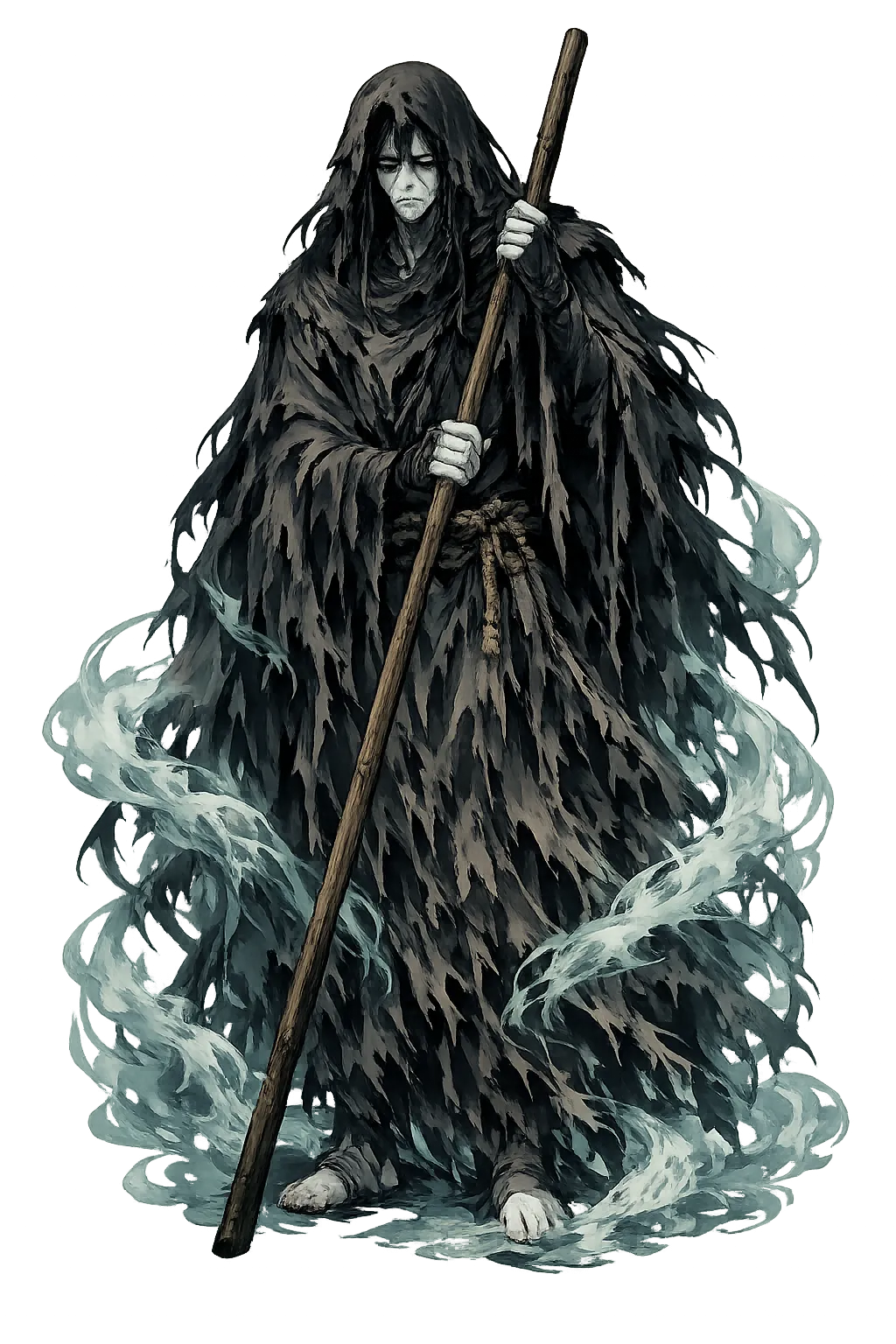
The Image

The Acheron is pictured less often than its ferryman. Fifth-century Attic white-ground lekythoi habitually stage the dead at the water's edge beside Charon's boat — the river implied, narrow and dark — and personified river-gods of the reed-crowned, water-pouring type are common enough in Greek art, though Acheron himself rarely takes human form. The fullest ancient image of his region is South Italian: the great underworld krater of the Underworld Painter (c. 330 BCE, Staatliche Antikensammlungen, Munich) enthrones Hades and Persephone amid the watery approaches of the dead. Roman wall-painting makes the geography explicit: the Odyssey landscapes from the Esquiline (c. 50 BCE, now in the Vatican Museums) set Odysseus' consultation of the dead at a misty marsh that ancient viewers would have read as Acheron's own. The evidence is indirect but consistent — reeds, dark water, and a boat that waits.

06

Reception & Transformation

The name after its own age — transmission, translation, survival

Afterlives

After Homer, the river's career was cartographic before it was literary. Plato gave it a moral geography — the Acherusian lake where souls gather for judgment (Phaedo 113d–e) — and Virgil fixed it at hell's gate; Servius's commentary on Aeneid 6 then glossed each river for medieval readers, keeping the names legible through the centuries when almost no one could read Greek. Dante's Acheron is the most famous single reuse, but the learned tradition ran in parallel: Renaissance mythographers such as Cartari mapped the infernal rivers for painters, and Milton listed them again in Paradise Lost — “Sad Acheron of sorrow, black and deep.” Meanwhile the real river kept its name: nineteenth-century travelers re-identified the classical stream with the cold gorge above the Ionian Sea, and twentieth-century excavation finally gave the myth a floor plan. The ferryman has retired; at Glyki the water still runs black in winter flood.

Identifications Across Traditions

Roman poets systematized what Homer and Plato had sketched: Virgil fixed the Achérōn at hell’s gate with its confluent rivers, and Ovid scattered its name through the Metamorphoses as shorthand for the world below. Early Christian geography absorbed the whole complex — by late antiquity the Achérōn stood among the infernal rivers of exegesis and medieval art, half-forgotten as a real stream but indispensable as a metaphor. Meanwhile the actual river kept its own cult: Roman travelers including Pliny noted the Thesprotian Achérōn and its lake, and Pausanias (1.17.5) describes the Epirote river near the oracle of the dead with its cold, gloomy water and the belief that it ran underground from Arcadia. Dante completed the transposition into doctrine, and the name has never since fully returned to geography — though in modern Greece the river still runs under it, dark and cold, exactly as described two thousand years ago.

Modern Legacy

Achérōn is the river whose name means grief, and its afterlife is a history of the metaphor. Dante set the uncommitted dead on its bank; Renaissance and Romantic poetry used it as the standing image of any dark crossing — Milton, Byron, and the whole tradition of ‘rivers of woe’ descend from it. Modern science has kept the name wherever something dark must be crossed: Acheron Fossae scars the surface of Mars, and the underworld theme reached cinema when the haunted planetoid of the Alien films was christened Acheron. The real river in Epirus still carries the name, its cold springs at Glyki feeding a gorge that tourists now raft — an irony the Greeks would have appreciated, crossing the river of woe for recreation. Geography and myth remain thinly divided there: the oracle is ruins, the river is a schedule of boat trips, and the boundary holds only in the name.

07

The Meditation

What Achérōn means — beyond the dictionary

Achérōn is the first river we cannot cross alone. In the myth, the dead need a ferry and a coin; they must leave the body behind and pay for passage. The river therefore marks not just death but transition: the moment when the old self is no longer sufficient.

Grief flows like a river because it too has no final shore. We cross and recross it, carried by memory, paying with tears. Achérōn reminds us that sorrow is a geography, not an event — a landscape with real rivers, real reeds, and real crossings. To name it in Unicode is to acknowledge that grief, like a river, has its own ancient right of way.

08

Frequently Asked Questions

Common questions about Achérōn, River of Woe, and Unicode restoration

01How do you pronounce Achérōn?

In reconstructed pronunciation, Achérōn is /a.kʰé.rɔːn/ — approximately 'ah-KHAY-rohn' — the middle syllable is pitched high; the final -ōn is long and sonorous.

02What does Achérōn mean?

Achérōn means River of woe in the greek tradition.

03What are the symbols of Achérōn?

Achérōn is associated with Dark water (The boundary liquid that the dead must cross), Cypress and willow (Trees of mourning that grow along its banks), Charon's boat (The ferry that carries souls across the river), Reeds and marsh (The liminal landscape where solid ground dissolves into the underworld).

04Why restore Achérōn in Unicode?

Plain ASCII acheron strips the stress, length, and script that make the name specific. Unicode restoration returns the name to its original written dignity.

05What is the most important myth about Achérōn?

“The Cosmic River” — the Plato, Phaedo story that anchors the mythology of Achérōn, told in full on the lore page.

09

Scholarly Sources

The philological foundations of this restoration

Every claim on this page is grounded in established scholarship. The orthographic restorations follow disciplinary convention. The etymological chain follows the best available reference works. This is not invention — it is resurrection through scholarship.

◈

Lexicography & Philology

  • Liddell, H. G., Scott, R., & Jones, H. S. A Greek-English Lexicon. Oxford: Clarendon Press, 9th ed. 1996.
◎

Primary Texts

  • Hesiod
  • Homer, Odyssey
  • Hesiod, Theogony
  • Virgil, Aeneid
  • Pausanias, Description of Greece
◉

Archaeology & Art History

  • Material evidence — iconography, inscriptions, and temple archaeology — for Achérōn and related cults.
✦

Religious Studies

  • Beekes, Etymological Dictionary of Greek
Return

The Surface Awaits

You have traced the name from its earliest attestation to its Unicode restoration. Now return to the myth. The story is where the name lives.

Back to Lore
Achérōn mascot