
The Cult
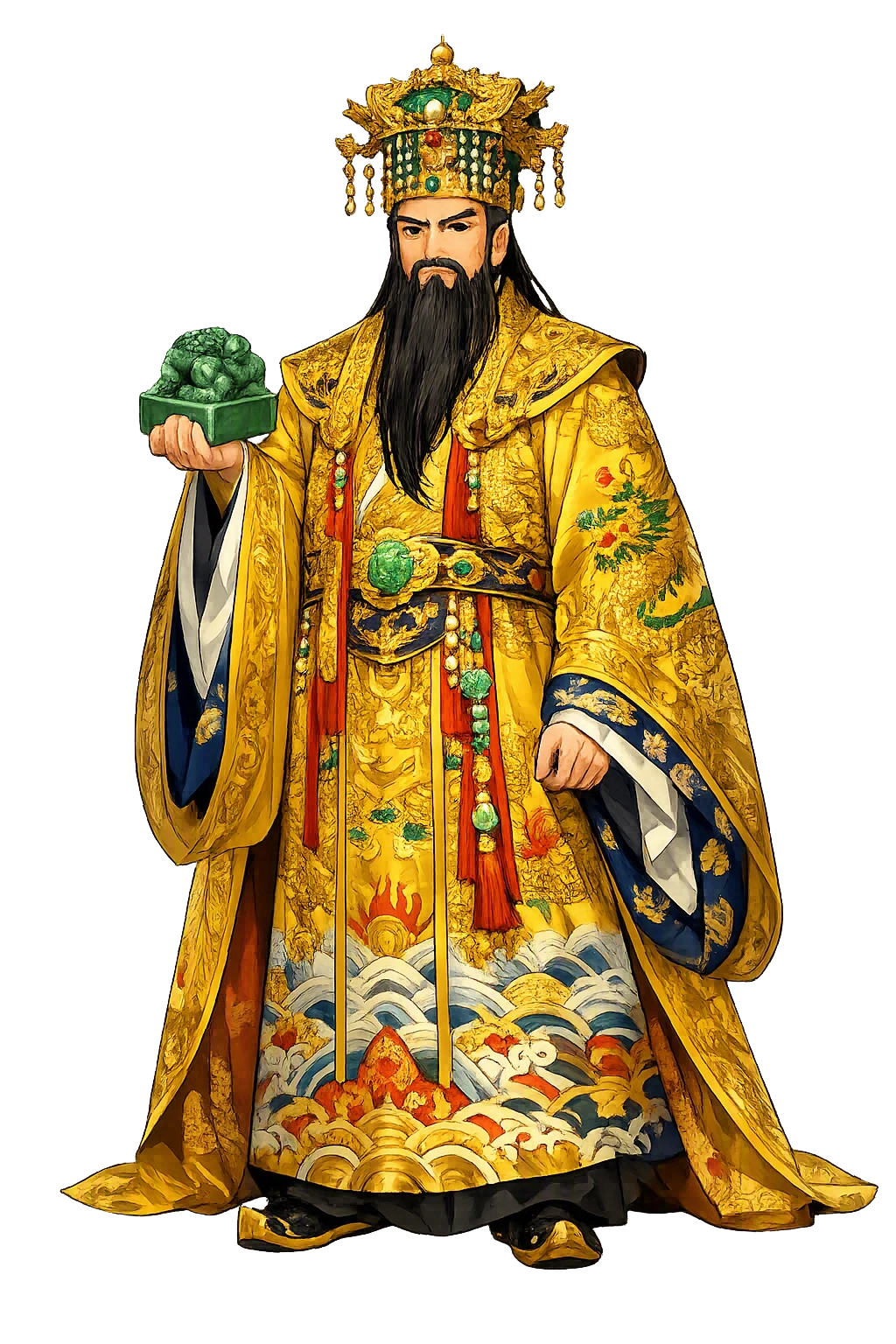
The Jade Emperor was served by professionals. Daoist priests were his standing clergy: they recited his scripture — the Yuhuang benxing jijing — as an act of merit, and in the great jiao offerings they reported the community's renewal of its covenant with Heaven, written memorials burned so that smoke carried them upward. Temples gave him a throne room: the main hall, conventionally named the Hall of the Numinous Firmament (Língxiāo diàn), where he sat in full imperial regalia to receive the temple's petitions. The state built his grandest sanctuary: under Zhenzong, Song state Daoism raised the Yuqing Zhaoying Palace at Kaifeng — completed in 1014, for decades the ceremonial headquarters of the imperial cult until fire took it in 1043. Households kept his tablet on their own altars, late-imperial spirit-writing circles took him as sovereign patron of their revelations, and fulfilled vows were repaid with opera performed before his image — the gods, like magistrates, were thought to enjoy a good play.