PuniCodex

Extended Lore

ᚢᛘᛁᚱ Ymir

Etymology · Phonology · Orthography · Cultural Legacy · Primary Sources

Tier 2 Ymir
Ymir — Primordial Giant, Chaos
01

Quick Facts

Essential information about Ymir, Primordial Giant, Chaos

Original Scriptᚢᛘᛁᚱ
Unicode RestorationYmir
Reconstructed Pronunciation/ˈy.mir/
PantheonNorse
DomainPrimordial Giant, Chaos
MeaningTwin, screamer (from *ymijaz)
ClassificationTier 2
Primary DomainYmir
Sacred SymbolsGinnungagap, Auðhumla, The dismembered body, The blood-flood, The four sky-dwarfs
02

Etymology & Word Family

From original script to Unicode restoration

Proto-indo-european *ymijaz Twin, screamer
Original Script ᚢᛘᛁᚱ Ymir — "Twin, screamer (from *ymijaz)"
Unicode Restoration Ymir Restored stress, length, and script
Modern ASCII ymir Plain-ASCII fallback

Ymir is Tier 2 by the mechanical rule: the normalized Old Norse form is already plain ASCII — there is no diacritic and no distinctive letter for the ASCII alphabet to lose. The giant's cosmic scale vastly outruns his name's orthography; only the capital distinguishes the restored form from the input.

03

Unicode Character Breakdown

Character-by-character philological analysis

CharacterUnicodeNameBlockPhonetic Role
YU+0059Latin Capital Letter YBasic LatinSame
mU+006DLatin Small Letter MBasic LatinSame
iU+0069Latin Small Letter IBasic LatinSame
rU+0072Latin Small Letter RBasic LatinSame

The Tier 2 classification reflects how much of the original phonology this restoration preserves — stress and vowel length for Greek names, distinctive letters and diacritics for every other tradition.

04

Cultural Significance

From ancient cult to modern Unicode

Ancient Domain

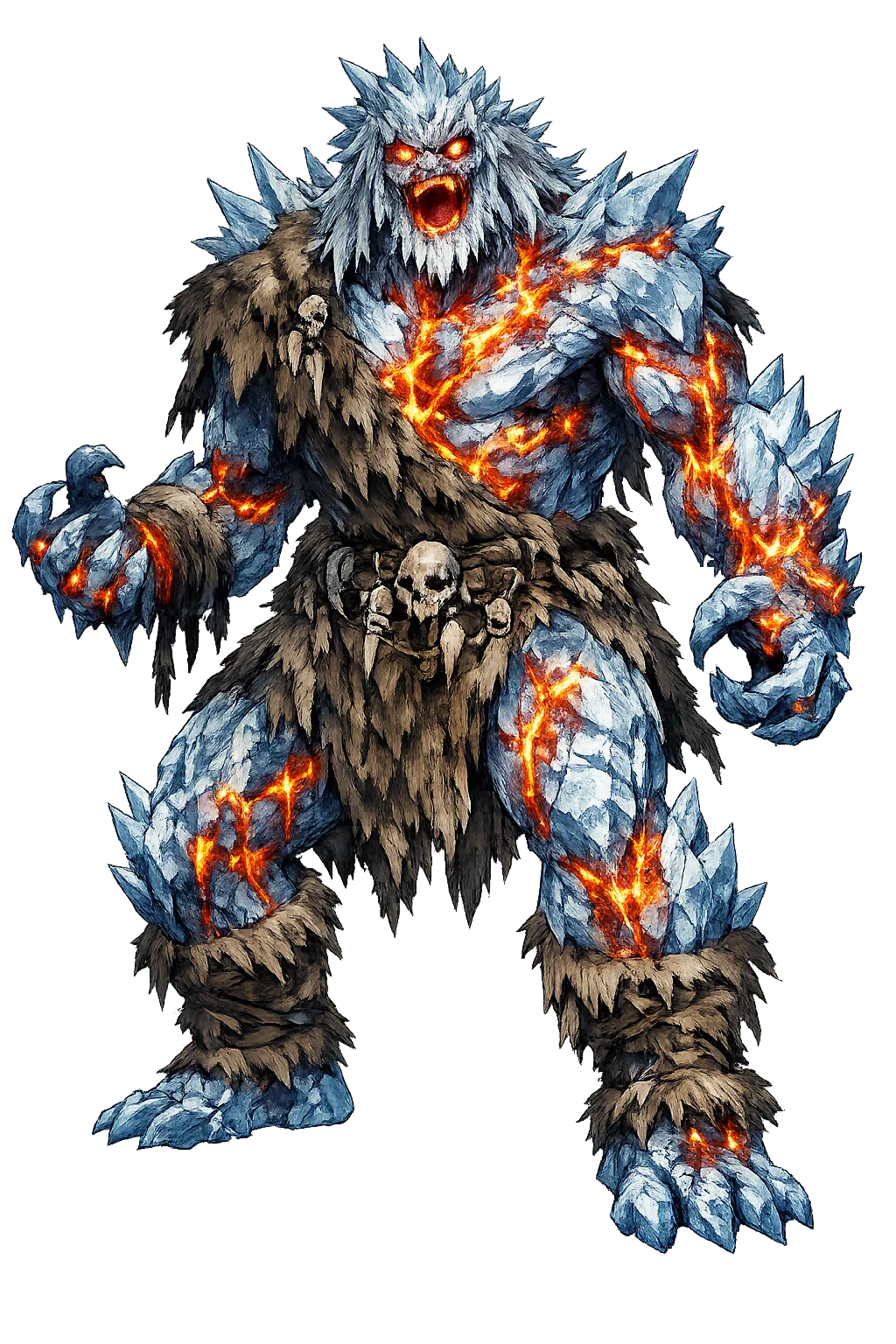
Ymir is the first living thing in the Norse cosmos — the frost-giant who condensed out of the dripping rime where the heat of Múspell met the ice of Niflheimr in the yawning void of Ginnungagap. He is the ancestor of every jotunn, the cow Auðhumla's nursling, and finally the raw material of creation itself: Óðinn, Vili, and Vé kill him, and from his body build the world — flesh to earth, blood to sea, bones to mountains, skull to sky.

Ymir in Later Traditions

Ymir stands at the centre of the best-known comparative debate in Germanic mythology: the Indo-European dismemberment cosmogony. The Sanskrit parallel is exact in structure — Rigveda 10.90, the Puruṣasūkta, makes the world from the sacrifice of the primeval man Puruṣa, whose breath became wind, head sky, feet earth — and scholars from the nineteenth century onward have read Ymir as the Norse reflex of the same inherited pattern, most fully in Bruce Lincoln's studies of Indo-European creation myth. The name itself is contested: the strong philological line derives Ymir from the Old Norse verb ymja, 'to scream, roar, resound' — the Roarer — while the alternative connects it to Indo-European *yemo-, 'twin' (Sanskrit Yama, Latin geminus), which would make the hermaphroditic, self-begetting giant the 'Twin'. Simek, de Vries, and Lindow all register the dispute without settling it; this temple records both. Tacitus supplies the Germanic corroboration — Germania chapter 2 has the peoples of Germania sing of Tuisto, 'a god born of the earth', whose name is regularly read as 'twin, two-fold' — as the ancestor of Mannus and all the tribes.

Modern Legacy

Ymir's afterlife runs wherever Norse myth is retold at scale. Richard Wagner's ring cycle built its world-music on the same dismembered-primordial logic, and the giant survives under his own name across modern popular culture: Robert E. Howard's 'The Frost-Giant's Daughter' (1934) makes its heroine the daughter of Ymir, Marvel Comics has kept Ymir the frost giant in print since 1962 as an antagonist of Thor, and the name recurs across fantasy games from Dungeons & Dragons onward wherever frost-giants are wanted. In scholarship the figure anchors the comparative project — Lincoln's Myth, Cosmos, and Society built its account of Indo-European creation ideology around the Ymir material. Modern Heathenry reads him as the necessary first matter of the cosmos: not a villain to be erased but the body the world is still made of.

Unicode Restoration as Cultural Act

Restoring Ymir in a domain name is more than orthographic accuracy. It is a statement that the internet should recognize the full range of human writing — not only the ASCII keyboard.

05

Frequently Asked Questions

Common questions about Ymir, Primordial Giant, Chaos, and Unicode restoration

01How do you pronounce Ymir?

In reconstructed pronunciation, Ymir is /ˈy.mir/ — approximately 'EE-meer' with rounded lips — say 'ee' while pursing the mouth as for 'oo' (the Old Norse y is German ü), then a short 'i' and a fully trilled final r..

02What does Ymir mean?

Ymir means Twin, screamer (from *ymijaz) in the norse tradition.

03What are the symbols of Ymir?

Ymir is associated with Ginnungagap (The yawning void at the world's beginning — the unmade space where fire and ice first traded breath), Auðhumla (The cow who feeds the giant and frees the gods — plenty and creation flowing from the same rime), The dismembered body (The map of the world written in one corpse: every landscape a part of Ymir, the cosmos as anatomy), The blood-flood (The deluge from Ymir's wound that drowns the frost-giants — destruction and sea-making in a single act), The four sky-dwarfs (Norðri, Suðri, Austri, and Vestri, set by the gods to hold Ymir's skull up at the four corners of heaven).

04Why restore Ymir in Unicode?

Plain ASCII ymir strips the stress, length, and script that make the name specific. Unicode restoration returns the name to its original written dignity.

05What is the most important myth about Ymir?

Before the world there was Ginnungagap, the yawning void, with the frozen rivers of Niflheimr to the north and the sparks of Múspell to the south. Where the heat met the rime, Snorri says, the hoar-frost melted and dripped, and the drops quickened into the shape of a man: Ymir, whom the frost-giants call Aurgelmir. Vafþrúðnismál gives the older verse version — from Élivágar's waves shot poison-drops that froze and grew, until a jotunn arose from them.He was no god and no friend to gods: Snorri calls him and all his line evil. Yet everything that follows in the cosmos presupposes him — the first living being is the first material, and creation in the Norse telling is not ex nihilo but a reworking of what already is.

06

Scholarly Sources

The philological foundations of this restoration

Every claim on this page is grounded in established scholarship. The orthographic restorations follow disciplinary convention. The etymological chain follows the best available reference works. This is not invention — it is resurrection through scholarship.

Lexicography & Philology

  • Cleasby-Vigfusson
  • Zoëga

Primary Texts

  • Poetic Edda: Völuspá 3–5 ('when Ymir dwelled'), Vafþrúðnismál 20–21, 29–35 (Ymir's origin, offspring, and Bergelmir's flood), Grímnismál 40–41 (the world from Ymir's body), Hyndluljóð 33 (all giants descend from Ymir)
  • Snorri Sturluson, Prose Edda: Gylfaginning 5–8 (Ginnungagap, Élivágar, Auðhumla and Búri, the killing and the making of the world); Skáldskaparmál (kennings and the þulur naming Aurgelmir, Brimir, Bláinn)
  • Rigveda 10.90, the Puruṣasūkta (the world from the dismembered primeval man) — the Sanskrit structural parallel

Archaeology & Art History

  • Material evidence — iconography, inscriptions, and temple archaeology — for Ymir and related cults.
  • Ymir is an entirely textual being: no runestone invokes him, no votive deposit names him, and no image can be securely identified with him — a silence that fits a cosmogonic abstraction rather than a cult figure. His attestation is the manuscript record. Vafþrúðnismál and Grímnismál survive in the thirteenth-century Codex Regius of the Poetic Edda (GKS 2365 4to); Völuspá is preserved both there and in the fourteenth-century Hauksbók; Snorri's creation account rests on the Codex Regius of the Prose Edda and related codices. Skaldic verse keeps the giant alive in kennings — the þulur catalogued in Skáldskaparmál list Aurgelmir, Brimir, and Bláinn among the giant-names — proving the cosmogony's currency in the working vocabulary of pre-Christian and early Christian poets. The comparative witnesses are themselves texts: Rigveda 10.90 and Tacitus' Germania, copied and recopied in Sanskrit and Latin manuscript traditions far from the North.

Religious Studies

  • Tacitus, Germania, chapter 2 (Tuisto, the earth-born god celebrated in the Germanic peoples' ancestral songs)
  • Cleasby–Vigfusson, An Icelandic-English Dictionary, s.v. Ymir, ymja
  • Zoëga, A Concise Dictionary of Old Icelandic, s.v. Ymir, ymja
  • Simek, Dictionary of Northern Mythology; Orchard, Dictionary of Norse Myth and Legend; Lindow, Norse Mythology: A Guide — s.v. Ymir (the 'roarer' versus 'twin' etymology debate and the dismemberment cosmogony)
Return

The Surface Awaits

You have traced the name from its earliest attestation to its Unicode restoration. Now return to the myth. The story is where the name lives.

Back to Lore
Ymir mascot