
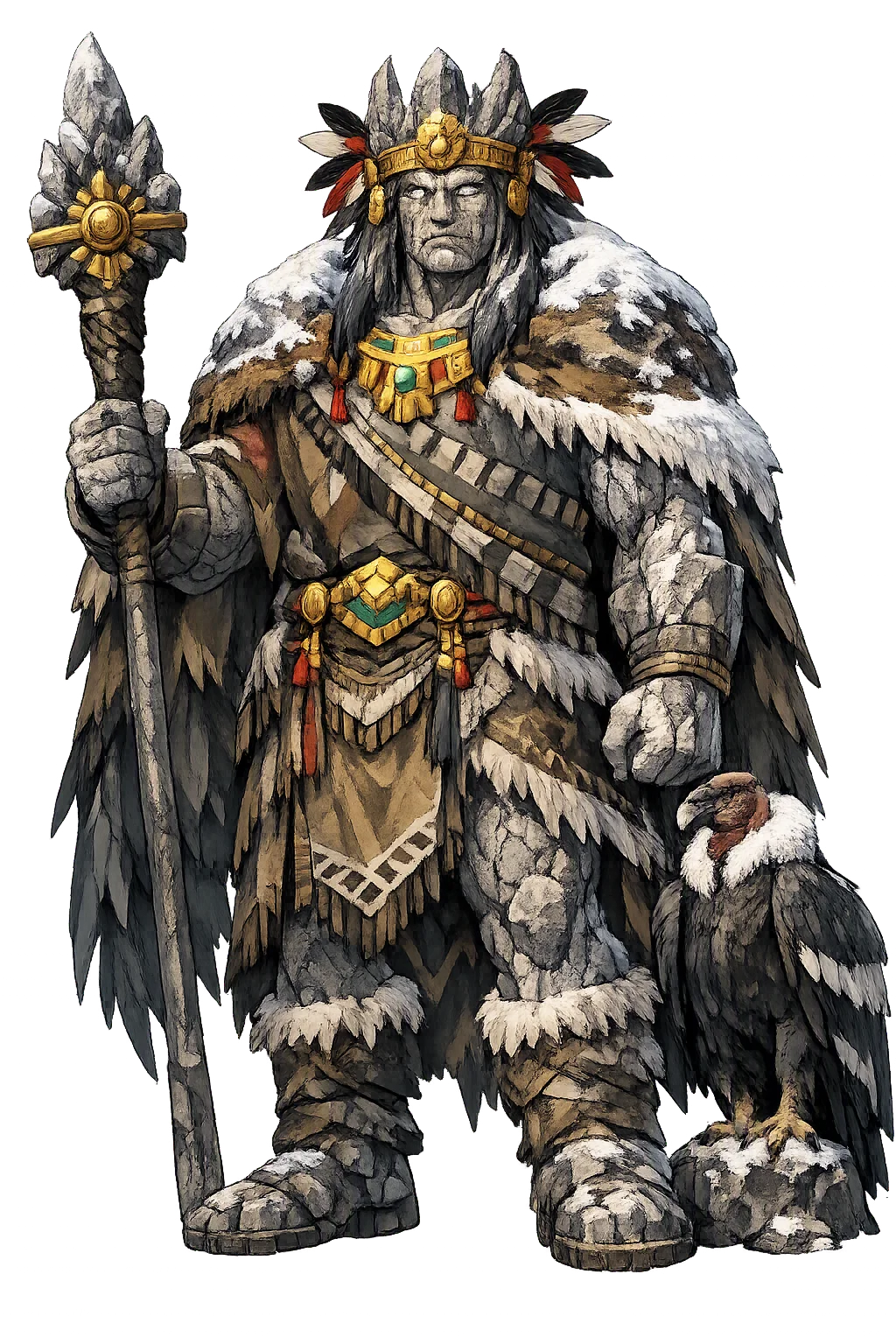
The Cult
The wamani is still worshipped, on schedule, in the Andes — which makes his cult the best documented in this batch. Its grammar is reciprocity: the community offers coca, chicha, and food on the apacheta cairns and stone platforms; the mountain answers with meltwater — springs, terraces, survival. Cobo watched the rites in the seventeenth century, and modern ethnographers recorded the same exchange still spoken as a courtesy owed an elder. There is no separate priesthood today; the specialists are the ritualists of the high pastures — the altomisayuq, the one who serves the mountain — and whole nations act as their own clergy at the great pilgrimages. Chief among them is Qoyllur Rit'i, where each June tens of thousands climb to the Sinakara glacier and dance for five nights, while the ukuku bear-dancers ascend the ice to carry star-snow down to the fields. In the empire's day the covenant had a state form: the capacocha, processions to the summits with gold, fine cloth, and chosen children — the Llullaillaco finds, excavated in 1999, are its votive evidence, intact five centuries on.