PuniCodex

Extended Lore

ᚢᛅᚾᚼᛁᛘᛁᚱ Vanaheimr

Etymology · Phonology · Orthography · Cultural Legacy · Primary Sources

Tier 2 Vanaheimr
Vanaheimr — Home of the Vanir
01

Quick Facts

Essential information about Vanaheimr, Home of the Vanir

Original Scriptᚢᛅᚾᚼᛁᛘᛁᚱ
Unicode RestorationVanaheimr
Reconstructed Pronunciation/ˈwɑ.nɑˌhɛi̯mr/
PantheonNorse
DomainHome of the Vanir
MeaningVan-home
ClassificationTier 2
Primary DomainVanaheimr
Sacred SymbolsThe hostage pledge (gísling), The vat of the truce, Sheaf and ship, The seiðr-staff, The broken wall of Ásgarðr
02

Etymology & Word Family

From original script to Unicode restoration

Original Script ᚢᛅᚾᚼᛁᛘᛁᚱ Vanaheimr — "Van-home"
Unicode Restoration Vanaheimr Restored stress, length, and script
Modern ASCII vanaheimr Plain-ASCII fallback

Vanaheimr is Tier 2 by the mechanical rule: the normalized Old Norse form is already plain ASCII — no diacritic, no distinctive letter for the ASCII alphabet to lose. Only the capital distinguishes the restored form from the input; the Vanir's home was never hard to type, only hard to find.

03

Unicode Character Breakdown

Character-by-character philological analysis

CharacterUnicodeNameBlockPhonetic Role
VU+0056Latin Capital Letter VBasic LatinSame, capitalized
aU+0061Latin Small Letter ABasic LatinSame
nU+006ELatin Small Letter NBasic LatinSame
aU+0061Latin Small Letter ABasic LatinSame
hU+0068Latin Small Letter HBasic LatinSame
eU+0065Latin Small Letter EBasic LatinSame
iU+0069Latin Small Letter IBasic LatinSame
mU+006DLatin Small Letter MBasic LatinSame
rU+0072Latin Small Letter RBasic LatinSame

The Tier 2 classification reflects how much of the original phonology this restoration preserves — stress and vowel length for Greek names, distinctive letters and diacritics for every other tradition.

04

Cultural Significance

From ancient cult to modern Unicode

Ancient Domain

Vanaheimr — Van-home — is the homeland of the Vanir, the elder kindred of gods whom the Eddas set beside the Æsir: keepers of fertility, wealth, peace, and the magic called seiðr. The record of the realm itself is one stanza and a few sentences of prose: in Vafþrúðnismál the wise powers shape Njörðr in Vanaheimr and hand him to the Æsir as a hostage, with the promise that at the doom of the age he will come home again; Snorri adds that Njörðr was raised there, and Ynglinga saga plants the Vanir's country by the river Tanais. Everything else the tradition knows of Vanaheimr it knows through its exiles — Njörðr, Freyr, and Freyja, who live among the Æsir and remain Vanir still.

Vanaheimr in Later Traditions

Vanaheimr's interpretive life is the Vanir problem itself: why does one mythology keep two divine kindreds? Dumézil made the pairing the cornerstone of his comparative system — the Æsir holding sovereignty and war, the Vanir fecundity and wealth, their war and merger the mythic charter of a complete pantheon, with structural cousins in the Roman pairing of Jupiter's Di Indigetes with the immigrant Di Novensides and in the intermarriage of cosmic orders across the Indo-European record. Current handbooks are cooler: Simek, Orchard, and Lindow note that the Vanir are attested only in the Norse sources — no Old English or Gothic trace of the kindred survives — that the Æsir/Vanir boundary blurs in practice (Skaði is a giant's daughter numbered among the goddesses; Njörðr's children outshine their host kindred), and that the war's mythology may encode history, ritual, or pure narrative logic in proportions no source will let us measure. What stands cleanly is the corpus's own testimony: two kindreds, one war, one exchange, and a homeland that keeps its identity through its exiles.

Modern Legacy

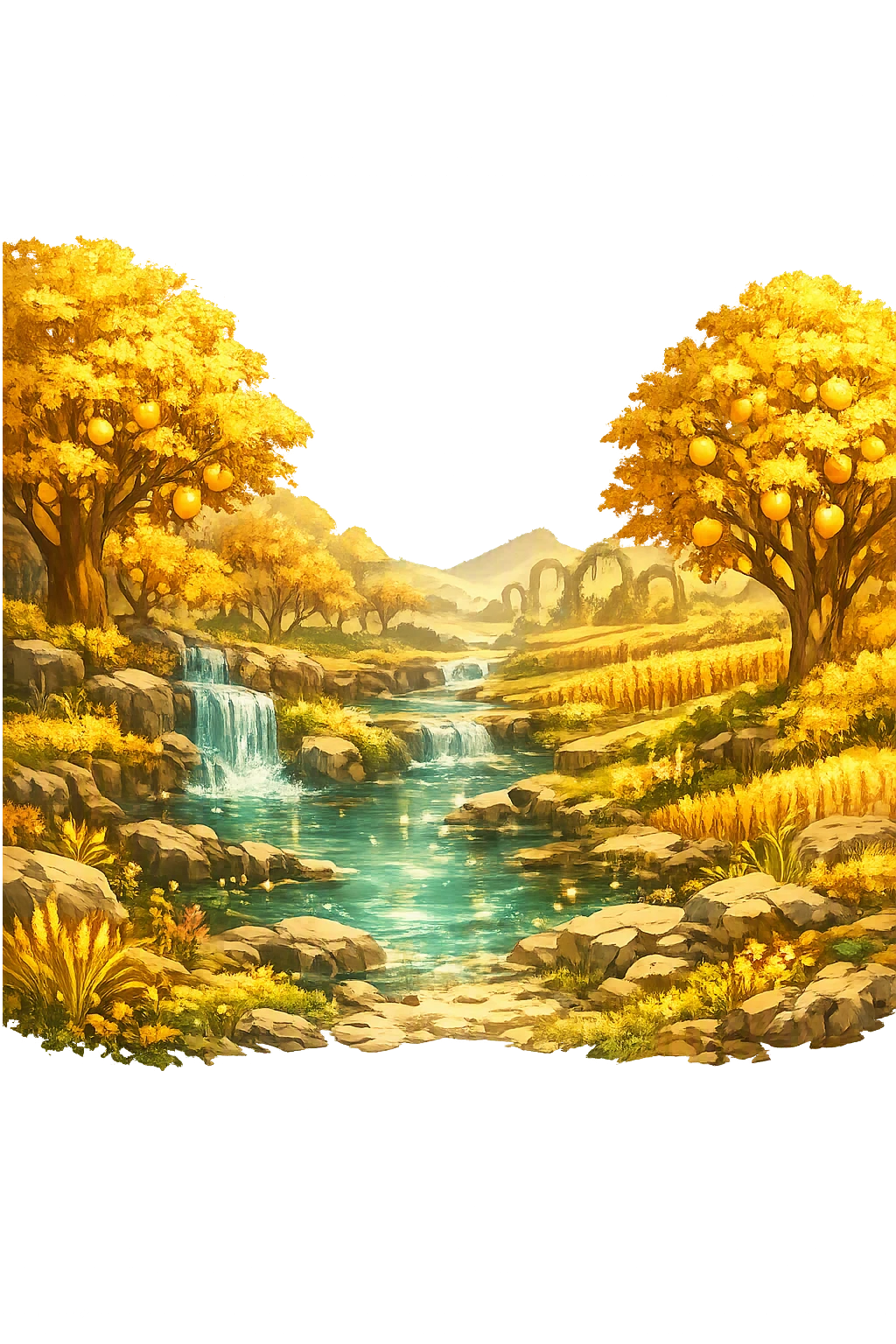
Vanaheimr's modern life follows the Vanir's. Nineteenth-century philology made the Æsir–Vanir war a scholarly crux — historicized as a memory of clashing cults, read by Dumézil as structural myth — and the debate remains the standard introduction to how hard it is to get history out of the Eddas. Modern Heathenry restored the kindred to practice: Vanatrú names a living devotional current centred on Njörðr, Freyr, and Freyja as gods of peace, fertility, and the household's wealth, with Vanaheimr honoured as their true home. Popular culture adopted the realm as scenery: Marvel's Thor comics placed Vanaheim among the Nine Realms and carried it onto film, and Santa Monica Studio's God of War Ragnarök (2022) rendered it as a vast jungle river-world — depictions with no warrant in the medieval record, which gives the realm no landscape at all. The restoration keeps the plain compound the sources actually wrote: the Vanir's home, named once in a wisdom-contest and remembered ever since.

Unicode Restoration as Cultural Act

Restoring Vanaheimr in a domain name is more than orthographic accuracy. It is a statement that the internet should recognize the full range of human writing — not only the ASCII keyboard.

05

Frequently Asked Questions

Common questions about Vanaheimr, Home of the Vanir, and Unicode restoration

01How do you pronounce Vanaheimr?

In reconstructed pronunciation, Vanaheimr is /ˈwɑ.nɑˌhɛi̯mr/ — approximately 'WAH-nah-HAYM-r' — begin with a w as in 'water', keep both a's short and open, glide the -hei- as in 'hay', and finish with a light rolled r..

02What does Vanaheimr mean?

Vanaheimr means Van-home in the norse tradition.

03What are the symbols of Vanaheimr?

Vanaheimr is associated with The hostage pledge (gísling) (Njörðr's transfer to the Æsir — peace made by exchanging what each side could not bear to lose), The vat of the truce (The peace sealed when both kindreds spat into a single vessel, from which Kvasir was made — reconciliation given a body), Sheaf and ship (The Vanir's twin wealth: the harvest of the fields and the sea-borne fortune of Njörðr of Nóatún and Freyr's Skíðblaðnir), The seiðr-staff (The magic Freyja first taught among the Æsir, which Ynglinga saga says was Vanir custom — power the immigrants carried from home), The broken wall of Ásgarðr (The Vanir's victory in the field — the only force in the corpus that ever breaches the Æsir's defences by open war).

04Why restore Vanaheimr in Unicode?

Plain ASCII vanaheimr strips the stress, length, and script that make the name specific. Unicode restoration returns the name to its original written dignity.

05What is the most important myth about Vanaheimr?

In the wisdom-contest with the giant Vafþrúðnir, Óðinn asks whence Njörðr came among the sons of the Æsir, he who rules so many temples and sanctuaries though he was not raised among the Æsir. The giant's answer is the realm's one great attestation: in Vanaheimr the wise powers created him and gave him to the gods as a hostage — and at the doom of the age he will come back home among the wise Vanir.The stanza does everything at once: it names the realm, names its people the wise ones, explains Njörðr's double citizenship, and promises him a homecoming that the surviving corpus never narrates. Vanaheimr is the only divine home defined not by what happens there but by who came from there — and by who is owed a return.

06

Scholarly Sources

The philological foundations of this restoration

Every claim on this page is grounded in established scholarship. The orthographic restorations follow disciplinary convention. The etymological chain follows the best available reference works. This is not invention — it is resurrection through scholarship.

Lexicography & Philology

  • Prose Edda
  • Cleasby-Vigfusson

Primary Texts

  • Poetic Edda: Vafþrúðnismál 39 (Njörðr created in Vanaheimr by the wise powers and given as hostage; the promised homecoming); Völuspá 21–24 (Gullveig and the first war; the Vanir break the wall of Ásgarðr); Lokasenna 34 (Njörðr taunted as a hostage sent from the east)
  • Snorri Sturluson, Prose Edda: Gylfaginning 23 (Njörðr raised in Vanaheimr, given as hostage to the Æsir; his marriage to Skaði; Freyr and Freyja his children); Skáldskaparmál (kennings for Njörðr as god of the Vanir)
  • Snorri Sturluson, Heimskringla, Ynglinga saga 1 and 4 (Vanaland/Vanaheimr by the river Vanakvísl-Tanais; the Æsir–Vanir war and the hostage exchange; the beheading of Mímir)

Archaeology & Art History

  • Material evidence — iconography, inscriptions, and temple archaeology — for Vanaheimr and related cults.
  • A realm named once in a wisdom-contest can leave no votives: Vanaheimr's evidence is manuscript evidence. Vafþrúðnismál and Völuspá survive in the Codex Regius of the Poetic Edda (GKS 2365 4to, c. 1270); Snorri's Gylfaginning and the Heimskringla tradition transmit the prose attestations. No runic inscription names Vanaheimr, and none names the Vanir as a kindred — a silence the realm shares with most of the cosmological furniture. The material record belongs to the Vanir's cult rather than their home: Adam of Bremen's description (c. 1070s) of the temple at Uppsala, where the idol Fricco — Freyr — stood between Wodan and Thor, fashioned with an immense phallus as the god of peace and pleasure; and the dense stratum of Scandinavian place-names compounded with Njörðr and Freyr (Swedish Närlunda from Njarðarlundr, Frøslev, Frösåker and their kin), which maps the kindred's worship across the landscape even where the mythology is silent. The Yngling dynasty's claimed descent from Yngvi-Freyr ties that cult geography to the great burial mounds of Gamla Uppsala — the closest the earth comes to showing us Vanaheimr's people.

Religious Studies

  • Adam of Bremen, Gesta Hammaburgensis ecclesiae pontificum IV.26–27 (the temple at Uppsala and the cult image of Fricco-Freyr) — the Vanir cult's contemporary material testimony
  • Cleasby–Vigfusson, An Icelandic-English Dictionary, s.v. Vanir, heimr; Zoëga, A Concise Dictionary of Old Icelandic, s.v. Vanir, heimr
  • de Vries, Altnordisches etymologisches Wörterbuch, s.v. Vanir (the contested etymology: connections proposed with vinr 'friend' and Latin Venus, none secure)
  • Dumézil, Gods of the Ancient Northmen (the Æsir–Vanir pairing as the structural charter of sovereignty and fecundity)
  • Simek, Dictionary of Northern Mythology; Orchard, Dictionary of Norse Myth and Legend; Lindow, Norse Mythology: A Guide — s.v. Vanaheimr, Vanir, Njörðr (attestation, the Vanir problem, and the limits of reconstruction)
Return

The Surface Awaits

You have traced the name from its earliest attestation to its Unicode restoration. Now return to the myth. The story is where the name lives.

Back to Lore
Vanaheimr mascot