
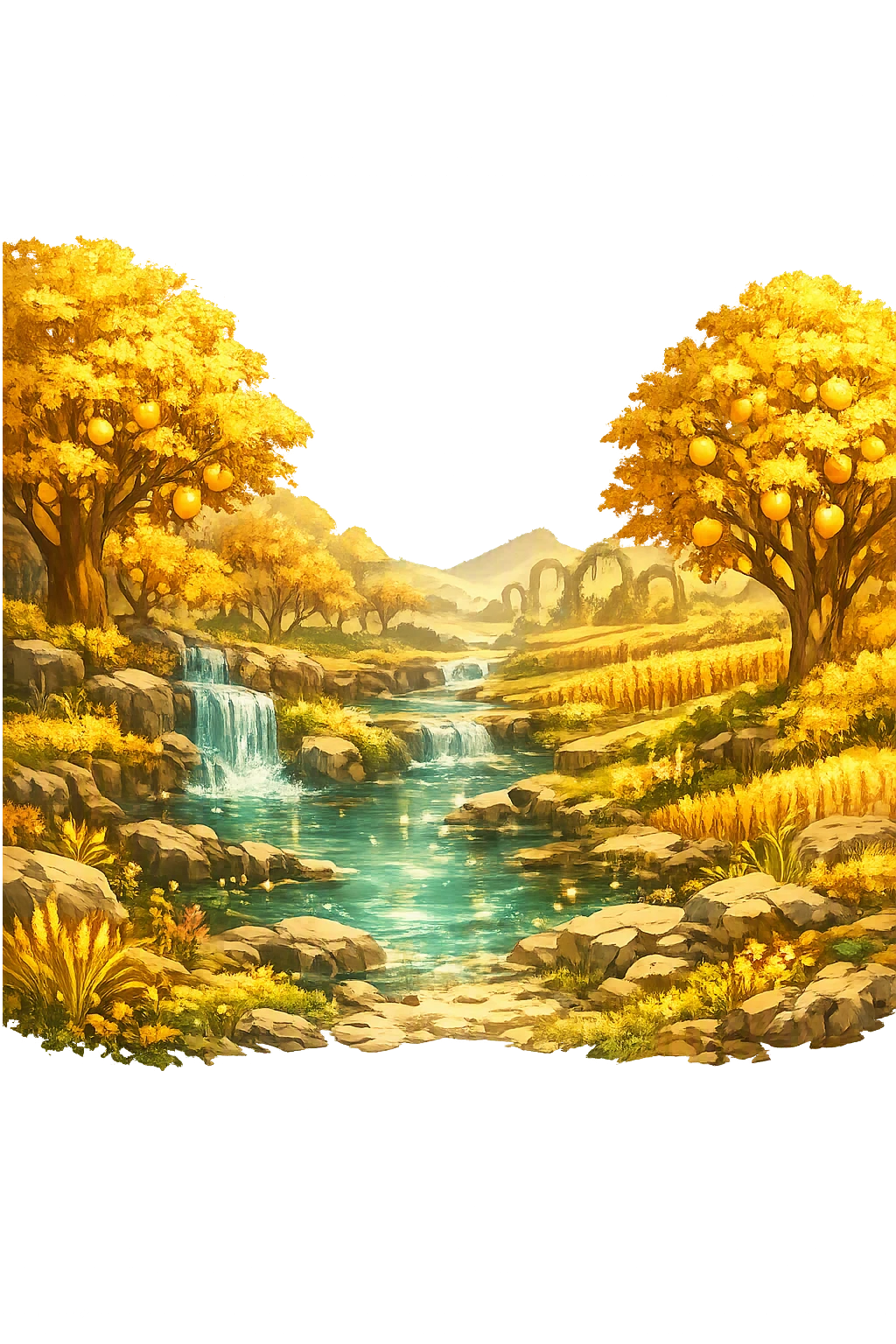
From Younger Futhark to Unicode: the journey of Vanaheimr
Long before it was a domain, this name traveled through scripts. Vanaheimr begins in Younger Futhark, passes through scholarly transliteration, and ends — for now — inside the punycode machinery of the global DNS. Each stage of that journey preserves some information and loses some, and the craft of restoration is knowing exactly which marks matter. This post follows the name stage by stage: the original script, the reconstructed pronunciation, the mythological record, the material evidence, and finally the Unicode form that carries all of it into the address bar. Think of it as a biography of a name, told through its spelling.
At a Glance
- Restored name: Vanaheimr
- ASCII form: vanaheimr
- Meaning: "Van-home"
- Domain of influence: Home of the Vanir
- Pantheon: Norse
- Classification: Tier 2
- Original script: ᚢᛅᚾᚼᛁᛘᛁᚱ (Younger Futhark)
Overview
Vanaheimr (Old Norse Vanaheimr, 'Van-home', from Vana, genitive plural of Vanir, + heimr 'home, world') is the homeland of the Vanir in Norse cosmology — the elder kindred of gods set beside the Æsir, keepers of fertility, wealth, peace, and the magic called seiðr. Its attestation is famously thin and exact: in Vafþrúðnismál 39 the wise powers (vís regin) shape Njörðr in Vanaheimr and give him to the gods as a hostage (gísling), with the promise that at the doom of the age he will come home among the wise Vanir. Snorri adds that Njörðr was raised in Vanaheimr before the exchange, and that his children Freyr and Freyja share his double citizenship. Beyond this the record is silent: no surviving poem is set in Vanaheimr, no traveller describes it, and the realm is known entirely through its exiles and through the war whose peace made the two kindreds one household.
PuniCodex restores the name as Vanaheimr — identical to the ASCII input, because normalized Old Norse writes no diacritic in this compound. The mechanical rule therefore places the name in Tier 2: nothing distinctive is lost in transit, a statement about orthography and never about the realm. The temple is domain-less: the plain-ASCII vanaheimr.com is registered to a third party outside the collection and is watched for release.
The Name
The name is attested in Old Norse as Vanaheimr — a transparent compound of Vana, the genitive plural of Vanir, and heimr 'home, world, dwelling-place', the same second element as in Álfheimr and the whole heimr-family of cosmological homesteads. Vafþrúðnismál 39 preserves the dative form í Vanaheimi.
The etymology of the first element is one of the honest open questions of the onomasticon. Vanir has been connected with Old Norse vinr 'friend', with a root of 'striving, winning', and with Latin Venus — none secure, and de Vries registers the proposals without settling them. What is not disputed is the compound's transparency to a medieval speaker: the home of the Vanir, as Álfheimr is the home of the elves.
The ASCII form is not a fallback here but the form itself: normalized Old Norse writes nine plain Latin letters and a capital. The Unicode restoration Vanaheimr therefore preserves nothing the ASCII alphabet loses, and the mechanical rule classifies the name Tier 2 — an orthographic fact, not a judgment on the realm.
The letter-by-letter transformation runs:
- v → V — Same, capitalized
- a → a — Same
- n → n — Same
- a → a — Same
- h → h — Same
- e → e — Same
- i → i — Same
- m → m — Same
- r → r — Same
The project holds no domain for this name. The plain-ASCII vanaheimr.com is registered to a third party outside the collection and is watched for release; this temple claims nothing it does not hold.
The Original Script
The name is preserved in medieval Icelandic manuscripts in the Latin alphabet as Vanaheimr — Old Norse (North Germanic), attested 13th c. CE in the Codex Regius of the Poetic Edda (Vafþrúðnismál, with the dative í Vanaheimi) and the codices of Snorri's Edda, recording material centuries older. Before the Latin bookhand, Old Norse names were carved in the Younger Futhark; no runic attestation of this compound survives, so the manuscript form is the primary witness. The runic rendering is ᚢᛅᚾᚼᛁᛘᛁᚱ (u-a-n-h-i-m-i-r).
The scholarly rendering proceeds step by step:
- ᚢ (úr) writes the rounded back vowels /u, o, ø, ǫ, y/ and /w/; the initial /v/ of the normalized spelling continues Proto-Germanic *w- and is represented by úr.
- ᛅ (ár) writes /a/, /á/ and /æ/; ᚾ (nauðr) writes /n/.
- The spelling uanhimir is a normalized phonetic reconstruction; Younger Futhark does not distinguish voiced/voiceless stops or separate short and long vowels.
- The compound is transparent — Vana (genitive plural of Vanir) + heimr 'home, world' — and the normalized Old Norse form writes no diacritic: both a's are short, and no distinctive letter (þ, ð, æ, ǫ) occurs in the name.
- The Unicode restoration Vanaheimr is therefore identical to the ASCII form — the restoration is a matter of canonical reference, not rescued orthography.
Pronunciation
The reconstructed pronunciation of the name is /ˈwɑ.nɑˌhɛi̯mr/ — Old Norse Reconstruction.
Phoneme by phoneme:
- Va- — Initial labial-velar glide [w], not modern [v]: Old Norse initial v continued Proto-Germanic *w and was still a glide in the classical period; the stressed vowel is short open [ɑ]
- -na- — Voiced alveolar nasal [n] and a second short open [ɑ]; both vowels of Vana- are short, the manuscripts writing no length mark
- -heimr — The rising diphthong [ɛi̯] of heimr, then bilabial [m] and the tapped or trilled [r] of the masculine nominative ending, fully sounded
For the modern speaker, the closest approximation is: 'WAH-nah-HAYM-r' — begin with a w as in 'water', keep both a's short and open, glide the -hei- as in 'hay', and finish with a light rolled r.
Kindred and historical forms of the name:
- Old Norse — Vanaheimr, with the dative í Vanaheimi attested in Vafþrúðnismál 39
- Younger Futhark — ᚢᛅᚾᚼᛁᛘᛁᚱ (u-a-n-h-i-m-i-r), the Viking-Age runic rendering, initial /w/ written with úr
- Modern Scandinavian — Swedish and Danish Vanahem, Modern Icelandic Vanaheimur, the learned form kept alive from the medieval corpus
- Other Germanic — none: the Vanir are attested only in the Norse sources, so no cognate realm-name exists in Old English or Gothic
Vanaheimr is Tier 2 because the restoration preserves nothing the ASCII form loses: no diacritic, no distinctive letter, no vowel length. English and Old Norse write the name identically.
Mythology
Vanaheimr has no myth of its own: no surviving story is set inside it, no traveller describes it, no poem is located there. Its whole mythology is told from outside, by and about the gods who left it.
In Vanaheimr the Wise Powers Created Him (Vafþrúðnismál 39)
In the wisdom-contest with the giant Vafþrúðnir, Óðinn asks whence Njörðr came among the sons of the Æsir, he who rules so many temples and sanctuaries though he was not raised among the Æsir. The giant's answer is the realm's one great attestation: in Vanaheimr the wise powers created him and gave him to the gods as a hostage — and at the doom of the age he will come back home among the wise Vanir. The stanza names the realm, explains Njörðr's double citizenship, and promises a homecoming the surviving corpus never narrates.
The First War in the World (Völuspá 21–24)
The seeress remembers the world's first war: Gullveig, the thrice-burned, thrice-born witch, is speared and burned in Hárr's hall yet lives; the gods take counsel whether the Æsir should pay tribute; and when battle is joined it is the Vanir who break the wall of Ásgarðr and tread the field in victory — the war-wise people. No poem says who won in the end, and the silence is the point: the war could not be won, and what follows in every account is not conquest but exchange.
The Hostage Exchange (Gylfaginning 23; Ynglinga saga 4)
The Vanir gave their foremost: Njörðr, raised in Vanaheimr, and with him his son Freyr. The Æsir gave Hœnir, thought fit to be a chieftain, and with him Mímir, wisest of men, and Kvasir. When Hœnir proved helpless in council without Mímir at his shoulder, the Vanir reckoned themselves cheated, cut off Mímir's head, and sent it to Óðinn, who preserved it with herbs and spells and consults it for hidden lore. Njörðr and Freyr thrived among the Æsir — so naturalized that Loki must taunt Njörðr with being only a hostage sent from the east — while the Vanir kept their country and the corpus keeps the asymmetry forever unreconciled.
Vanaland by the Tanais (Ynglinga saga 1)
Snorri's Heimskringla opens its euhemerized geography with the river the medieval world called the Tanais — the Don — and names the country on its eastern side Vanaland or Vanaheimr, and the river itself Vanakvísl: the mythic homeland become a border province of legendary history, the starting point of the migration that carries Óðinn's people north to found the Yngling dynasty at Uppsala. Even euhemerized, the pattern holds: Vanaheimr is the place one leaves to found dynasties elsewhere.
Symbols & Iconography
No Viking-Age image can be securely read as a picture of Vanaheimr, so the realm's symbolic vocabulary is built from the events and objects the texts attach to the Vanir and the peace:
- The hostage pledge (gísling) — Njörðr's transfer to the Æsir: peace made by exchanging what each side could not bear to lose
- The vat of the truce — the vessel into which both kindreds spat to seal the peace, from which Kvasir was made: reconciliation given a body
- Sheaf and ship — the Vanir's twin wealth: the harvest of the fields and the sea-borne fortune of Njörðr of Nóatún and Freyr's Skíðblaðnir
- The seiðr-staff — the magic Freyja first taught among the Æsir, which Ynglinga saga says was Vanir custom: power the immigrants carried from home
- The broken wall of Ásgarðr — the Vanir's victory in the field, the one breach of the Æsir's defences the corpus records
Archaeology & Evidence
A realm named once in a wisdom-contest can leave no votives: Vanaheimr's evidence is manuscript evidence. Vafþrúðnismál and Völuspá survive in the Codex Regius of the Poetic Edda (GKS 2365 4to, c. 1270), and Snorri's Gylfaginning and the Heimskringla tradition transmit the prose attestations. No runic inscription names Vanaheimr, and none names the Vanir as a kindred — a silence the realm shares with most of the cosmological furniture.
The material record belongs to the Vanir's cult rather than their home. Adam of Bremen's description (c. 1070s) of the temple at Uppsala sets the idol Fricco — Freyr — between Wodan and Thor, fashioned with an immense phallus as the god of peace and pleasure: the Vanir's nearest contemporary portrait. The dense stratum of Scandinavian place-names compounded with Njörðr and Freyr — Swedish Närlunda from Njarðarlundr, Frøslev, Frösåker and their kin — maps the kindred's worship across the landscape even where the mythology is silent, though the distribution is uneven enough that no simple map of a 'Vanir religion' survives scrutiny. The Yngling dynasty's claimed descent from Yngvi-Freyr ties that cult geography to the great burial mounds of Gamla Uppsala — the closest the earth comes to showing us Vanaheimr's people.
Realm & Domain
Vanaheimr is catalogued under Home of the Vanir — and the title is the whole dossier: the sources define the realm by its people and its role in the peace, never by landscape, buildings, or events within it.
The Vanir's Country
The homeland of the elder kindred — Njörðr, Freyr, Freyja — the gods of growth, wealth, peace, and seiðr, whom the corpus consistently presents as a separate people with their own customs, down to marriage law the Æsir forbade and the Vanir practised.
The Hostage's Home
Vanaheimr's one mythic act is a departure: the wise powers shape Njörðr there and hand him to the Æsir as the gísling, the hostage who seals the peace after the first war in the world — and Vafþrúðnismál promises him a homecoming at the doom of the age.
The Undefeated Enemy
In Völuspá's account it is the Vanir who break the wall of Ásgarðr and tread the field in victory — the only power in the corpus that breaches the Æsir's defences by open war. Vanaheimr is the country strong enough to stalemate heaven and wise enough to settle it.
The Wise Powers
The realm's inhabitants are named only by their wisdom — vís regin, 'the wise powers', in Vafþrúðnismál; the war-wise Vanir in Völuspá — a people the tradition never describes but always respects.
Across Cultures
Vanaheimr's interpretive life is the Vanir problem itself: why does one mythology keep two divine kindreds? Dumézil made the pairing the cornerstone of his comparative system — the Æsir holding sovereignty and war, the Vanir fecundity and wealth, their war and merger the mythic charter of a complete pantheon, with structural cousins in Rome's pairing of the Di Indigetes with the immigrant Di Novensides and in kindred patterns across the Indo-European record.
Current handbooks are cooler. The Vanir are attested only in the Norse sources — no Old English or Gothic trace of the kindred survives; the Æsir/Vanir boundary blurs in practice, since Skaði is a giant's daughter numbered among the goddesses and Njörðr's children outshine their host kindred; and the war's mythology may encode history, ritual, or pure narrative logic in proportions no source will let us measure. What stands cleanly is the corpus's own testimony: two kindreds, one war, one exchange, and a homeland that keeps its identity through its exiles. Within the corpus, the realm's household and kin are Njörðr, Freyr, Freyja, Skaði, and the hostage-counterpart Mímir.
Cultural Legacy
Vanaheimr's modern life follows the Vanir's. Nineteenth-century philology made the Æsir–Vanir war a scholarly crux — historicized as a memory of clashing cults, read by Dumézil as structural myth — and the debate remains the standard introduction to how hard it is to get history out of the Eddas. Modern Heathenry restored the kindred to practice: Vanatrú names a living devotional current centred on Njörðr, Freyr, and Freyja as gods of peace, fertility, and the household's wealth, with Vanaheimr honoured as their true home.
Popular culture adopted the realm as scenery: Marvel's Thor comics placed Vanaheim among the Nine Realms and carried it onto film, and Santa Monica Studio's God of War Ragnarök (2022) rendered it as a vast jungle river-world — depictions with no warrant in the medieval record, which gives the realm no landscape at all. The restoration keeps the plain compound the sources actually wrote: the Vanir's home, named once in a wisdom-contest and remembered ever since.
The Scholarly Record
The account of Vanaheimr given in this edition rests on the witnesses and reference works listed below. The Poetic Edda supplies the realm's only direct attestations; Snorri's Edda and Heimskringla the prose frame; Adam of Bremen the Vanir cult's contemporary testimony; the lexica and etymological dictionaries the name's form and disputed roots; and Dumézil with the modern handbooks the interpretive debate.
- The Poetic Edda, trans. Carolyne Larrington, 2nd ed. (Oxford: Oxford University Press, 2014): Vafþrúðnismál 39 (Njörðr created in Vanaheimr and given as hostage; the promised homecoming); Völuspá 21–24 (Gullveig and the first war); Lokasenna 34 (Njörðr the hostage from the east).
- Snorri Sturluson, Edda, Gylfaginning 23 (Njörðr raised in Vanaheimr; the hostage exchange; Freyr and Freyja) and Skáldskaparmál (kennings for Njörðr as god of the Vanir), trans. Anthony Faulkes (London: Everyman, 1987; Viking Society for Northern Research, 1998).
- Snorri Sturluson, Heimskringla, Ynglinga saga 1 and 4 (Vanaland/Vanaheimr by the Vanakvísl-Tanais; the war and the hostage exchange; the beheading of Mímir), trans. Lee M. Hollander (Austin: University of Texas Press, 1964).
- Adam of Bremen, Gesta Hammaburgensis ecclesiae pontificum IV.26–27 (the temple at Uppsala and the idol Fricco-Freyr), trans. Francis J. Tschan (New York: Columbia University Press, 1959).
- Cleasby, Richard, and Guðbrandur Vigfússon, An Icelandic-English Dictionary, 2nd ed. (Oxford: Clarendon Press, 1957), s.v. Vanir, heimr; Zoëga, Geir T., A Concise Dictionary of Old Icelandic (Oxford: Clarendon Press, 1910), s.v. Vanir, heimr.
- de Vries, Jan, Altnordisches etymologisches Wörterbuch, 2nd ed. (Leiden: Brill, 1962), s.v. Vanir (the contested etymology: vinr 'friend', a root of 'striving', Latin Venus — none secure).
- Dumézil, Georges, Gods of the Ancient Northmen, ed. Einar Haugen (Berkeley: University of California Press, 1973) (the Æsir–Vanir pairing as the structural charter of sovereignty and fecundity).
- Simek, Rudolf, Dictionary of Northern Mythology, trans. Angela Hall (Cambridge: D. S. Brewer, 1993); Orchard, Andy, Dictionary of Norse Myth and Legend (London: Cassell, 1997); Lindow, John, Norse Mythology: A Guide (Oxford: Oxford University Press, 2001) — s.v. Vanaheimr, Vanir, Njörðr.
A Meditation
Every heimr in the Norse cosmos is a homestead, but Vanaheimr is the one defined by leaving it. Ásgarðr has its walls and halls, Miðgarðr its fence, Jötunheimr its giants; Vanaheimr has a departure and a promise. The wise powers shape Njörðr and hand him over, and the corpus never once takes us back across the border — we know the realm only as the place the hostage came from, the address on a homecoming that Ragnarǫk will finally honour.
There is something exact in that economy: a peace that could only be made by each side surrendering what it could least spare, and a god who spends his whole mythic life as a guest in someone else's heaven, ruling temples among the Æsir while remaining, at the level of grammar and fate, a Vanir abroad. Vanaheimr is the mythology's quietest lesson in what homes are for: not to be described, but to be owed a return.
The Unicode Restoration
Vanaheimr is classified as Tier 2: the restoration needs no distinctive letters or diacritics its ASCII form would lose. The ASCII fallback vanaheimr still resolves everywhere, but it is the restored form that carries the name's full information. That is the whole thesis of this temple: the marks are the message.
Why This Restoration Matters
Every stage of the journey from Younger Futhark to Unicode was an act of care: the scribe who first wrote the name, the lexicographer who glossed it, the engineer who taught the DNS to carry it. The PuniCodex restoration is the latest stage, not the last word — the Scholarly Edition is revised as the evidence improves. What does not change is the principle: a name deserves to be written the way its own tradition wrote it. Vanaheimr in the address bar is that principle, made routable.
Explore Further
This post is one doorway into the temple. The home page carries the full character breakdown and the ambient canvas; the lore page tells the myths in long form; the Scholarly Edition preserves the sources, pronunciation data, and revision history; and the patron wall supports the restoration directly. For the wider map, browse the Lexicon, explore the Pantheon, or return to the PuniCodex blog.
Related Names
Sources
The full scholarly apparatus — every citation, revision, and review — lives in the Scholarly Edition. Key references for this post:
- Vafþrúðnismál 39 (Poetic Edda), trans. Carolyne Larrington, The Poetic Edda, 2nd ed. (Oxford: Oxford University Press, 2014).
- Snorri Sturluson, Edda, Gylfaginning 23, ed. and trans. Anthony Faulkes (London: Everyman, 1987).
- Simek, Rudolf, Dictionary of Northern Mythology, trans. Angela Hall (Cambridge: D. S. Brewer, 1993), s.v. Vanaheimr, Vanir.
- de Vries, Jan, Altnordisches etymologisches Wörterbuch, 2nd ed. (Leiden: Brill, 1962), s.v. Vanir, heimr.
- Lexicon authorities for this entry: Prose Edda, Cleasby-Vigfusson.