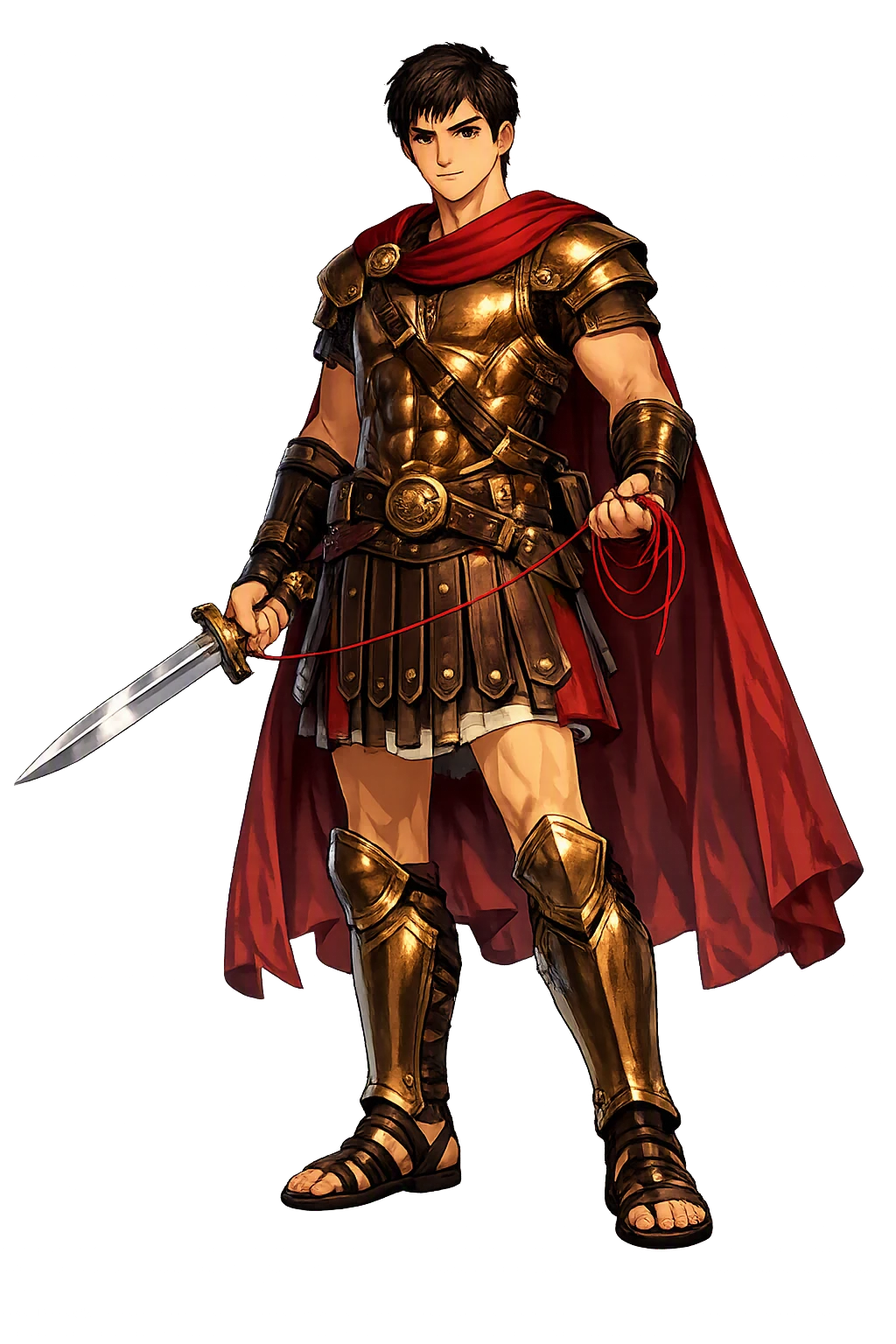
PuniCodex

Extended Lore

Θησεύς Thēseus

Etymology · Orthography · Cultural Legacy · Reception · Primary Sources

Tier 1 Thēseus.com
Thēseus — Heroism, Athens, Labours
01

Quick Facts

Essential information about Thēseus, Heroism, Athens, Labours

Original ScriptΘησεύς
Unicode RestorationThēseus
Reconstructed Pronunciation/tʰɛː.ˈseu̯s/
PantheonGreek
DomainHeroism, Athens, Labours
MeaningThe Gatherer (from τίθημι)
ClassificationTier 1
Primary DomainThēseus.com
Sacred SymbolsThe Sword and Sandals, The Iron Club, Ariádnē's Thread, The Black Sail, The Ship of Theseus
02

Etymology & Word Family

From original script to Unicode restoration

Proto-indo-european *dʰeh₁- to put, to place
Original Script Θησεύς Thēseus — "The Gatherer (from τίθημι)"
Unicode Restoration Thēseus Restored stress, length, and script
Modern ASCII theseus Plain-ASCII fallback

Greek Θησεύς, popularly derived from τίθημι 'to set, to place'; the Athenian hero who slew the Minotaur and unified Attica.

03

Unicode Character Breakdown

Character-by-character philological analysis

CharacterUnicodeNameBlockPhonetic Role
TU+0054Latin Capital Letter TBasic LatinTau
hU+0068Latin Small Letter HBasic LatinTheta
ēU+0113Latin Small Letter E with MacronLatin Extended-AEta: long epsilon
sU+0073Latin Small Letter SBasic LatinSigma
eU+0065Latin Small Letter EBasic LatinShort epsilon
uU+0075Latin Small Letter UBasic LatinUpsilon
sU+0073Latin Small Letter SBasic LatinSigma

The Tier 1 classification reflects how much of the original phonology this restoration preserves — stress and vowel length for Greek names, distinctive letters and diacritics for every other tradition.

04

Cultural Significance

From ancient cult to modern memory

Thēseus in Later Traditions

Rome claimed Thēseus twice. Plutarch paired him with Romulus, and the comparison flattered Athens: unlike the fratricidal founder of Rome, Theseus spared his rivals and voluntarily stepped down from power. Long before Plutarch, Athenian ideology had already made him the first constitutional gentleman — Euripides' Suppliants and Isocrates' Helen (23–37) stage a king who rules by persuasion and buries the war-dead at his city's cost — a rehearsal, the orators implied, for Athens's own claims. The Renaissance knew him as the Duke of Athens in Shakespeare's A Midsummer Night's Dream. Modern reception split him deliberately: Mary Renault's The King Must Die (1958) made him the Bronze Age embodiment of ephebic initiation, while Borges, in 'The House of Asterion,' rewrote the labyrinth from the monster's side. And the 'ship of Theseus' — the galley kept in the harbor and rebuilt plank by plank — passed from Plutarch (Theseus 23) into the identity paradox that now bears his name in every philosophy seminar.

Modern Legacy

His cult was civic fact, not legend: the Theseia and the Synoikia in the festival calendar, and the Theseion in the agora — the leading candidate is the so-called 'Theseion' (Hephaisteion) on Kolonos Agoraios — where Kimon's recovery of his bones from Skyros (476/5 BCE) gave Athens a royal tomb inside the democracy (Plutarch, Kimon 8; Pausanias 1.17.2–6 describes the paintings of his Amazonomachy, katabasis, and Centauromachy that hung there). Suppliants' rights, in Euripides' play, are his legislation. The labyrinth, the black sail, and the ship that was never the same ship remain the West's working metaphors — for bewilderment, for a grief built on misread signals, for the puzzle of personal identity. Restoring Thēseus with its macron — and ideally the acute of the variant Thēseús — restores the length and pitch that Attic ears heard in the name of the man who gathered a nation.

In the Earth

The Theseion in the Athenian agora held Kimon-recovered bones after 476/5 BCE, with wall-paintings of the Amazonomachy, the underworld rescue, and the Centauromachy (Pausanias 1.17.2–6; Plutarch, Kimon 8; Theseus 36). Plutarch also records that his shield, dedicated to the god, was preserved at Delphi (Theseus 36). Attic black-figure and red-figure vases from the sixth century BCE onward narrate the brigand cycle, the Cretan expedition, and the Amazonomachy — the 'ephebic' Theseus is one of the most popular heroic subjects in Athenian vase-painting, a visual counterpart to the initiationist reading. On Crete nothing of Thēseus himself exists; but the labyrinth-palace of Knossos, with its storerooms and corridors, underlies the entire myth — the historical seed inside the story.

05

The Meditation

What Thēseus means — beyond the dictionary

What does it mean that Athens chose, as its patron hero, a man whose greatest act was giving up power? Heracles purified; Achilles raged; Odysseus survived; Thēseus convened. His myth is the political one: the villages of Attica became a city because one strongman persuaded them that a shared fire was worth more than a dozen local ones — and then declined to be king of it. Thucydides, the least sentimental of historians, preserves this as fact (2.15). The myth also keeps the receipt: the Helen abduction and the katabasis show what becomes of a hero who treats the world as a road of monsters — he ends in the Chair of Lethe, and only a greater hero's hand pulls him out. Athens buried him in the middle of the city so that every citizen voting nearby would remember both halves: the road cleared, and the power surrendered. He remains the rare hero whose monument is a form of government.

06

Screen & Culture

Where Thēseus echoes through film, television, and games — and how

07

Frequently Asked Questions

Common questions about Thēseus, Heroism, Athens, Labours, and Unicode restoration

01How do you pronounce Thēseus?

In reconstructed pronunciation, Thēseus is /tʰɛː.ˈseu̯s/ — approximately 'tay-SEWS' — aspirate the initial 'th' as you release it, hold the first vowel long, and glide the 'ew' into a single syllable. The pitch peaks on the second syllable, matching the Greek.

02What does Thēseus mean?

Thēseus means The Gatherer (from τίθημι) in the greek tradition.

03What are the symbols of Thēseus?

Thēseus is associated with The Sword and Sandals (Aegeus hid sword and sandals under a great rock at Troezen; lifting them at sixteen, Thēseus claimed his father's inheritance (Plutarch, Theseus 3–6).), The Iron Club (Taken from Periphḗtēs and carried to Athens: Thēseus chose Heracles' weapon deliberately, styling himself the god's peer (Plutarch, Theseus 7).), Ariádnē's Thread (The Cretan princess's gift that led him out of the labyrinth; he carried its secret home, and it became the emblem of method.), The Black Sail (His forgotten signal: the dark sail that told Aegeus his son was dead — the grief that named the Aegean Sea (Plutarch, Theseus 22).), The Ship of Theseus (His galley kept in Athens' harbor and rebuilt plank by plank as the timbers rotted — antiquity's most durable puzzle about identity (Plutarch, Theseus 23).).

04Why are there different spellings of Thēseus?

Each form is a historically attested restoration rather than a mistake: Thēseús is the ideal form (Acute on the stressed short vowel, matching Greek Θησεύς; preserves stress where the canonical macron-only form records length only.). PUNICODEX registers the full set so the tradition is preserved under every defensible spelling.

05Why restore Thēseus in Unicode?

Plain ASCII theseus strips the stress, length, and script that make the name specific. Unicode restoration returns the name to its original written dignity.

06What is the most important myth about Thēseus?

“Clearing the Road to Athens” — Thēseus's biography is the most complete 'life' of any Greek hero: the ephebic labours on the road, the Cretan expedition, the unification of Attica, the Helen abduction, the descent to Hades, and a squalid death on Skyros. Plutarch wrote his Life pairing him with Romulus; Athenian democracy wrote him first. The full telling lives on the lore page.

08

Scholarly Sources

The philological foundations of this restoration

Every claim on this page is grounded in established scholarship. The orthographic restorations follow disciplinary convention. The etymological chain follows the best available reference works. This is not invention — it is resurrection through scholarship.

Lexicography & Philology

  • Liddell, H. G., Scott, R., & Jones, H. S. A Greek-English Lexicon. Oxford: Clarendon Press, 9th ed. 1996.
  • Pape, W., & Benseler, G. E. Wörterbuch der griechischen Eigennamen. Braunschweig: Vieweg, 1884.
  • Beekes, R. S. P. Etymological Dictionary of Greek. Leiden: Brill, 2010.

Primary Texts

  • Plutarch, Life of Theseus
  • Apollodorus, Bibliotheca Epitome 1.1–24
  • Euripides, Suppliants
  • Pausanias 1.17.2–6; 2.1.3–4

Archaeology & Art History

  • Material evidence — iconography, inscriptions, and temple archaeology — for Thēseus and related cults.

Religious Studies

  • Thucydides 2.15
  • Catullus 64
  • Isocrates, Helen 23–37
Return

The Surface Awaits

You have traced the name from its earliest attestation to its Unicode restoration. Now return to the myth. The story is where the name lives.

Back to Lore
Thēseus mascot