PuniCodex

Extended Lore

Θάλεια Tháleia

Etymology · Orthography · Cult · Iconography · Reception · Sources

Tier 1 Tháleia.com
Tháleia — Comedy, Idyll
01

Quick Facts

Essential information about Tháleia, Comedy, Idyll

Original ScriptΘάλεια
Unicode RestorationTháleia
Reconstructed Pronunciation/ˈtʰa.leː.a/
PantheonGreek
DomainComedy, Idyll
MeaningFlourishing, blooming
ClassificationTier 1
Primary DomainTháleia.com
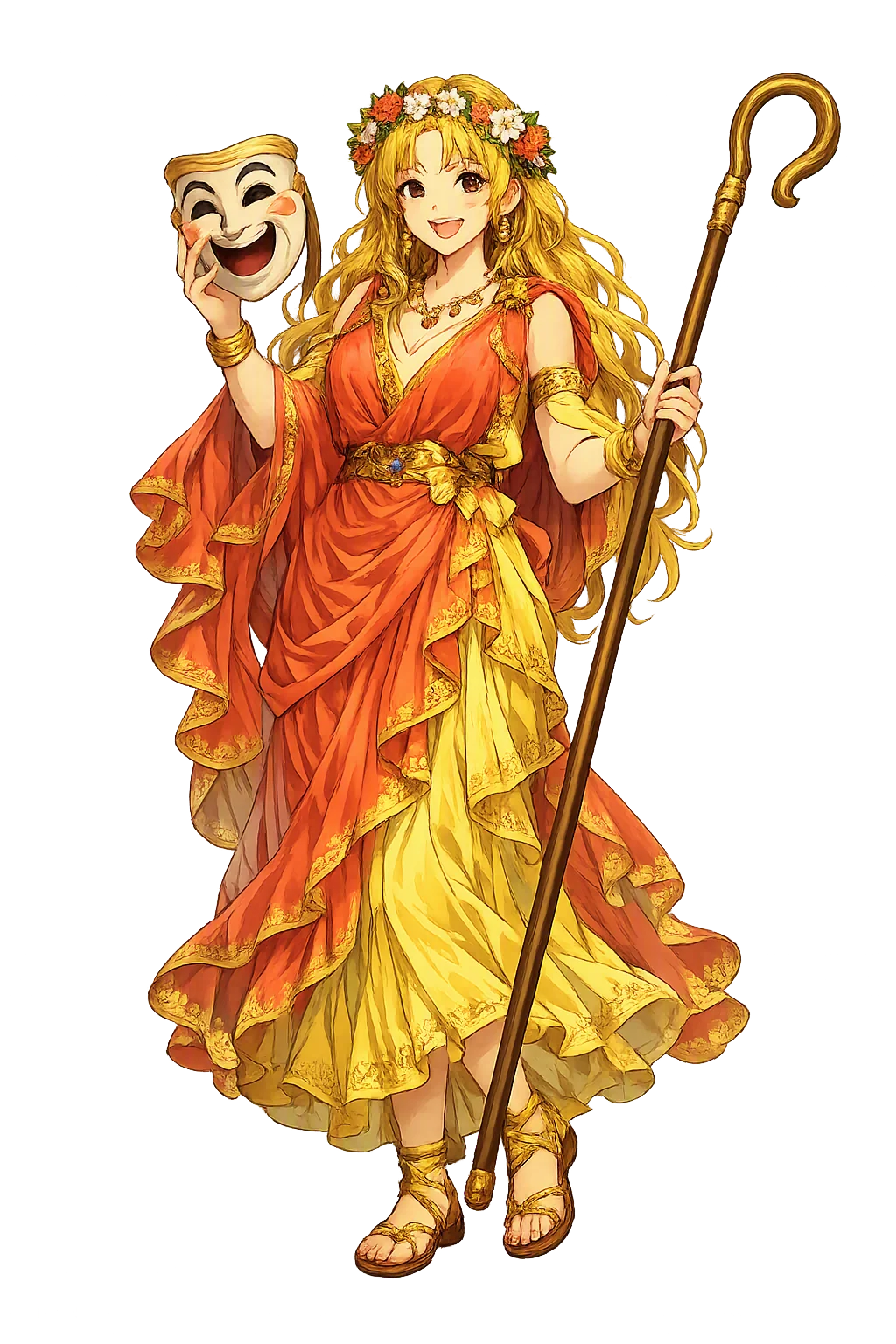
Sacred SymbolsComic mask, Shepherd's staff (pedum), Ivy wreath, Comic slipper (soccus), Frame drum
02

Etymology & Word Family

From original script to Unicode restoration

Original Script Θάλεια Tháleia — "Flourishing, blooming"
Unicode Restoration Tháleia Restored stress, length, and script
Modern ASCII thaleia Plain-ASCII fallback

The name Tháleia carries the orthographic signature of the greek tradition: Θάλεια. Unicode restoration recovers what ASCII flattens.

03

Unicode Character Breakdown

Character-by-character philological analysis

CharacterUnicodeNameBlockPhonetic Role
TU+0054Latin Capital Letter TBasic LatinT uppercase
hU+0068Latin Small Letter HBasic Latinh same
áU+00E1Latin Small Letter A with AcuteLatin-1 SupplementAcute on a
lU+006CLatin Small Letter LBasic Latinl same
eU+0065Latin Small Letter EBasic Latine same
iU+0069Latin Small Letter IBasic Latini same
aU+0061Latin Small Letter ABasic Latina same

The Tier 1 classification reflects how much of the original phonology this restoration preserves — stress and vowel length for Greek names, distinctive letters and diacritics for every other tradition.

04

Cult & Worship

How the sacred was kept — rites, sanctuaries, remains

The Cult

Tháleia shared the collective cult of the Muses in the Valley of the Muses below Mount Helicon, near Thespiai. Pausanias describes the sanctuary's grove, statues, and the Mouseia festival games that drew competitors in music and athletics. As the Muse of comedy and bucolic poetry, she had no priesthood of her own, but she received sacrifice and song as one of the nine. The nearby spring Hippokrene, struck from the rock by Pegasos, was part of the same sacred landscape. Modern commemoration is institutional and theatrical rather than devotional: comedy festivals, drama schools, and pastoral poetry readings invoke her name as a patron rather than as a living object of worship.

In the Earth

The great cult center of the Muses stood in the Valley of the Muses below Mount Helicon, near Thespiai, with its grove, its statues, and the Mouseia festival games; Pausanias (9.29–30) describes the sanctuary and the nearby spring Hippocrene at length. Tháleia herself survives visually on Roman-era Muses sarcophagi and mosaics, where she sits with the comic mask and shepherd's staff that became her invariable attributes. Comic masks further appear throughout theater-related dedications and Pompeian wall painting, the material trace of the genre she was believed to rule.

05

Iconography

How Tháleia was imaged across the ages

The Image

Tháleia's canonical attributes are the comic mask and the shepherd's staff, emblems of comedy and pastoral poetry, often with an ivy wreath crowning her hair. Roman Muse sarcophagi and floor mosaics present her seated with these signs, and the nine-Muse scheme remained a favourite decorative programme in villas and baths across the empire. Renaissance and Baroque ceiling cycles — notably in theatres, academies, and libraries — repeated the attributes, sometimes adding a tambourine or a garland of flowers. In modern graphic design for comedy clubs, theatre festivals, and literary societies, a laughing mask or crook still signals her ancient province.

06

Reception & Transformation

The name after its own age — transmission, translation, survival

Afterlives

The name Tháleia, flourishing, was shared by one of the three Graces and one of the nine Muses, and later Greek and Roman writers often blurred the two. The Grace Thalia presided over banquets and abundance, while the Muse Thalia guarded comedy; both associations kept the name alive through the medieval encyclopedic tradition and the Renaissance revival of the nine Muses. In the seventeenth and eighteenth centuries she became a stock allegory of comedy in theatrical frontispieces and opera prologues. In modern European languages Thalia became a favourite name for theatres, literary societies, and publishing houses, notably the German booksellers Thalia, while pastoral poetry and comedy festivals continue to claim her as a mascot. Her afterlife thus links communal festivity, the theatre, and the idea of cultural blooming.

Identifications Across Traditions

Rome adopted the nine Musae almost without translation, and Thalia kept her Greek name; it was in late antique and Renaissance iconography that she was fixed once and for all as comedy's patron, mask in hand, one of the paired faces of the theater. Her namesake the Charis lived a parallel afterlife as one of the three Graces of Western art — Aglaia, Euphrosyne, and Thalia, the dancers of Botticelli's Primavera. Through her collective she passes into the very words 'music' and 'museum,' both children of the Greek Mousa.

Modern Legacy

No common English noun descends from Tháleia's name alone — her legacy travels under other flags. She presides in spirit over Theocritus's Idylls, the bucolic poems that gave English the word 'idyll' for every scene of pastoral peace. Theaters bear her name — Hamburg's Thalia Theater most famously — and the paired masks of comedy and tragedy that still sign for the stage are, by long convention, hers and Melpoménē's. As a given name, Thalia has never gone out of use; the Muse of laughter is one of the few Greek deities people still name their daughters after.

07

The Meditation

What Tháleia means — beyond the dictionary

Honesty requires a caveat: Hesiod assigns no spheres to the Muses. The tidy division — Tháleia for comedy, Melpoménē for tragedy, Kalliṓpē for epic — is a Hellenistic and Roman codification, unknown to the archaic sources, which treat the nine as one undivided choir. Yet the later assignment is not arbitrary decoration. That comedy receives a Muse at all is the telling fact: the Greeks did not rank laughter beneath song but placed both in the care of Memory's daughters, performed together at the festivals of Dionysos.

Her name carries the argument further. Θάλλω is what the green world does in spring — and in the plural, θαλίαι is what the feast does in winter. One root holds vegetation and celebration together, as if the Greeks suspected that festivity is simply abundance made audible. A Muse named Blooming says that comedy is not escape from the serious world but its renewal: the year, and the city, flowering again.

08

Frequently Asked Questions

Common questions about Tháleia, Comedy, Idyll, and Unicode restoration

01How do you pronounce Tháleia?

In reconstructed pronunciation, Tháleia is /ˈtʰa.leː.a/ — approximately 'TAH-lay-ah' — begin with a breathy t as in 'top', lean on the first syllable, and let the 'ei' glide long; the English 'th' of Thalia has no place in the Greek.

02What does Tháleia mean?

Tháleia means Flourishing, blooming in the greek tradition.

03What are the symbols of Tháleia?

Tháleia is associated with Comic mask (Her defining attribute in ancient iconography — laughter given a face), Shepherd's staff (pedum) (The bucolic world of idyllic poetry: flocks, shade, and song), Ivy wreath (The plant of Dionysos, god of the theater where comedy was performed), Comic slipper (soccus) (The low shoe of comic actors, set against tragedy's high cothurnus), Frame drum (The tambourine of the Corybantes, the ecstatic dancers said to be her sons).

04Why restore Tháleia in Unicode?

Plain ASCII thaleia strips the stress, length, and script that make the name specific. Unicode restoration returns the name to its original written dignity.

05What is the most important myth about Tháleia?

“Nine Nights, Nine Daughters” — the Theogony story that anchors the mythology of Tháleia, told in full on the lore page.

09

Scholarly Sources

The philological foundations of this restoration

Every claim on this page is grounded in established scholarship. The orthographic restorations follow disciplinary convention. The etymological chain follows the best available reference works. This is not invention — it is resurrection through scholarship.

◈

Lexicography & Philology

  • Liddell, H. G., Scott, R., & Jones, H. S. A Greek-English Lexicon. Oxford: Clarendon Press, 9th ed. 1996.
◎

Primary Texts

  • Hesiod
  • Hesiod, Theogony 53–62, 76–79, 907–911
  • Homer, Iliad 2.594–600
  • Apollodorus, Bibliotheca 1.3.4
  • Pausanias 9.35.1–7
◉

Archaeology & Art History

  • Material evidence — iconography, inscriptions, and temple archaeology — for Tháleia and related cults.
✦

Religious Studies

  • Comparative studies of greek religion and the place of Tháleia within it.
Return

The Surface Awaits

You have traced the name from its earliest attestation to its Unicode restoration. Now return to the myth. The story is where the name lives.

Back to Lore
Tháleia mascot