PuniCodex

Extended Lore

ᛋᚢᛏᛏᚢᚾᚴᚱ Suttungr

Etymology · Phonology · Orthography · Cultural Legacy · Primary Sources

Tier 2 Suttungr
Suttungr — Giant, Guardian of Mead
01

Quick Facts

Essential information about Suttungr, Giant, Guardian of Mead

Original Scriptᛋᚢᛏᛏᚢᚾᚴᚱ
Unicode RestorationSuttungr
Reconstructed Pronunciation/ˈsut.tuŋɡr/
PantheonNorse
DomainGiant, Guardian of Mead
MeaningHeavy with foundation
ClassificationTier 2
Primary DomainSuttungr
Sacred SymbolsThe vats Óðrerir, Boðn, and Són, Hnitbjörg, The auger Rati, The eagle form, The skerry at flood
02

Etymology & Word Family

From original script to Unicode restoration

Original Script ᛋᚢᛏᛏᚢᚾᚴᚱ Suttungr — "Heavy with foundation"
Unicode Restoration Suttungr Restored stress, length, and script
Modern ASCII suttungr Plain-ASCII fallback

Suttungr is Tier 2 by the mechanical rule: the normalized Old Norse form is already plain ASCII — no diacritic, no distinctive letter for the ASCII alphabet to lose. The figure's centrality to the mead myth vastly outruns his name's orthography; only the capital distinguishes the restored form from the input.

03

Unicode Character Breakdown

Character-by-character philological analysis

CharacterUnicodeNameBlockPhonetic Role
SU+0053Latin Capital Letter SBasic LatinSame
uU+0075Latin Small Letter UBasic LatinSame
tU+0074Latin Small Letter TBasic LatinSame
uU+0075Latin Small Letter UBasic LatinSame
nU+006ELatin Small Letter NBasic LatinSame
gU+0067Latin Small Letter GBasic LatinSame
rU+0072Latin Small Letter RBasic LatinSame

The Tier 2 classification reflects how much of the original phonology this restoration preserves — stress and vowel length for Greek names, distinctive letters and diacritics for every other tradition.

04

Cultural Significance

From ancient cult to modern Unicode

Ancient Domain

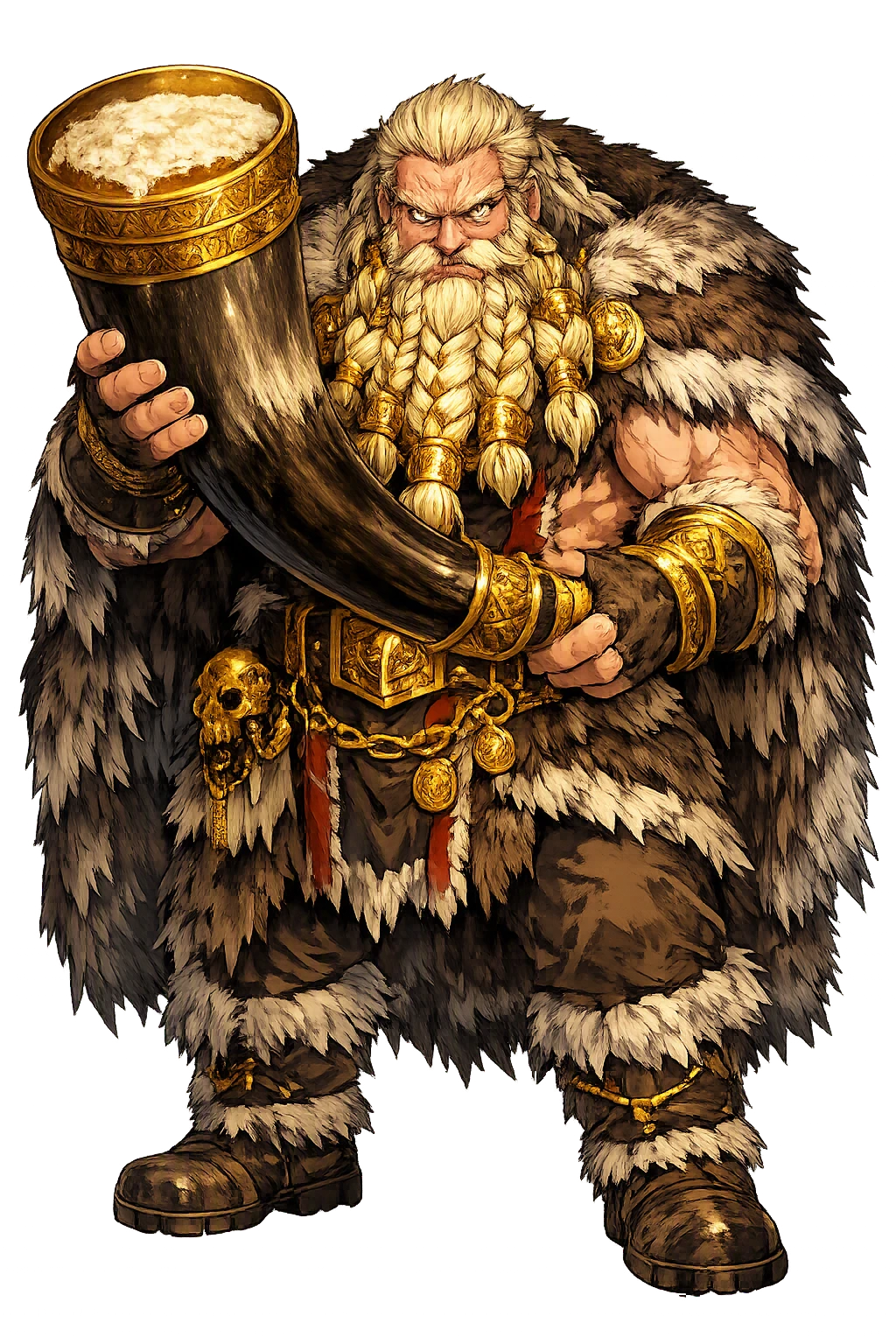
Suttungr, son of Gillingr and brother of Baugi, is the giant who came to own the mead of poetry — the blood of wise Kvasir, brewed by the dwarfs Fjalar and Galar and yielded up as ransom for their lives. He stored it in the mountain Hnitbjörg, in the three vats Óðrerir, Boðn, and Són, and set his own daughter Gunnlöð to guard it. His whole mythology is the story of that hoard and its loss: Óðinn came disguised as the wanderer Bölverkr, drilled through the rock, lay three nights with Gunnlöð, drank the vats dry, and flew home as an eagle with Suttungr's wings one beat behind him. From that flight, every poet drinks.

Suttungr in Later Traditions

Suttungr's closest kin are inside the corpus itself. The mead myth belongs to the great northern pattern of the coveted treasure prised from giant-keepers: Þórr winning the mile-wide brewing cauldron from Hymir so that Ægir can brew for the gods is the same plot in beer rather than poetry, and Lindow reads the two tales as sibling statements about how culture's goods are obtained — never made at home, always taken across the boundary. Cross-culturally, the comparativists' dossier is older and larger: Dumézil and the Indo-European school long paired Óðinn's mead-theft with the Indic myths of soma won by the eagle — the bird that carries the intoxicating draught of inspiration down to the gods — and the parallel is genuinely striking, a divine bird, a guarded liquor, a theft that founds an art. Current handbooks keep the comparison but drop the certainty: Simek and Orchard treat Suttungr as a figure wholly of the mead complex, with no cult, no place-name, and no etymology solid enough to build on. What can be said cleanly is that no other northern giant stands so exactly at the hinge of loss and gift — the one who held poetry so that a god could steal it, and whose name every kenning for verse goes on paying.

Modern Legacy

Suttungr's afterlife is the afterlife of the mead itself: every retelling of Norse poetry's origin, from the Kearys' Victorian 'Heroes of Asgard' onward, replays the auger-hole, the golden seat, and the two eagles over the wall of Ásgarðr. The romantics loved Gunnlöð and made Suttungr a brooding proprietor; the skaldic scholars made him something rarer, a mnemonic fixed point — because 'Suttungr's mead' stayed a living kenning, his name travelled inside every stanza that called verse by its owner's title. In modern Heathen and Ásatrú practice he is remembered, with some sympathy, at the edge of sumbel and skaldic rites as the giant from whom inspiration was taken, and the 'rhymester's share' — the mead spilt backwards in the chase — survives as the tradition's own dry name for bad verse. As a personal name he never entered the living Scandinavian stock; his immortality is entirely literary, and it is complete.

Unicode Restoration as Cultural Act

Restoring Suttungr in a domain name is more than orthographic accuracy. It is a statement that the internet should recognize the full range of human writing — not only the ASCII keyboard.

05

Frequently Asked Questions

Common questions about Suttungr, Giant, Guardian of Mead, and Unicode restoration

01How do you pronounce Suttungr?

In reconstructed pronunciation, Suttungr is /ˈsut.tuŋɡr/ — approximately 'SOOT-toongr' — two beats, the first stressed, the double t held a fraction long in the middle, and the final -r trilled as a syllable of its own, as in Icelandic Suttungur..

02What does Suttungr mean?

Suttungr means Heavy with foundation in the norse tradition.

03What are the symbols of Suttungr?

Suttungr is associated with The vats Óðrerir, Boðn, and Són (The three vessels of the poetry-mead — 'mind-stirrer', 'offering', and 'atonement' — emptied in three drinks), Hnitbjörg (The mountain vault of the mead — treasure sealed in stone, poetry kept from the world), The auger Rati (The boring tool that made the snake-road into the rock — the slender breach through which all poetry escaped), The eagle form (Óðinn's flight with the mead, pursued by Suttungr in eagle shape — the chase every kenning remembers), The skerry at flood (The tide-washed rock where Suttungr stranded the dwarf-murderers until they paid him the mead — the ransom that made him poetry's gaoler).

04Why restore Suttungr in Unicode?

Plain ASCII suttungr strips the stress, length, and script that make the name specific. Unicode restoration returns the name to its original written dignity.

05What is the most important myth about Suttungr?

When the Æsir and the Vanir made peace, they sealed the truce by spitting into a vat, and from the spittle they fashioned a man, Kvasir, wisest of all beings — no question was asked him he could not answer. He travelled the world teaching wisdom, until the dwarfs Fjalar and Galar killed him in private, drained his blood into two vats and a kettle named Óðrerir, Boðn, and Són, and mixed it with honey: that is the mead of poetry, of which whoever drinks becomes a skald or a sage.The dwarfs' violence did not end there. They invited the giant Gillingr to row with them and capsized the boat — Gillingr, who could not swim, drowned — and when his wife wept at the news, Galar dropped a millstone on her head as she passed under the lintel. Then Suttungr, Gillingr's son, came for the reckoning. He seized the dwarfs, carried them out to sea, and stranded them on a skerry that the tide would cover. They begged for their lives and offered the precious mead as ransom, and Suttungr accepted: blood-guilt paid in blood-brew. He carried the mead home, stored it in the mountain called Hnitbjörg, and set his daughter Gunnlöð to watch over it. This is why poetry is called Kvasir's blood, the dwarfs' drink — and Suttungr's mead.

06

Scholarly Sources

The philological foundations of this restoration

Every claim on this page is grounded in established scholarship. The orthographic restorations follow disciplinary convention. The etymological chain follows the best available reference works. This is not invention — it is resurrection through scholarship.

Lexicography & Philology

  • Cleasby-Vigfusson
  • Zoëga

Primary Texts

  • Snorri Sturluson, Prose Edda: Skáldskaparmál 3-6 (Kvasir's blood and the mead's brewing; Gillingr's death and Suttungr's ransom of the dwarfs; Hnitbjörg and Gunnlöð; Bölverkr, Baugi, and the auger Rati; the eagle chase and the rhymester's share), with the þulur (jǫtna heiti) and the kennings for poetry
  • Poetic Edda: Hávamál 104-110 (Óðinn's own account: Suttungr's hall, Gunnlöð's golden seat, Rati's mouth, the ring-oath, and Gunnlöð weeping) and 13-14 (the heron of forgetfulness; 'drunk I was at wise Fjalar's')

Archaeology & Art History

  • Material evidence — iconography, inscriptions, and temple archaeology — for Suttungr and related cults.
  • Suttungr is a wholly textual giant: no runestone invokes him, no votive deposit names him, and no Viking-Age image can be securely identified with his story. His attestation hangs on the manuscript witnesses of the mead myth — the Codex Regius of the Poetic Edda for Hávamál's account, and the Codex Regius of Snorri's Edda with its fellow codices for Skáldskaparmál's continuous narrative. The story's pictorial life begins only in the early modern North: the eighteenth-century Icelandic paper manuscripts of the Edda (SÁM 66 and the Melsteð Edda) illustrate the myth with woodcut-style scenes — Óðinn as an eagle above the Æsir's waiting vats, Suttungr's eagle behind him — proof of the tale's hold on post-medieval readers, not of older iconography. Claims that figures on the Gotland picture stones depict the mead of poetry remain interpretive and are not accepted as secure identifications; the stone record is silent, and the word-hoard of the skalds — the kennings that kept 'Suttungr's mead' current for centuries — is the only true monument.

Religious Studies

  • Cleasby–Vigfusson, An Icelandic-English Dictionary, s.v. suttungr; Zoëga, A Concise Dictionary of Old Icelandic, s.v. suttungr (name of a giant)
  • de Vries, Altnordisches etymologisches Wörterbuch, s.v. Suttungr (the unsettled etymology)
  • Simek, Dictionary of Northern Mythology; Orchard, Dictionary of Norse Myth and Legend; Lindow, Norse Mythology: A Guide — s.vv. Suttung, mead, Kvasir (attestation and the mead complex)
Return

The Surface Awaits

You have traced the name from its earliest attestation to its Unicode restoration. Now return to the myth. The story is where the name lives.

Back to Lore
Suttungr mascot