
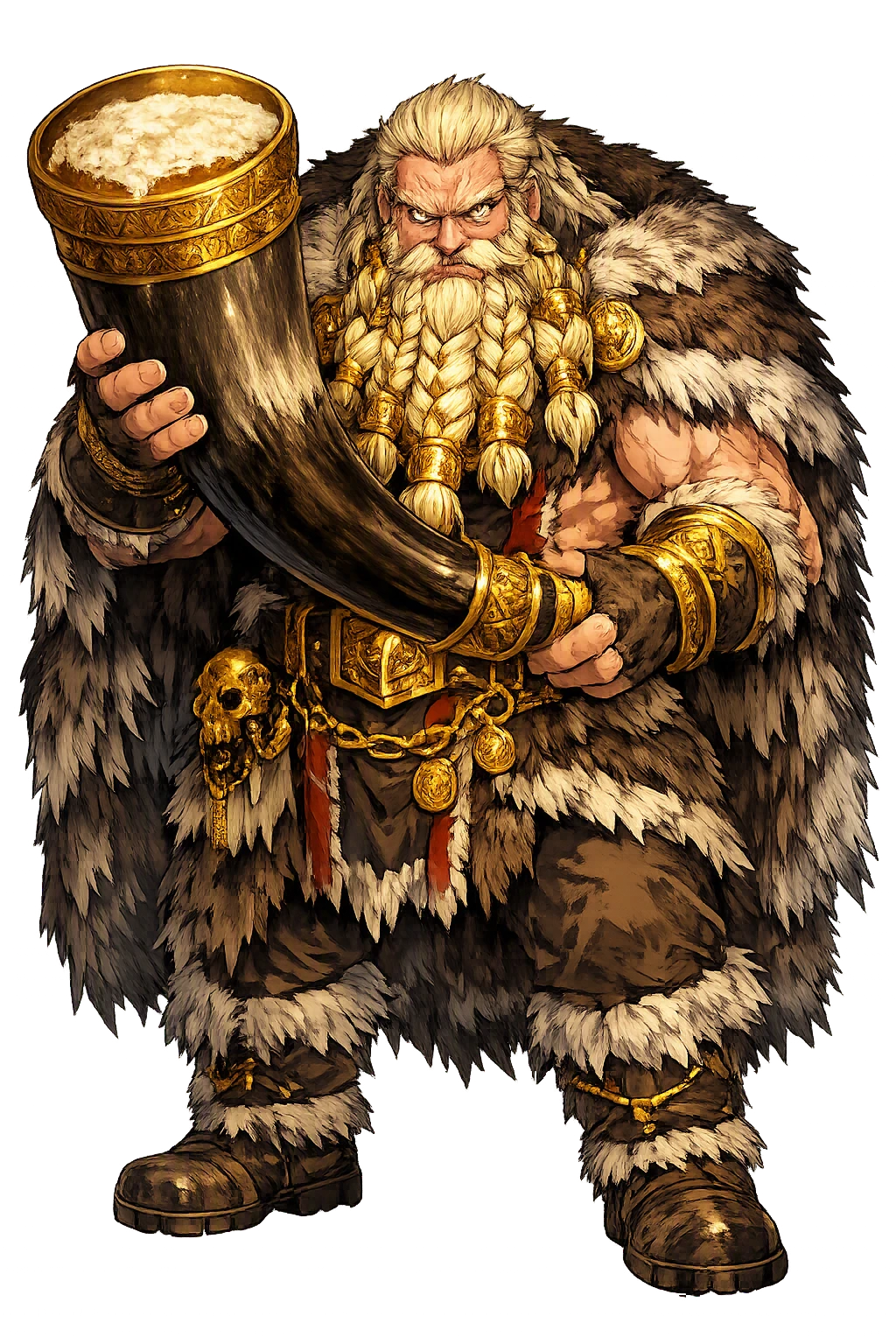
The Cult
Suttungr was never worshipped, and the medieval North would have found the idea strange: he is the giant the myth indicts, the lawful owner from whom poetry is stolen. No sanctuary, festival, or votary ever bore his name; no runestone invokes him, no votive deposit or place-name preserves his memory, and the þulur list him among the giants' names as a catalogue entry, not a cult figure. His standing in the myth is itself anti-cultic — the handbooks note the strangeness of a giant who avenges his father lawfully, bargains in good faith, refuses a bargain he has every right to refuse, and loses everything to a god's perjury; the skalds named the mead after him precisely because he could be trusted to keep it. What later centuries practise is memory, not worship: modern Heathen sumbel-rites remember the mead's former owner at the edge of the toast — a literary piety with no ancient rite behind it.