
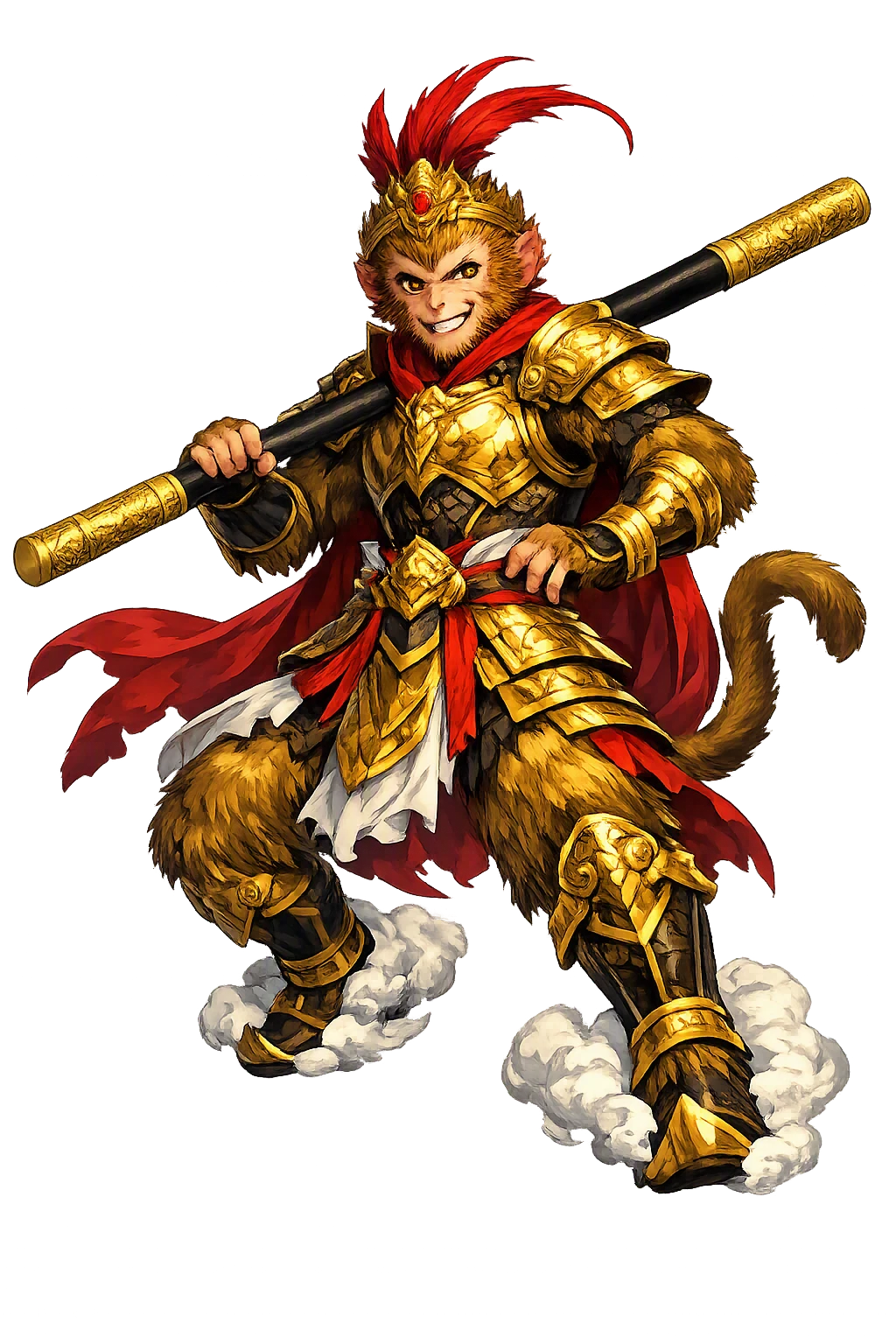
The Cult
The Great Sage was a god before he was a character — and he has never stopped being one. The cult of Qítiān Dàshèng, 'Great Sage Equal to Heaven,' in Fujian and Taiwan demonstrably predates the novel: a Song-dated stone shrine at Baoshan in Shunchang County, Fujian, dedicated to the Great Sage and his brother Tōngtiān Dàshèng, is among the earliest material witnesses, generations before 1592. Across Fujian, Taiwan, and the Chinese diaspora of Southeast Asia his temples are served by spirit-mediums (the jītóng tradition), whose trance performances dramatize the monkey's martial vigor, and he is invoked as an exorcistic protector and a fearsome witness to oaths. His birthday, the sixteenth of the second lunar month, is kept with opera and procession in Taiwanese and southern Fujianese practice. This is a living popular-religion cult, not an ancient state one — no court liturgy ever addressed him — and communities across the region have built the novel's own fictional sanctuaries in stone, finding the book's god worth actually worshipping.