PuniCodex

Extended Lore

Σπάρτη Spártē

Etymology · Orthography · Cultural Legacy · Reception · Primary Sources

Tier 1 Spártē.com
Spártē — Warrior City
01

Quick Facts

Essential information about Spártē, Warrior City

Original ScriptΣπάρτη
Unicode RestorationSpártē
Reconstructed Pronunciation/ˈspar.tɛː/
PantheonGreek Location
DomainWarrior City
MeaningSown land (from σπείρω)
ClassificationTier 1
Primary DomainSpártē.com
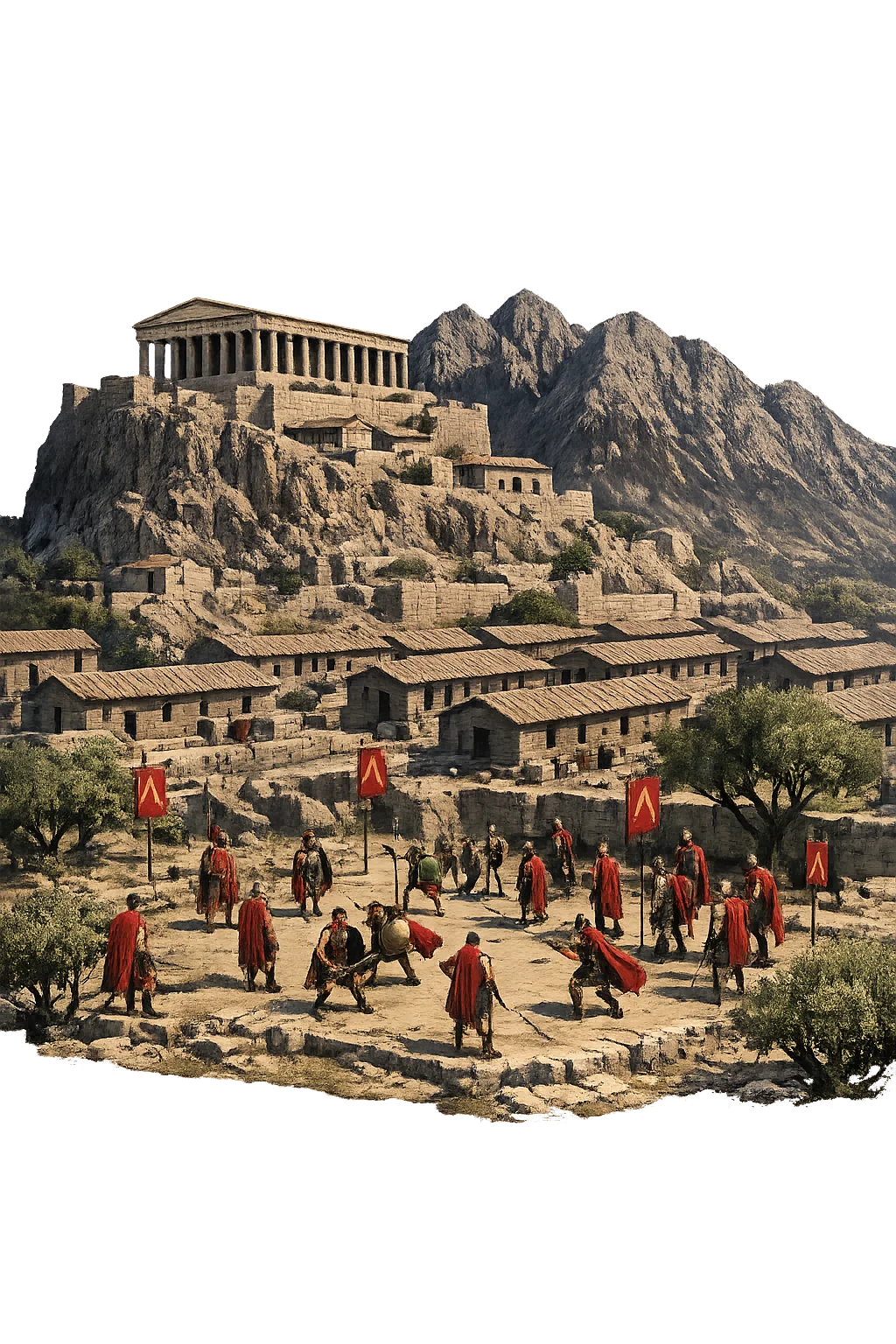
Sacred SymbolsLambda shield, Doric column, Helot's plough, Spear and red cloak, Eurotas river
02

Etymology & Word Family

From original script to Unicode restoration

Proto-indo-european *speh₁- to sow, to scatter
Original Script Σπάρτη Spártē — "Sown land (from σπείρω)"
Unicode Restoration Spártē Restored stress, length, and script
Modern ASCII sparte Plain-ASCII fallback

From σπείρω "to sow". The sown land.

03

Unicode Character Breakdown

Character-by-character philological analysis

CharacterUnicodeNameBlockPhonetic Role
SU+0053Latin Capital Letter SBasic LatinSigma
pU+0070Latin Small Letter PBasic LatinPi
áU+00E1Latin Small Letter A with AcuteLatin-1 SupplementAcute on alpha
rU+0072Latin Small Letter RBasic LatinRho
tU+0074Latin Small Letter TBasic LatinTau
ēU+0113Latin Small Letter E with MacronLatin Extended-AEta: long epsilon

The Tier 1 classification reflects how much of the original phonology this restoration preserves — stress and vowel length for Greek names, distinctive letters and diacritics for every other tradition.

04

Cultural Significance

From ancient cult to modern memory

Spártē in Later Traditions

Sparta's afterlife is a reception history rather than a theology. Republican Rome studied the Lycurgan constitution through Xenophon, Aristotle's lost treatise on the Lacedaemonians, and Polybius' account of the mixed constitution — and read Sparta as proof that a state could trade comfort for discipline and longevity. Plutarch's Life of Lycurgus then carried the idealized Sparta into every later century, from Rousseau, who praised the lawgiver's shaping of citizens, to the 19th-century gymnastics and boarding-school movements that borrowed the agoge's name. Modern scholarship, led by Cartledge and Hodkinson, has dismantled the mirage of a changeless Sparta — yet the mirage itself is one of antiquity's most influential exports, a whole political imagination built on a Greek city that may never have existed as its admirers believed.

Modern Legacy

Sparta survives in language itself: 'laconic' speech, the terseness the Lacedaemonians made a civic art, and the modern Greek town of Sparti on the ancient site. Thermopylae made the Spartan name a byword for disciplined collective sacrifice, echoed from Roman funerary inscriptions to modern military units. The agoge, the common mess, and the ephorate still anchor classroom discussions of ancient constitutions, and the scholarly debate over 'the Spartan mirage' is itself a legacy — evidence of how thoroughly this austere city colonized the political imagination of the West. Restoring Spártē with its long final eta returns the name to the vowel sound in which Greek speakers actually pronounced it.

In the Earth

The Spartan acropolis preserves the temple of Athena Chalkioikos ('of the Bronze House'), the city's principal sanctuary, above the theatre where the absurdly fragmentary remains of Lacedaemon still impress. At Therapne across the Eurotas, the Menelaion — the hero-shrine of Menelaus and Helen — has been excavated since 1900, with votive offerings from the seventh century BCE onward. The sanctuary of Artemis Orthia by the Eurotas yielded the famous lead votive figurines and the 'diamastigosis' whipping altar described by Xenophon and Pausanias; at Amyklai, the colossal throne of Apollo Amyklaios (Pausanias 3.18–19) anchored the Hyacinthia festival. Linear B tablets from the Mycenaean palace at Thebes and Pylos attest the Laconian place-name, and recent surveys have traced the Iron Age villages that synoecized into classical Sparta.

05

The Meditation

What Spártē means — beyond the dictionary

Sparta is the ancient city that became an argument. Every generation since Xenophon has used it to prove something — that law can shape a people, that equality of hardship creates equality of courage, that a state can choose discipline over comfort and win. The Spartans themselves encouraged the reading: they attributed everything to a single lawgiver and a single oracle, as if their whole society were one long act of obedience. Whether the reality matched the argument is a question archaeology keeps reopening: the inscriptions reveal a Sparta of wealthy families, contested offices, and art as fine as any in Greece. Yet the argument endures because it answers a need no evidence can settle — the wish that a community could be built on shared sacrifice rather than shared appetite. Spártē is less a place than a standing challenge.

06

Frequently Asked Questions

Common questions about Spártē, Warrior City, and Unicode restoration

01How do you pronounce Spártē?

In reconstructed pronunciation, Spártē is /ˈspar.tɛː/ — approximately 'SPAR-tay' — roll the 'r', stress the first syllable, and hold the final 'tay' long.

02What does Spártē mean?

Spártē means Sown land (from σπείρω) in the greek-location tradition.

03What are the symbols of Spártē?

Spártē is associated with Lambda shield (The Spartan shield blazon, the first letter of Lacedaemon), Doric column (The austere architectural order favoured in Laconia), Helot's plough (The agricultural labour that supported the Spartan warrior class), Spear and red cloak (The simple military kit of the Spartan citizen-soldier), Eurotas river (The river that defined the Spartan valley and its identity).

04Why restore Spártē in Unicode?

Plain ASCII sparte strips the stress, length, and script that make the name specific. Unicode restoration returns the name to its original written dignity.

05What is the most important myth about Spártē?

“Sparta and Lacedaemon” — Greek myth gives Sparta a human namesake. Sparta is the daughter of the river-god Eurotas and the wife of Lacedaemon, son of Zeus; through her, the city receives both its name and its mythic charter. Around her cluster the lawgiver Lycurgus, the divine authorization from Delphi, and the Spartan share in the greatest cycle of Greek heroic legend, the Trojan War. The full telling lives on the lore page.

07

Scholarly Sources

The philological foundations of this restoration

Every claim on this page is grounded in established scholarship. The orthographic restorations follow disciplinary convention. The etymological chain follows the best available reference works. This is not invention — it is resurrection through scholarship.

Lexicography & Philology

  • Pape, W., & Benseler, G. E. Wörterbuch der griechischen Eigennamen. Braunschweig: Vieweg, 1884.
  • Barrington

Primary Texts

  • Homer, Iliad 2.581–590 (Sparta in the Catalogue of Ships); Odyssey 4 (Menelaus' palace)
  • Pausanias 3.1–20 (the mythic history of Laconia); Description of Greece Book 3
  • Xenophon, Constitution of the Lacedaemonians; Plutarch, Life of Lycurgus
  • Tyrtaeus, Elegies (Spartan martial poems)

Archaeology & Art History

  • Material evidence — iconography, inscriptions, and temple archaeology — for Spártē and related cults.

Religious Studies

  • Herodotus 1.65–68 (Lycurgus and the oracle), 7.202–239 (Thermopylae)
  • Cartledge, Paul, Sparta and Lakonia: A Regional History 1300–362 BC (Routledge, 2002)
Return

The Surface Awaits

You have traced the name from its earliest attestation to its Unicode restoration. Now return to the myth. The story is where the name lives.

Back to Lore
Spártē mascot