PuniCodex

Extended Lore

ᛋᚴᚢᛚᛏ Skuld

Etymology · Phonology · Orthography · Cultural Legacy · Primary Sources

Tier 2 Skuld
Skuld — Valkyrie / Norn of Future
01

Quick Facts

Essential information about Skuld, Valkyrie / Norn of Future

Original Scriptᛋᚴᚢᛚᛏ
Unicode RestorationSkuld
Reconstructed Pronunciation/skuld/
PantheonNorse
DomainValkyrie / Norn of Future
MeaningDebt, future
ClassificationTier 2
Primary DomainSkuld
Sacred SymbolsUrðarbrunnr, The carved wood-slips, The shield, The white clay of the well, The laws and the lots
02

Etymology & Word Family

From original script to Unicode restoration

Original Script ᛋᚴᚢᛚᛏ Skuld — "Debt, future"
Unicode Restoration Skuld Restored stress, length, and script
Modern ASCII skuld Plain-ASCII fallback

Skuld is Tier 2 by the mechanical rule: the normalized Old Norse form is already plain ASCII — no diacritic, no distinctive letter for the ASCII alphabet to lose. The youngest norn's standing in the corpus vastly outruns her name's orthography; only the capital distinguishes the restored form from the input.

03

Unicode Character Breakdown

Character-by-character philological analysis

CharacterUnicodeNameBlockPhonetic Role
SU+0053Latin Capital Letter SBasic LatinSame, capitalized
kU+006BLatin Small Letter KBasic LatinSame
uU+0075Latin Small Letter UBasic LatinSame
lU+006CLatin Small Letter LBasic LatinSame
dU+0064Latin Small Letter DBasic LatinSame

The Tier 2 classification reflects how much of the original phonology this restoration preserves — stress and vowel length for Greek names, distinctive letters and diacritics for every other tradition.

04

Cultural Significance

From ancient cult to modern Unicode

Ancient Domain

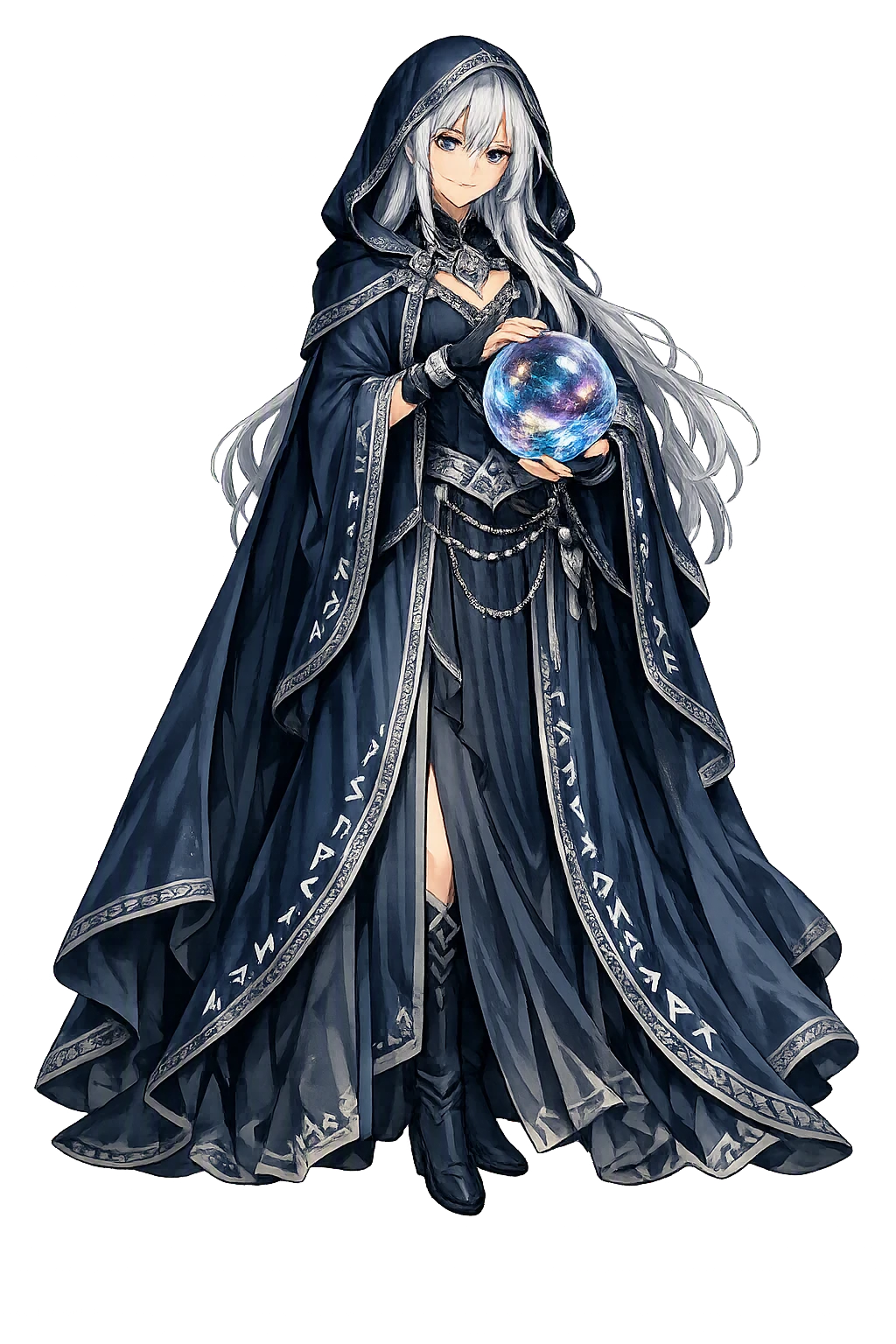
Skuld is the third of the three norns who dwell at the well of Urðr beneath the root of Yggdrasill, laying laws and choosing lives for the children of men — and she is the only figure in the Norse corpus counted twice. Völuspá names her among the three maidens beneath the tree, and names her again in the tally of valkyries riding to the gods' host, bearing a shield beside Skögul, Gunnr, Hildr, Göndul and Geirskögul. Snorri fuses the two offices in a single clause: with Gunnr and Rota always rides 'the youngest norn, who is called Skuld', to choose the slain and decide the battle. Her name is the noun for 'debt' — the future as what is still owed.

Skuld in Later Traditions

The comparison that shaped Skuld's modern reading is with the Roman Parcae and the Greek Moirai — three spinners or allotters of fate matched to past, present and future. The mapping was a favourite of nineteenth-century mythography, and it is only half right: the names do not divide time so neatly. Urðr is 'what has become', Verðandi 'what is becoming', but Skuld is not 'what will be' in the same tense-logic — she is 'what is owed', a category of obligation rather than of tense; de Vries and Simek both warn that the clean past-present-future scheme is likely a learned schematization laid over older material. Within the corpus her truest kin are her own sisters [[urdr|Urðr]] and [[verdandi|Verðandi]] and the valkyrie sisterhood she alone joins — [[brynhildr|Brynhildr]] among the named riders — and, at one remove, the English fate-word [[wyrd|wyrd]], cognate with Urðr, through which the whole northern doctrine of allotted debt and doom entered English speech.

Modern Legacy

Skuld's most pervasive legacy is grammatical: her name's root is the English modal shall — and its past, should — so that every English sentence about obligation or the future conjugates, unknowingly, the youngest norn's name; German Schuld keeps the same root in its sense of debt and guilt. In mythography the three norns became the fixed northern counterpart of the Parcae in every retelling of the Eddas, and Skuld's double office — fate at the well, shield in the field — made her the standing emblem of fate that acts rather than merely decrees. Modern Heathen and Ásatrú practice honours the norns at birth-rites and at the year's turning, with Skuld invoked as the portion not yet owed; her name also survives as a rare Scandinavian given name, carrying its ominous register intact.

Unicode Restoration as Cultural Act

Restoring Skuld in a domain name is more than orthographic accuracy. It is a statement that the internet should recognize the full range of human writing — not only the ASCII keyboard.

05

Frequently Asked Questions

Common questions about Skuld, Valkyrie / Norn of Future, and Unicode restoration

01How do you pronounce Skuld?

In reconstructed pronunciation, Skuld is /skuld/ — approximately 'SKULD' — one short beat: say English 'skull' and release a d at the end; the vowel is the short u of 'put', and the word sits exactly between 'skull' and 'should' spoken with a k..

02What does Skuld mean?

Skuld means Debt, future in the norse tradition.

03What are the symbols of Skuld?

Skuld is associated with Urðarbrunnr (The well beneath the tree where the three norns dwell — fate's spring at the world's root), The carved wood-slips (The lots the maidens cut as they lay laws and choose lives — destiny written before it is lived), The shield (Skuld's valkyrie gear in Völuspá — the norn who rides, allotment armed and mounted), The white clay of the well (The mud with which the norns coat the ash's bark so its limbs do not rot — fate also as the world's maintenance), The laws and the lots (What the three maidens lay and cast for the children of men — ordinance and chance, both in their hands).

04Why restore Skuld in Unicode?

Plain ASCII skuld strips the stress, length, and script that make the name specific. Unicode restoration returns the name to its original written dignity.

05What is the most important myth about Skuld?

The seeress surveys the world's frame: the ash Yggdrasill, tall, drenched with white loam, whence come the dews that fall in the valleys, ever green, standing over Urðarbrunnr. Thence come maidens, deep in wisdom, three from the lake that stands beneath the tree: one was called Urðr, the second Verðandi — they carved on slips of wood — Skuld the third. They laid laws, they chose lives for the children of men, the fates of men.The stanza is the foundation text of northern fate-doctrine, and it fixes Skuld's place in the triad without explaining it: the poem gives her no act, no speech, no attribute but her position — the third, the last named, the one whose name is a debt.

06

Scholarly Sources

The philological foundations of this restoration

Every claim on this page is grounded in established scholarship. The orthographic restorations follow disciplinary convention. The etymological chain follows the best available reference works. This is not invention — it is resurrection through scholarship.

Lexicography & Philology

  • Poetic Edda
  • Cleasby-Vigfusson

Primary Texts

  • Poetic Edda: Völuspá 19–20 (the ash, the well, and the three maidens — Urðr, Verðandi, Skuld — who lay laws and choose lives) and 30 (Skuld bearing a shield in the tally of valkyries), trans. Carolyne Larrington
  • Snorri Sturluson, Prose Edda: Gylfaginning 15–16 (Urðarbrunnr and the three norns; the white clay that preserves the tree) and 36 (Gunnr and Rota and the youngest norn, who is called Skuld, ride to choose the slain), trans. Anthony Faulkes; Skáldskaparmál þulur (norna heiti, valkyrja heiti)

Archaeology & Art History

  • Material evidence — iconography, inscriptions, and temple archaeology — for Skuld and related cults.
  • Skuld is a wholly textual figure: no runestone invokes her, no votive deposit names her, and no image can be securely identified with her — a silence she shares with her sisters, since the norns belong to the corpus's theological frame rather than to any named cult. Her attestation hangs on the manuscript witnesses of the fate-doctrine: the Codex Regius of the Poetic Edda for Völuspá 19–20 and 30, and the Codex Regius, Codex Wormianus and Codex Upsaliensis of Snorri's Edda for Gylfaginning 15–16 and 36 and the þulur lists preserved with Skáldskaparmál. The nearest material context is indirect: the valkyrie figures on Gotland picture-stones and on small Viking-Age brooches and pendants give the visual world her rider-form belongs to, though none names her. No runic carving of the theonym is known; the manuscript spelling of the Eddas remains the primary witness.

Religious Studies

  • Cleasby–Vigfusson, An Icelandic-English Dictionary, s.v. skuld ('debt, duty; a Norn'); Zoëga, A Concise Dictionary of Old Icelandic, s.v. skuld
  • de Vries, Altnordisches etymologisches Wörterbuch, s.v. skuld, skulu (the etymology from *skel- 'to owe', and the caveat on the past–present–future scheme)
  • Hrólfs saga kraka (Skuld, daughter of King Aðils — the legendary echo of the name at Fýrisvellir), trans. Jesse L. Byock
  • Simek, Dictionary of Northern Mythology; Orchard, Dictionary of Norse Myth and Legend; Lindow, Norse Mythology: A Guide — s.v. Skuld, norns, valkyries (the double office and its interpretation)
Return

The Surface Awaits

You have traced the name from its earliest attestation to its Unicode restoration. Now return to the myth. The story is where the name lives.

Back to Lore
Skuld mascot