PuniCodex

Extended Lore

ᛋᚴᚢᛚᛏ Skuld

Etymology · Orthography · Cult · Iconography · Reception · Sources

Tier 2 Skuld
Skuld — Valkyrie / Norn of Future
01

Quick Facts

Essential information about Skuld, Valkyrie / Norn of Future

Original Scriptᛋᚴᚢᛚᛏ
Unicode RestorationSkuld
Reconstructed Pronunciation/skuld/
PantheonNorse
DomainValkyrie / Norn of Future
MeaningDebt, future
ClassificationTier 2
Primary DomainSkuld
Sacred SymbolsUrðarbrunnr, The carved wood-slips, The shield, The white clay of the well, The laws and the lots
02

Etymology & Word Family

From original script to Unicode restoration

Original Script ᛋᚴᚢᛚᛏ Skuld — "Debt, future"
Unicode Restoration Skuld Canonical scholarly spelling — ASCII-identical
Modern ASCII skuld Plain-ASCII fallback

The name Skuld reaches the modern world through scholarly transliteration of the norse tradition. Because the conventional spelling uses only Latin letters, its Unicode and ASCII forms coincide — the tradition it carries is in the name itself, not in diacritics.

03

Unicode Character Breakdown

Character-by-character philological analysis

CharacterUnicodeNameBlockPhonetic Role
SU+0053Latin Capital Letter SBasic LatinSame, capitalized
kU+006BLatin Small Letter KBasic LatinSame
uU+0075Latin Small Letter UBasic LatinSame
lU+006CLatin Small Letter LBasic LatinSame
dU+0064Latin Small Letter DBasic LatinSame

The Tier 2 classification here reflects fidelity to the attested tradition, not recovered diacritics: every character of Skuld already survives in ASCII. What the restoration preserves is the canonical spelling itself — the form scholarship standardised.

04

Cult & Worship

How the sacred was kept — rites, sanctuaries, remains

The Cult

No cult of Skuld — or of her sisters — is attested anywhere in the Norse world. The three norns belong to the corpus's theology, not to its ritual: no sanctuary is named for them, no festival calendar admits them, no votive inscription invokes them, and no runestone carves their names. The wider horizon offers only indirect light. The dísir, the female powers of the North, demonstrably received cult — saga tradition attests a dísablót, a sacrifice to the dísir, and names the Dísarsalr at Uppsala — and place-name scholars have registered a small scatter of possible norn-names in Norway; but none of it fastens on Skuld herself, and the handbooks are properly cautious about building a cult of the youngest norn out of a kenning-cluster and a stanza. Her medieval reality was textual: she 'laid laws and chose lives' in verse, a different order of existence from worship. Modern Heathen birth-rites and year-turnings invoke the three sisters together — a sincere revival, not a survival.

In the Earth

Skuld is a wholly textual figure: no runestone invokes her, no votive deposit names her, and no image can be securely identified with her — a silence she shares with her sisters, since the norns belong to the corpus's theological frame rather than to any named cult. Her attestation hangs on the manuscript witnesses of the fate-doctrine: the Codex Regius of the Poetic Edda for Völuspá 19–20 and 30, and the Codex Regius, Codex Wormianus and Codex Upsaliensis of Snorri's Edda for Gylfaginning 15–16 and 36 and the þulur lists preserved with Skáldskaparmál. The nearest material context is indirect: the valkyrie figures on Gotland picture-stones and on small Viking-Age brooches and pendants give the visual world her rider-form belongs to, though none names her. No runic carving of the theonym is known; the manuscript spelling of the Eddas remains the primary witness.

05

Iconography

How Skuld was imaged across the ages

The Image

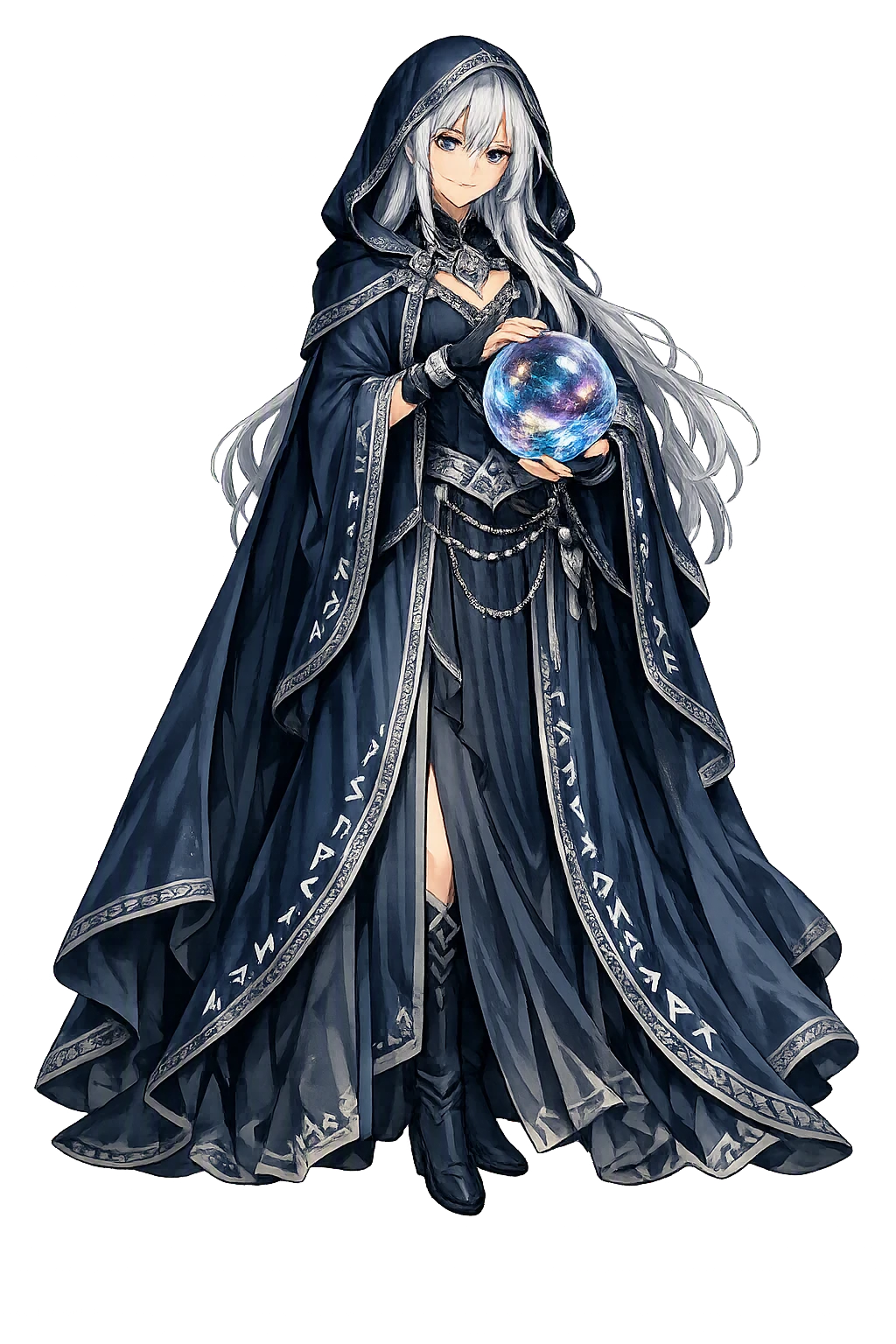
No image of Skuld survives, and the figure was barely imaged even in words. What the texts fix is an attribute-set of austere economy: the carved slip of wood on which the sisters cut the lots of men — 'they carved on slips of wood' is Völuspá's one action-verb for the triad — and, in her valkyrie aspect, the shield she alone bears among the named riders. Around these the medieval imagination supplied nothing visual: the Edda manuscripts do not illustrate the maidens at the well, and the Gotland picture stones, which do show the valkyrie's world of armed riders welcomed by women bearing drinking-horns before the mead-hall, name no norn and identify no Skuld. Later art has had to invent: the Romantic illustrators of the nineteenth century gave the three sisters the distaff and spindle of classical habit, borrowing the Parcae's wardrobe because the North had left none, and the carved slips survive, if at all, as an antiquarian footnote. Her truest image remains grammatical: a noun made personal, debt wearing a shield.

06

Reception & Transformation

The name after its own age — transmission, translation, survival

Afterlives

Skuld's journey begins in the greatest poem of the North and ends in the grammar of living languages. Völuspá's stanzas — the three maidens at the well, the shield in the valkyrie tally — survive in the Codex Regius, the vellum that surfaced in 1643 and was printed by Resen in 1665 with a Latin crib; through the seventeenth and eighteenth centuries the Sæmundar-Edda hypothesis credited a learned Icelander with the poem before nineteenth-century philology — Konráð Gíslason, N. M. Petersen, and the editors of the age — freed it for genuine criticism. The twentieth century gave her stanzas their modern commentary: Sigurður Nordal's edition of Völuspá (1922), the great tug-of-war over the poem's structure and age, and Ursula Dronke's philological commentary a generation later — with the norns' triad itself long debated, Eugen Mogk having once argued the three sisters were a learned construction modelled on the classical Fates. Meanwhile the name lived on in the North Germanic languages: Icelandic skuld still means a debt on the books, and the Scandinavian cognates keep the register of owing and guilt that her myth made cosmic.

Identifications Across Traditions

The comparison that shaped Skuld's modern reading is with the Roman Parcae and the Greek Moirai — three spinners or allotters of fate matched to past, present and future. The mapping was a favourite of nineteenth-century mythography, and it is only half right: the names do not divide time so neatly. Urðr is 'what has become', Verðandi 'what is becoming', but Skuld is not 'what will be' in the same tense-logic — she is 'what is owed', a category of obligation rather than of tense; de Vries and Simek both warn that the clean past-present-future scheme is likely a learned schematization laid over older material. Within the corpus her truest kin are her own sisters [[urdr|Urðr]] and [[verdandi|Verðandi]] and the valkyrie sisterhood she alone joins — [[brynhildr|Brynhildr]] among the named riders — and, at one remove, the English fate-word [[wyrd|wyrd]], cognate with Urðr, through which the whole northern doctrine of allotted debt and doom entered English speech.

Modern Legacy

Skuld's most pervasive legacy is grammatical: her name's root is the English modal shall — and its past, should — so that every English sentence about obligation or the future conjugates, unknowingly, the youngest norn's name; German Schuld keeps the same root in its sense of debt and guilt. In mythography the three norns became the fixed northern counterpart of the Parcae in every retelling of the Eddas, and Skuld's double office — fate at the well, shield in the field — made her the standing emblem of fate that acts rather than merely decrees. Modern Heathen and Ásatrú practice honours the norns at birth-rites and at the year's turning, with Skuld invoked as the portion not yet owed; her name also survives as a rare Scandinavian given name, carrying its ominous register intact.

07

The Meditation

What Skuld means — beyond the dictionary

Of the three sisters, Skuld is the one the grammar of Old Norse could not leave alone. Urðr names what has become — a fact, settled, already part of the weave. Verðandi names what is becoming — the present, unrolling. But Skuld names a debt, and a debt is the strangest tense of all: it is real now, binding now, though it falls due later. The North's deepest intuition about the future is stored in this one word — that what is coming is not empty time but an obligation already incurred, an account running toward settlement.

And then the corpus does something harsher still: it gives the debt a shield. The youngest norn does not wait at the well for the future to arrive; she rides out to collect it, choosing the slain, deciding the battle. Every life, in this theology, ends in a payment — and the collector is fate's youngest daughter, who has been counting since the slip of wood was carved.

08

Frequently Asked Questions

Common questions about Skuld, Valkyrie / Norn of Future, and Unicode restoration

01How do you pronounce Skuld?

In reconstructed pronunciation, Skuld is /skuld/ — approximately 'SKULD' — one short beat: say English 'skull' and release a d at the end; the vowel is the short u of 'put', and the word sits exactly between 'skull' and 'should' spoken with a k.

02What does Skuld mean?

Skuld means Debt, future in the norse tradition.

03What are the symbols of Skuld?

Skuld is associated with Urðarbrunnr (The well beneath the tree where the three norns dwell — fate's spring at the world's root), The carved wood-slips (The lots the maidens cut as they lay laws and choose lives — destiny written before it is lived), The shield (Skuld's valkyrie gear in Völuspá — the norn who rides, allotment armed and mounted), The white clay of the well (The mud with which the norns coat the ash's bark so its limbs do not rot — fate also as the world's maintenance), The laws and the lots (What the three maidens lay and cast for the children of men — ordinance and chance, both in their hands).

04Why restore Skuld in Unicode?

Skuld is written entirely in ASCII letters, so its restoration is about canonical fidelity rather than recovered diacritics: the temple fixes the name in its scholarly standard spelling, attested in the source tradition, instead of leaving it to drift.

05What is the most important myth about Skuld?

“The Three Beneath the Tree” — the Völuspá 19–20 story that anchors the mythology of Skuld, told in full on the lore page.

09

Scholarly Sources

The philological foundations of this restoration

Every claim on this page is grounded in established scholarship. The orthographic restorations follow disciplinary convention. The etymological chain follows the best available reference works. This is not invention — it is resurrection through scholarship.

◈

Lexicography & Philology

  • Cleasby-Vigfusson
◎

Primary Texts

  • Poetic Edda
  • Poetic Edda: Völuspá 19–20 (the ash, the well, and the three maidens — Urðr, Verðandi, Skuld — who lay laws and choose lives) and 30 (Skuld bearing a shield in the tally of valkyries), trans. Carolyne Larrington
  • Snorri Sturluson, Prose Edda: Gylfaginning 15–16 (Urðarbrunnr and the three norns; the white clay that preserves the tree) and 36 (Gunnr and Rota and the youngest norn, who is called Skuld, ride to choose the slain), trans. Anthony Faulkes; Skáldskaparmál þulur (norna heiti, valkyrja heiti)
◉

Archaeology & Art History

  • Material evidence — iconography, inscriptions, and temple archaeology — for Skuld and related cults.
✦

Religious Studies

  • Cleasby–Vigfusson, An Icelandic-English Dictionary, s.v. skuld ('debt, duty; a Norn'); Zoëga, A Concise Dictionary of Old Icelandic, s.v. skuld
  • de Vries, Altnordisches etymologisches Wörterbuch, s.v. skuld, skulu (the etymology from *skel- 'to owe', and the caveat on the past–present–future scheme)
  • Hrólfs saga kraka (Skuld, daughter of King Aðils — the legendary echo of the name at Fýrisvellir), trans. Jesse L. Byock
  • Simek, Dictionary of Northern Mythology; Orchard, Dictionary of Norse Myth and Legend; Lindow, Norse Mythology: A Guide — s.v. Skuld, norns, valkyries (the double office and its interpretation)
Return

The Surface Awaits

You have traced the name from its earliest attestation to its Unicode restoration. Now return to the myth. The story is where the name lives.

Back to Lore
Skuld mascot