The Authentic Orthography
Sea, Primordial Waters, Chaos · Sea; the deified primordial ocean in Ugaritic and Canaanite myth
Unicode restoration and ASCII comparison
Yām
The name survives only in scholarly transliteration. Yām is the standard Canaanite romanisation, documented in academic sources — “Sea; the deified primordial ocean in Ugaritic and Canaanite myth”. Its macron-length vowels preserve distinctions lost in plain ASCII.
The original script for this canaanite name has not yet been added to PUNICODEX. The form shown is a scholarly transliteration.
yam
Reduced to plain yam, the name loses everything that made it specific: macron-length vowels. What remains is an ASCII string that machines can parse but that no longer speaks with its original voice.
Yām
The Unicode restoration recovers what ASCII flattened. Yām restores macron-length vowels, returning the name to its original written dignity. The domain encodes to Punycode, but the browser displays the truth.
Yām.com → xn--ym-dla.com
The non-ASCII characters in Yām are encoded while the ASCII remains visible. To the DNS, it is Punycode. To humanity, it is Yām.
How Yām is preserved in writing
A bespoke provenance study for Yām is being prepared by the PUNICODEX scholarly team.
Contribute scholarly provenance →How Yām was spoken
Primordial Ocean, Chaos, and the Rival of Baal
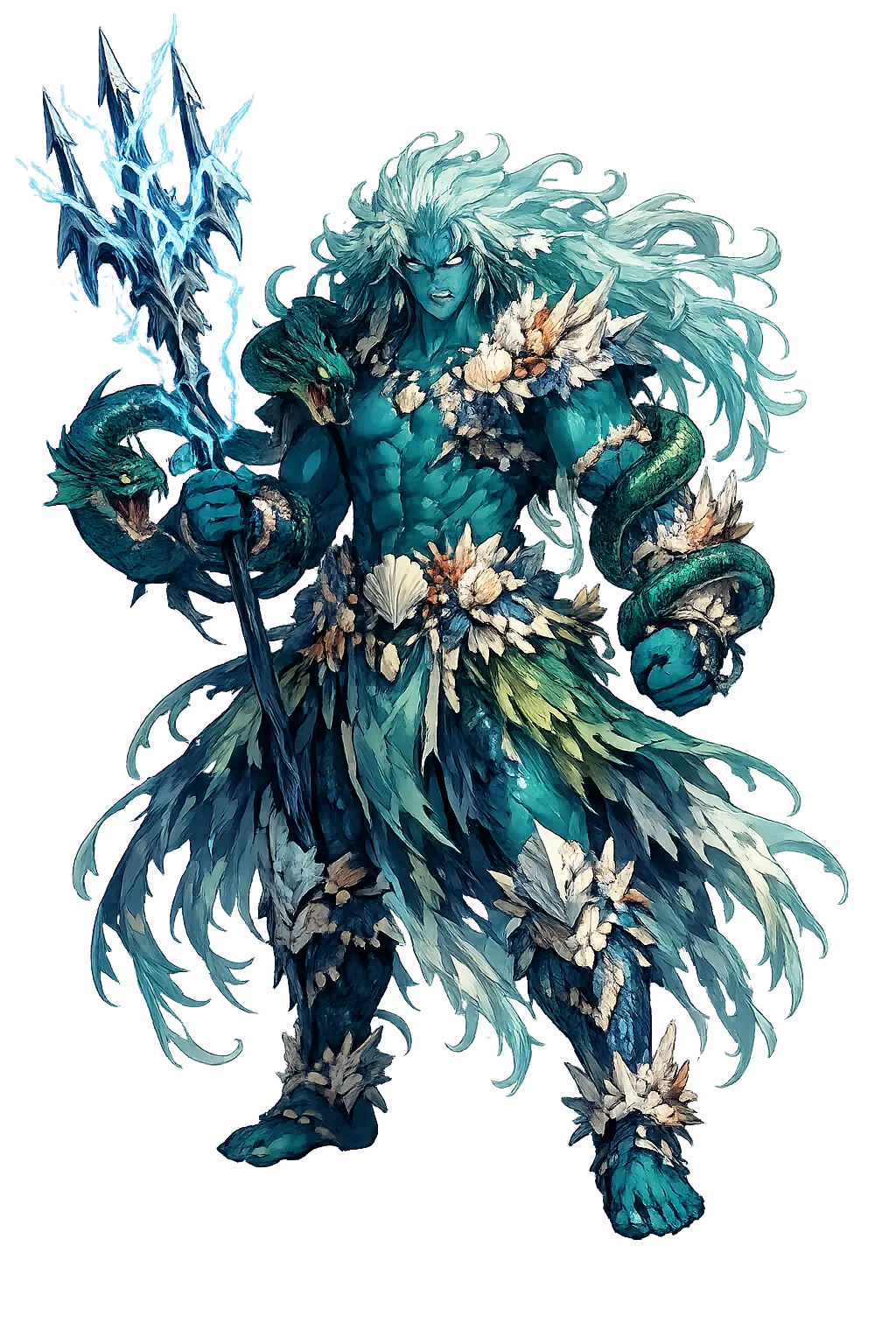
Yām is the deified sea of the Ugaritic Baal Cycle, the vast primordial water that claims kingship over the gods before Baal defeats him. He is not simply the Mediterranean; he is the dangerous, chaotic deep that threatens to overwhelm the ordered world of dry land and storm-fed fields. In Canaanite myth, the storm god's victory over Yām is the founding act that makes civilization possible.
Yām represents the pre-creation waters that must be pushed back for land and life to appear.
He demands that El hand over the divine kingship, setting up the central combat of the Baal Cycle.
In battle Yām is a seven-headed sea monster, kin to the biblical Leviathan and Rahab.
His domain is the boundary between chaos and order, the sea that feeds and destroys.
Stories of Yām
Yām's story is told in the Ugaritic Baal Cycle, where he plays the role of the chaos monster that the young storm god must defeat to establish his kingship. The myth is one of the oldest and most influential combat narratives in the ancient Near East, echoed in the Bible's Leviathan, Babylonian Tiamat, and Greek Typhon.
In KTU 1.2 i, Yām sends messengers to the divine assembly and demands that El, the high god, hand over Baal to be his slave. El is forced to agree, but Baal refuses to submit. Anat and Asherah intervene, and Baal prepares for war. The scene establishes Yām as the primordial claimant to universal rule, the arrogant sea who must be humbled before order can be secure.
KTU 1.2 iv describes the climactic combat. Kothar-wa-Ḫasīs forges two magical clubs for Baal, Yagrush and Aymur. Baal strikes Yām in the head and between the eyes, and the sea monster collapses. With Yām's defeat, Baal is proclaimed king and is finally granted a palace on the cosmic mountain Ṣaphon. The victory re-enacts the primal separation of sea and land.
The Hebrew Bible preserves echoes of the Canaanite sea-combat in passages such as Psalm 74:13–14 (God crushing the heads of Leviathan), Isaiah 27:1 (the sword against Leviathan), and Job 26:12 (God stirs up the sea, Rahab). These texts translate the older myth into monotheistic language: the sea monster becomes a symbol of chaos subdued by the one God.
Yām is the sea that cannot be owned, the chaos that lies just beyond the harbor wall. He reminds us that every civilization lives on land wrested from water, and that the boundary must be maintained. In an era of rising seas and climate chaos, Yām returns not as myth but as warning: the primordial deep remembers what was taken from it, and only respectful stewardship keeps it at bay.
Enter Extended Lore