
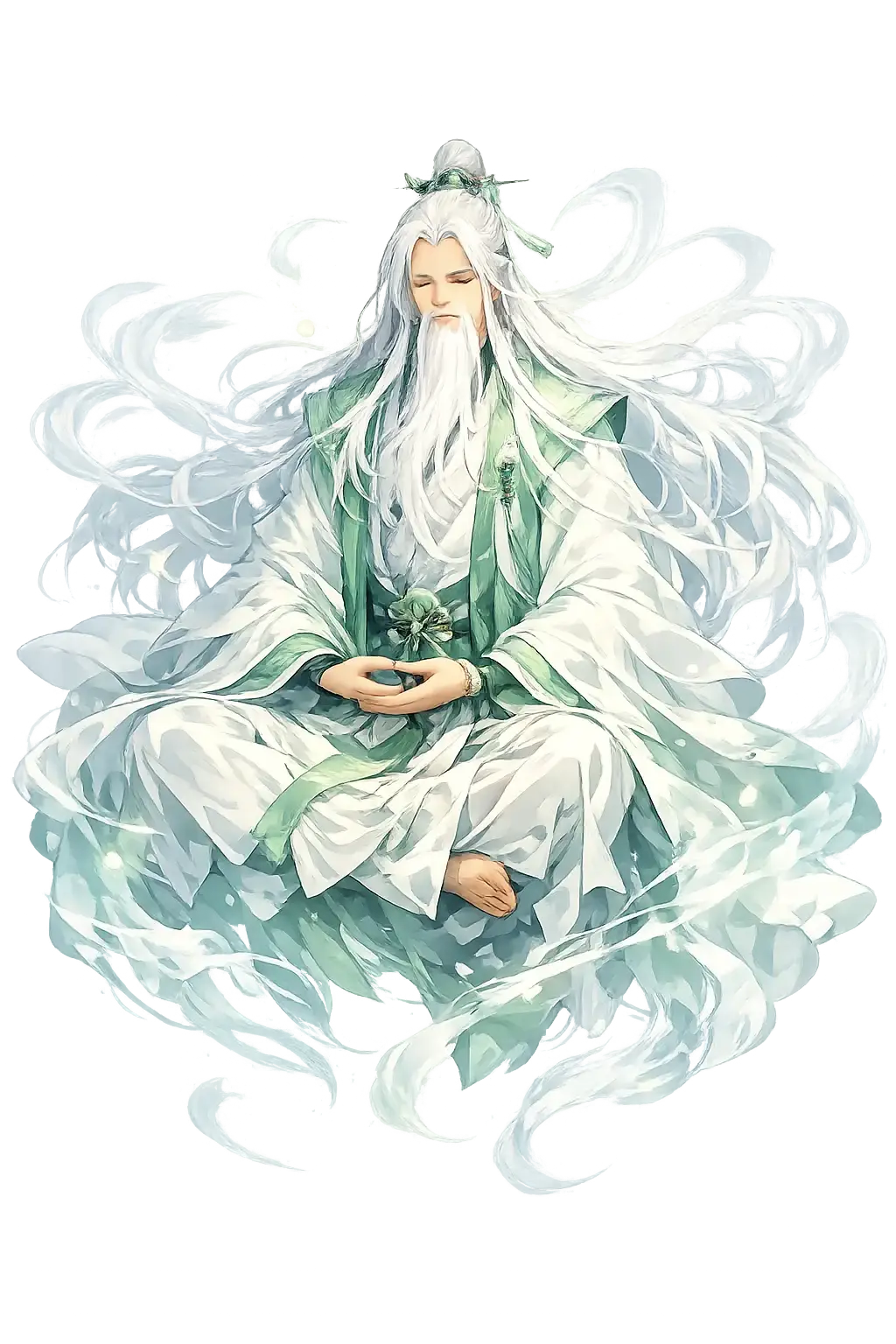
The name Xiān and the world it opens
A name is a door. Xiān opens onto an entire world: the domain of immortal, transcendent, a Chinese tradition, and centuries of storytelling, worship, and scholarship. This post walks through that world room by room — the name and its roots, the original script, the sound of it, the myths, the symbols, the sites, the afterlife across cultures — and ends at the newest room of all: a Unicode domain that makes the whole structure addressable. xian gets you to the same building, but only the restored form tells you why it was built.
At a Glance
- Restored name: Xiān
- ASCII form: xian
- Meaning: "Immortal"
- Domain of influence: Immortal, Transcendent
- Pantheon: Chinese
- Classification: Tier 2
- Original script: 仙 (Chinese characters)
- Live domain: xian.com
Overview
Xiān (xian) — Immortal, Transcendent · Immortal — belongs to the Chinese tradition, where it is catalogued under the domain "Immortal, Transcendent". The name means "Immortal".
Xiān is the Chinese immortal: a human being who has refined body and spirit until death no longer applies. Unlike the gods of popular religion, who receive offerings and grant petitions, the xiān has escaped the bureaucracy of heaven and earth. He or she dwells in mountains, rides clouds or cranes, and appears unpredictably to those who have cultivated the Dao.
The path to becoming xiān is not faith but practice: meditation, breath control, diet, alchemy, and moral discipline. Immortality is an achievement, not a gift.
PuniCodex restores the name as Xiān and serves its temple at xian.com. The restoration preserves a single prosodic feature — the high-level first tone marked by the macron — which places the name in Tier 2. The plain ASCII form xian survives as a modern convenience imposed by the early domain-name system; the restoration, not the fallback, is the form the project defends as philologically complete.
The Name
The name is attested in Chinese characters as 仙. Etymologically it means "Immortal".
The ASCII form xian survives only because the early domain-name system could not carry diacritics; it is a technological compromise, not an ancient spelling. The Unicode restoration Xiān restores the high-level first tone of the Mandarin reading directly in the address bar: in Hànyǔ Pīnyīn the macron is a tone mark, and without it the syllable's lexical identity is lost. The restoration preserves a single prosodic feature — the tone carried by the macron — which places the name in Tier 2.
The letter-by-letter transformation runs:
- x → X — Same, capitalized
- i → i — Same
- a → ā — Macron: first tone (high level)
- n → n — Same
The canonical temple for this name is served at xian.com.
The Original Script
The name is written in Chinese characters as 仙, an associative compound of the person radical 亻 and 山 'mountain': the immortal pictured as a human being among the mountains. An older graph, 僊, is the form registered in the Shuōwén Jiězì (c. 100 CE), which glosses it as 'long-lived, ascending away' — a person beside a phonetic cognate with 遷 'to shift, to ascend'. Neither graph occurs in the oracle-bone corpus: the word belongs to the Warring States vocabulary of the longevity cults, and its written forms stabilized in the Han.
Against this original, the ASCII fallback xian drops the tone and the PuniCodex restoration Xiān restores it — in Hànyǔ Pīnyīn the macron marks the high-level first tone, so the typed address still speaks the name with its tone intact.
Pronunciation
The reconstructed pronunciation of the name is /ɕjɛn˥˥/ — Modern Standard Mandarin (Pinyin).
Phoneme by phoneme:
- xiān — Voiceless alveolo-palatal fricative [ɕ], palatal approximant [j], open-mid front vowel [ɛ], and Tone 1 (high level, ˥˥). Pinyin 'x' before front vowels is [ɕ], never English 'ks' or 'z'.
For the modern speaker, the closest approximation is: SHYEHN — a high, level tone held steady, with a light 'sh' that touches the palate.
Kindred and historical forms of the name:
- Traditional — 仙
- Classical Chinese — Xiān, an immortal, transcendent, or perfected being.
- Wade-Giles — hsien¹
- Related terms — 神仙 shénxiān (god-immortal); 仙人 xiānrén (immortal person); 八仙 Bāxiān (Eight Immortals)
仙 denotes a transcendent being in Daoism, distinct from ordinary gods (shén) and from Buddhist arhats or bodhisattvas. The character combines 人 (person) with 山 (mountain), suggesting one who withdraws to the heights. The Pinyin restoration Xiān preserves the high level tone.
Mythology
Xiān mythology is a vast gallery of individual adepts, each with a distinctive method of transcendence. They are less a pantheon than a community of perfected beings.
The Eight Immortals (Bāxiān) (Hagiography)
The most famous xiān are the Eight Immortals, each representing a different social type and a different path to transcendence. Zhōnglí Quán was a general; Lǚ Dòngbīn a scholar; Hé Xiāngū a woman who nourished her spirit; Lán Cǎihé a gender-ambiguous beggar; and so on. Their collective journeys show that immortality is open to anyone who cultivates the Dao, regardless of birth.
The Queen Mother of the West's Peach Banquet (Cosmology)
Every three thousand years, the peaches of immortality ripen in the garden of Xīwángmǔ, the Queen Mother of the West. The xiān gather to feast and renew their transcendence. The myth links immortality to cosmic time: it is not a single event but a continual nourishment by celestial cycles.
The Shījié or Corpse Liberation (Practice)
Some xiān are said to achieve transcendence through shījié, 'liberation from the corpse.' The adept appears to die and leave a body behind — sometimes a sword or a bamboo staff transformed to look like a corpse — while the true person departs as a xiān. The motif resolves the paradox of physical immortality: the body that is left is not the body that ascends.
Symbols & Iconography
The attributes of the xiān are vehicles and provisions of transcendence rather than emblems of office:
- Crane — The mount and companion of immortals, credited with a thousand-year lifespan. In the Lièxiān Zhuàn, the earliest surviving hagiography of the immortals, the Zhōu crown prince Wángzǐ Qiáo reappears on Mount Gōushì riding a white crane before ascending out of reach.
- Peach of immortality — The fruit of Xīwángmǔ's orchard on Mount Kūnlún, said to ripen once in three thousand years; in medieval legend she offers the peaches to the Han emperor Wǔ, whose wish to plant their stones in mortal soil cannot be granted.
- Gourd — The sealed vessel that holds elixirs and medicines. The Hòu Hànshū tells of Húgōng, 'Master Gourd', whose gourd contained a whole palace world — the vessel made an emblem of the boundless space hidden in small things.
- Clouds and mist — The medium through which immortals travel and the boundary between mortal and transcendent realms: the Chǔcí poem Yuǎnyóu already sends its speaker feeding on pure vapours beyond the dust of the world.
Archaeology & Evidence
Material evidence for the immortality cult predates the organized Daoist church. The Mawangdui Tomb 3 manuscripts (sealed 168 BCE) include the Dǎoyǐn tú, a painted chart of gymnastic postures, and texts on breath cultivation and grain abstention — the bodily regimen from which the arts of the xiān grew. Han art then supplies the iconography: 'hill censers' (bōshān lú) model the clouded isles of the immortals, bronze mirrors and tomb reliefs show Xīwángmǔ enthroned among transcendent beings, and feathered men (yǔrén) ascend on painted tiles and sarcophagi. The medieval cult survives monumentally in the Yuán-dynasty murals of the Yǒnglè Gōng (Palace of Eternal Joy) in Shanxi — including the cycle of the life of Lǚ Dòngbīn, foremost of the Eight Immortals — preserved after the temple's piecemeal relocation to Ruìchéng in 1959–1964. Elixir recipes, alchemical apparatus, and inner-alchemical manuals transmitted in the Daoist Canon complete the record from Han through Song.
Realm & Domain
Xiān is the Chinese immortal: a human being who has refined body and spirit until death no longer applies. Unlike the gods of popular religion, who receive offerings and grant petitions, the xiān has escaped the bureaucracy of heaven and earth. He or she dwells in mountains, rides clouds or cranes, and appears unpredictably to those who have cultivated the Dao.
The path to becoming xiān is not faith but practice: meditation, breath control, diet, alchemy, and moral discipline. Immortality is an achievement, not a gift.
Longevity
The xiān has overcome ageing and death through disciplined transformation of the body.
Mountain Dwelling
Immortals withdraw to peaks and grottoes where the qi is pure and the world is far.
Internal Alchemy
Neidan refines the three treasures — jīng, qì, shén — into an immortal embryo.
Freedom from Bureaucracy
Unlike gods bound by celestial office, the xiān wanders freely between realms.
Across Cultures
The xiān tradition absorbed many influences. Indigenous Chinese quest for longevity merged with shamanic flight, alchemical experimentation, and Buddhist meditation techniques. The figure of the wandering immortal influenced Chan Buddhism, Confucian self-cultivation, and Chinese poetry and painting. In popular religion, local spirits and historical figures were posthumously enrolled as xiān. The West knows the xiān chiefly through the Eight Immortals and martial-arts films, where they appear as eccentric sages with superhuman powers. Modern Daoist lineages continue to practice neidan in pursuit of the same goal.
Within the Chinese tradition, closely related names in the corpus include [[bagua|Bāguà]], [[long|Lóng]], [[taichi|Tàijí]], [[taishang|Tàishàng]], [[tian|Tiān]], and [[tiandi|Tiāndì]].
Cultural Legacy
The cult of the xiān left its mark on every register of later Chinese culture. In landscape painting the immortal survives as the tiny figure crossing a bridge into misty peaks; in New Year prints the Eight Immortals arrive carrying peaches and gourds; in literature the tradition culminates in the sixteenth-century novel Journey to the West, whose monkey pilgrim has stolen the peaches of immortality and whose heaven is precisely the bureaucracy the xiān has quit. The proverb 'when the Eight Immortals cross the sea, each reveals their divine power' (八仙過海,各顯神通) has made the group the standing Chinese image of different means serving one end. The aspiration to longevity shapes Chinese medicine, diet, and exercise practices such as tai chi and qigong, and the modern fantasy genre xiānxiá 仙俠 ('immortal heroes') has carried the figure into film, television, and games. The word xiān also serves for extraordinary people: a great cook is a 'food immortal', a beautiful woman a 'fairy'. In global spirituality the xiān offers an alternative to the Western heaven: not a reward after death but a transformation of life itself, achieved through sustained practice.
The Scholarly Record
The account of Xiān given in this edition rests on the witnesses and reference works listed below. The primary testimony is textual: hagiography and practice manuals preserved in the Daoist Canon, anchored by the earliest great systematizer of the cult, Gě Hóng. Modern scholarship supplies the critical frame — Campany's annotated translation of the Shénxiān Zhuàn, Kohn's survey of Daoist practice, and the standard encyclopedia and scripture studies of Pregadio and Bokenkamp.
- Dàozàng 道藏 (Daoist Canon), the Ming Zhèngtǒng Dàozàng of 1445, which preserves the Lièxiān Zhuàn, Shénxiān Zhuàn, and Bàopúzǐ.
- Campany, Robert Ford. To Live as Long as Heaven and Earth: A Translation and Study of Ge Hong's Traditions of Divine Transcendents. University of California Press, 2002.
- Kohn, Livia. Daoism and Chinese Culture. Three Pines Press, 2001.
- Pregadio, Fabrizio, ed. The Encyclopedia of Taoism. 2 vols. Routledge, 2008.
- Bokenkamp, Stephen R. Early Daoist Scriptures. University of California Press, 1997.
- Unihan Database (Unicode Consortium), readings and variants for U+4ED9 仙. Full text
A Meditation
Xiān is the promise that the human body is not a prison. Unlike religions that split soul from flesh, Daoist immortality aims to refine the body until it becomes light, durable, and free. The xiān does not escape the world; the world loses its grip.
This is a demanding hope. It requires decades of breath, diet, meditation, and moral care. It asks whether we are willing to treat our own embodiment as a craft rather than a given. The immortal on the crane is not a tourist in transcendence but an artisan of spirit. To name a domain Xiān is to claim that the highest human possibility is not power or knowledge but freedom — the freedom that comes from having made oneself compatible with the Dao.
The Unicode Restoration
Xiān is classified as Tier 2: the original preserves at least one philological feature that ASCII cannot encode. The ASCII fallback xian still resolves everywhere, but it is the restored form that carries the name's full information. Across the 4 characters of the name, the restoration adjusts 1: 1 mark of length (ā). That is the whole thesis of this temple: the marks are the message.
Character by Character
The journey from xian to Xiān, one character at a time:
- x → X — Same, capitalized
- i → i — Same
- a → ā — Long vowel
- n → n — Same
The Domain Name
The restored name is live as a working domain: xian.com, which the DNS carries in punycode form as xian.com — an ASCII-compatible encoding that lets a non-ASCII name travel the global network without breaking older infrastructure. The visitor sees Xiān; the machines see the encoding. That duality is the engineering compromise on which the entire restoration rests, and it is why a name written the way its own tradition wrote it in Chinese characters can now be typed into any browser on earth.
The Chinese Pantheon
Xiān is one of 43 entries the PuniCodex lexicon catalogues under the Chinese pantheon. The Pantheon page gathers the tradition's major figures in one place, and the Lexicon lets you filter all 895 restorations by tradition, tier, or script — the fastest way to see where this name sits among its kin.
Frequently Asked Questions
What does Xiān mean? The traditional gloss is "Immortal."
Which tradition does Xiān belong to? Xiān is catalogued in the Chinese pantheon of the PuniCodex lexicon.
Why is Xiān classified as Tier 2? Because the original preserves at least one philological feature that ASCII cannot encode — and the marks in the restored spelling preserve exactly that evidence.
Is Xiān a working domain? Yes — xian.com resolves today and routes to this temple.
What is the punycode for xian.com? The DNS encoding is xian.com; browsers perform the translation automatically, so visitors only ever see the restored name.
Typing Xiān
You do not need a special keyboard to use this restoration. The PuniCodex Type Tool converts the ASCII form xian into Xiān as you type, and the browser extension offers the same conversion inside any text field. Copy the restored form, paste it into the address bar, and the DNS does the rest.
Why This Restoration Matters
A door only matters if people walk through it. xian.com is open, and everything behind it — the myths, the scholarship, the canvas, the patrons — hangs on the restored spelling. The PuniCodex project bets that the web will make room for names as they were actually written, and Xiān is one of its standing proofs. Visit, share, cite, type it yourself: each use is a small rehearsal for a web where no name has to hide its marks to be found.
Explore Further
This post is one doorway into the temple. The home page carries the full character breakdown and the ambient canvas; the lore page tells the myths in long form; the Scholarly Edition preserves the sources, pronunciation data, and revision history; and the patron wall supports the restoration directly. For the wider map, browse the Lexicon, explore the Pantheon, or return to the PuniCodex blog.
Related Names
Sources
The full scholarly apparatus — every citation, revision, and review — lives in the Scholarly Edition. Key references for this post:
- Unihan Database (Unicode Consortium), entry U+4ED9 仙.
- Chuci (Songs of Chu), 'Yuan you' (Far-off Journey).
- Daozang (Daoist Canon).
- Campany, To Live as Long as Heaven and Earth.
- Kohn, Daoism and Chinese Culture.
- Mathews, R. H., Chinese-English Dictionary (Harvard University Press, 1931).
- Lexicon authorities for this entry: Daoist Canon, Chinese folklore.