The Authentic Orthography
Speech, Voice, Sacred Word · Speech personified (in various manners or forms, e.g. as Vāc Āmbhṛṇī in RV. x, 125; as the voice of the middle sphere in Naigh. & Nir.; in the Veda she is also represented as
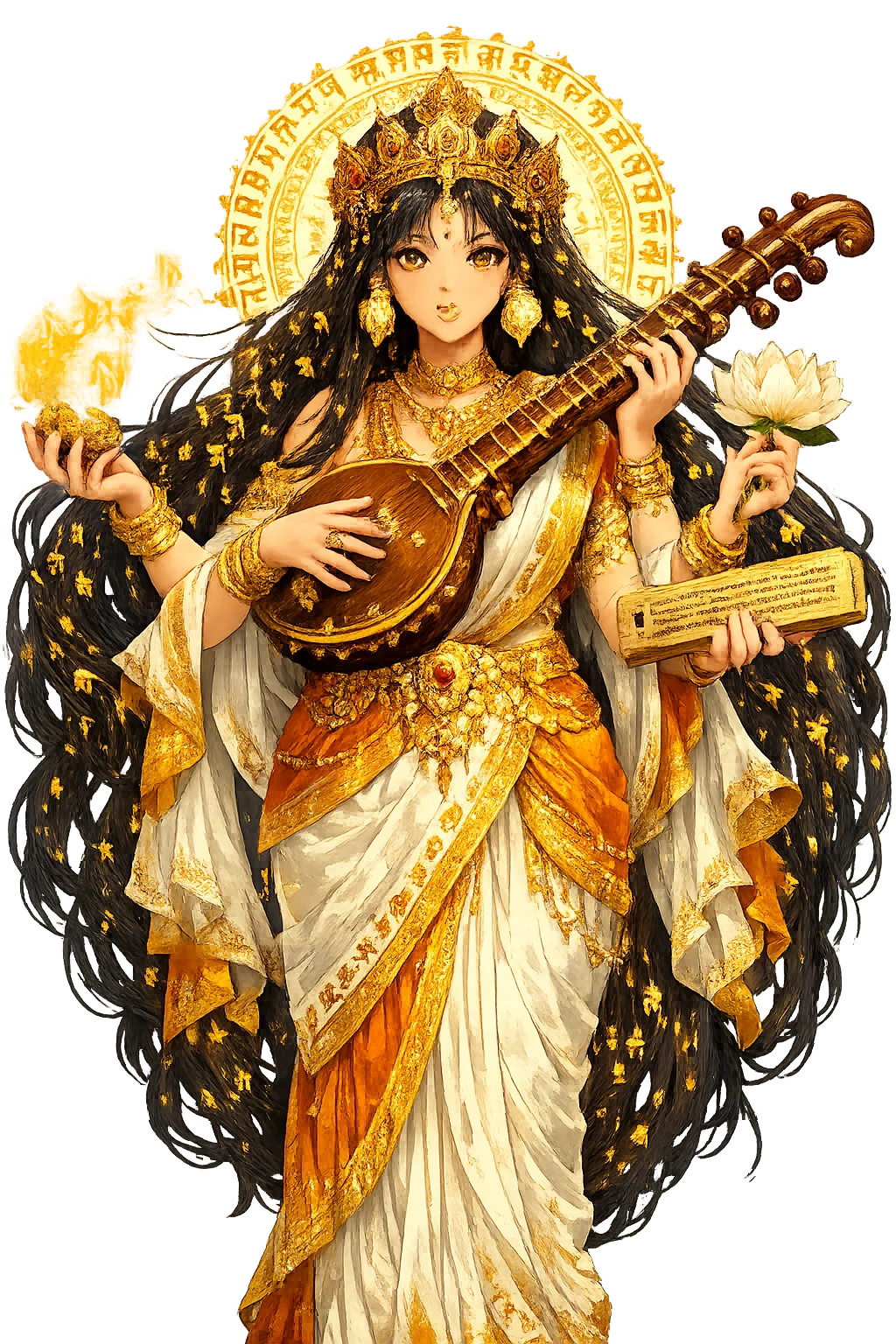
Unicode restoration and ASCII comparison
वाच्
The name in its original Sanskrit form. Vāc (वाच्) is attested in the source tradition — “Speech personified (in various manners or forms, e.g. as Vāc Āmbhṛṇī in RV. x, 125; as the voice of the middle sphere in Naigh. & Nir.; in the Veda she is also represented as”. Its macron-length vowels carry the full phonetic and orthographic weight of the source tradition.
vac
Reduced to plain vac, the name loses everything that made it specific: macron-length vowels. What remains is an ASCII string that machines can parse but that no longer speaks with its original voice.
Vāc
The Unicode restoration recovers what ASCII flattened. Vāc restores macron-length vowels, returning the name to its original written dignity. The domain encodes to Punycode, but the browser displays the truth.
Vāc.com → xn--vc-dla.com
The non-ASCII characters in Vāc are encoded while the ASCII remains visible. To the DNS, it is Punycode. To humanity, it is Vāc.
How Vāc travels from ancient script to the modern URL
Sanskrit Vāc; from the root vac- “to speak"; the personification of sacred speech.
Speech, Voice, Sacred Word
The IAST form Vāc uses registrable Latin diacritics; the Devanagari form is not supported in .com.
How Vāc was spoken
Speech, Sacred Sound, and Creative Word
Vāc is not just "voice." In Vedic India, she is the divine power of speech by which the gods create, the poets see, and the ritual comes alive. She is the word that precedes the world: before anything is, it must be named. To the theologians of the Brāhmaṇas, Vāc is the mother of the Vedas, the consort of Prajāpati, and the creative energy that turns silence into cosmos. She is the precursor of Sarasvatī, the river-goddess of wisdom and art.
Vāc is the power that makes mantra effective; the right word, rightly spoken, is a creative act.
Speech flows like water; Vāc is associated with rivers, streams, and the Sarasvatī herself.
As the mother of the Vedas, Vāc is the source of revealed wisdom and scholarly learning.
Prajāpati creates by uttering "Bhūr, Bhuvaḥ, Svaḥ" — Vāc is the energy that turns the utterance into reality.
Stories of Vāc
The mythology of Vāc is the mythology of language becoming power. In the Ṛgveda she is already a goddess; in the Brāhmaṇas she becomes the consort of the creator; in the Purāṇas her identity is absorbed into Sarasvatī, but her Vedic hymns remain among the most astonishing claims for the sacredness of speech ever composed.
Ṛgveda 10.125 is Vāc's great hymn. She declares: "I am the queen, the gatherer of treasures, the first among those worthy of sacrifice. The gods have set me in many places, so that I dwell in many forms." She animates the atmosphere, the earth, and the heavens; she is the power by which the sun gives light and the soma-press flows. This is not metaphor: for the Vedic poet, speech is a cosmic force as real as fire or wind.
In the Śatapatha Brāhmaṇa, Prajāpati desires to create. He utters the syllables "Bhūr, Bhuvaḥ, Svaḥ" — earth, atmosphere, heaven — and Vāc is the power that makes the utterance real. She is both his daughter and his consort, the female principle that completes the creator. The myth dramatizes a deep Vedic intuition: creation is not by hand but by word, and the word needs a speaker and a power of articulation.
Every Vedic sacrifice depends on the hotṛ, the priest who recites. His voice is not his own; it is the vehicle of Vāc. A mistake in accent, a wrong syllable, could break the ritual and endanger the cosmos. The science of phonetics — śikṣā — developed to protect Vāc from human error. In this sense, grammar is theology: to speak correctly is to keep the world in order.
By the late Vedic and epic periods, Vāc is increasingly identified with Sarasvatī, the river goddess who becomes the goddess of learning, music, and eloquence. The name Vāc never fully disappears — it remains in philosophical vocabulary — but its mythic role is carried forward by Sarasvatī. What begins as the raw power of speech becomes the refined goddess of culture and art.
Vāc teaches that words are not cheap. In a culture saturated with noise, the Vedic idea that speech is a goddess feels almost impossible. But that is precisely the point: every word either participates in order or adds to the lie. Vāc is not freedom of speech in the modern sense; she is responsibility of speech — the demand that what we say correspond to what is real, that our utterances build rather than damage.
Enter Extended Lore