
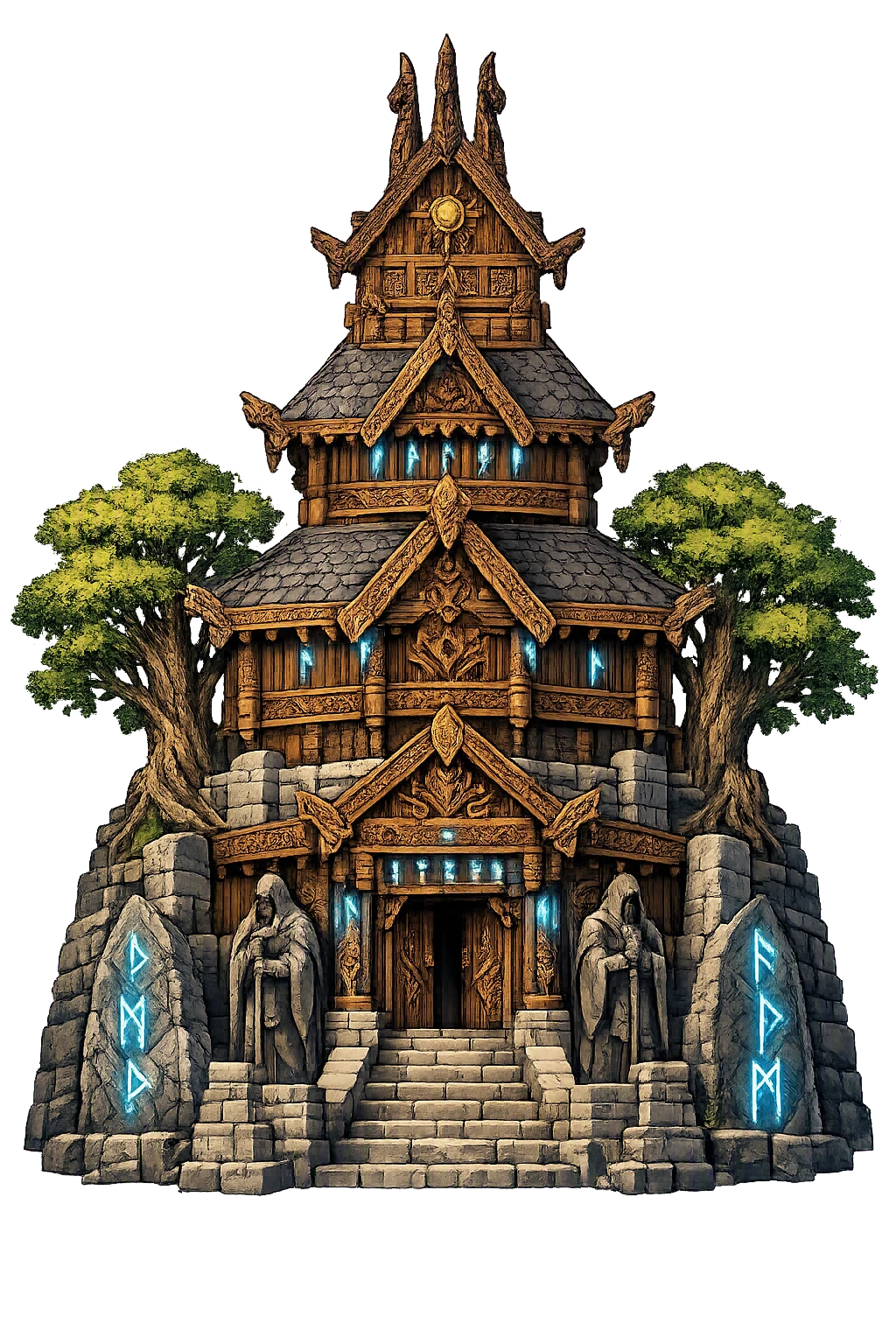
Uppsala: canonical, contested, and the false forms on record
A letter to a colleague, 31 July 2026 — on the name Uppsala, and on the forms that keep failing it.
Your note said, roughly: surely the marks are a nicety. Permit me to use Uppsala to show they are not.
First, the attestation. The attested form is ᚢᛒᛒᛋᛅᛚᛅ, from the tradition's own record. The canonical transliteration is Uppsala.
Say it aloud as the sources heard it: 'OOP-sah-lir' — three beats, the double p held a fraction long, the final r trilled; modern Swedish Uppsala ('OOP-sah-lah') has shed the old plural ending. The marks are what carry that sound to a reader who has never heard it spoken.
On the plain form — and I want to be precise, because you pushed on this. The plain form uppsala differs from the canonical Uppsala only by convention of display — case, not content. It is acceptable everywhere: in legacy systems, in plain-text citation, in the DNS itself. What is not acceptable is what follows in the register: respellings that change the letters, not just their case.
One more thing, because it always surprises: the name did not stay home. Uppsala's closest kin are not gods but holy places. Thietmar of Merseburg, writing two generations before Adam, describes the nine-year sacrifice at Lejre in Denmark — ninety-nine men, horses, dogs and cocks offered to placate the gods — the Danish counterpart of the Uppsala rite and the proof that Adam's nine-year cycle was pan-Scandinavian grammar, not local invention.
And it never stopped working. Uppsala never stopped being the stage on which Sweden remembers itself. The old cult centre became the church's: Gamla Uppsala was the seat of Sweden's first archbishopric from 1164 until the see moved to Östra Aros — the modern city of Uppsala — in 1273, and the medieval church still stands on the artificial plateau where Adam's temple is sought.
The Convention's Own History
The Poetic Edda survives essentially in one manuscript — the Codex Regius, c. 1270 — and normalized Old Norse spelling descends from what that manuscript and its siblings actually write. Þ and ð are not decorations: they are letters of the alphabet the skalds used (and English later abandoned), and ǫ is a nasal vowel the normalization preserves because the sources carry it. The register's rule is the manuscript's rule: spell the names the way the tradition that sang them wrote them down.
Where Protocol Meets Practice
The technical answer is simple: the canonical marks are legal IDNA 2008 characters, encoded as punycode under `xn--`. The practical answer is messier: legal does not mean stocked (registrar inventory is partial), and stocked does not mean typeable (stacked diacritics defeat mobile keyboards).
So the register's rule is a hierarchy of attested forms — full restoration, circumflex, macron-only, attested variant, and finally plain ASCII for the systems that cannot carry marks. Every rung is defensible because every rung is attested. The forms this register rules against are not rungs; they are errors, and errors do not get rungs.
Write back when you have checked the sources; they are better company than I am.
— The Register
The Verdict
Uppsala is the canonical form: attested, checkable, and enforced across the temple, the lexicon, the cards, the APIs, and this register. The plain form uppsala shares that standing — the two are the same name in every system. The false forms above are documented so that no reader has to take the temple's word on faith — the violations are stated, the sources are named, and the register stands open to challenge on every line.
The temple of Uppsala stands at /sites/uppsala/.
The docket for this ruling: no false forms on the docket; no contested forms attested; the attestation rests on 8 cited sources — Adam of Bremen, Gesta Hammaburgensis ecclesiae pontificum 4.26–27 with scholia 134–139 (the temple at Ubsola, the enthroned triad, the nine-year festival, the sacred grove, and the spring), trans. Francis J. Tschan, rev. Timothy Reuter (Columbia University Press, 2002), Snorri Sturluson, Heimskringla, Ynglingasaga 10 (Freyr builds the temple at Uppsalir, makes it his chief seat, endows the Uppsala wealth, and is buried in a mound there), trans. Lee M. Hollander, Snorri Sturluson, Prose Edda, Skáldskaparmál (the kenning 'Kraki's seed' — the gold Hrólfr sowed on the Fyrisvellir below Uppsala), trans. Anthony Faulkes.
The Register Continues
Entry 371 of 397 in the Canonical Register. Around it: the temple's founding dispatch, the Restoration File on the marks themselves, the Resonance File on the archetype at work, and the Rulebook behind all of it.
Continue the register — previous entry: Ullr (read it) · next entry: Vāc (read it).
The Canonical Register is written from the same canonical record as the lexicon itself. If a false form is missing from this page, it is because the evidence does not support calling it false — or because we have not seen it yet. Show us, with a citation, and the register will answer.