PuniCodex

Extended Lore

Θάλεια Tháleia

Etymology · Phonology · Orthography · Cultural Legacy · Primary Sources

Tier 1 Tháleia.com
Tháleia — Comedy, Idyll
01

Quick Facts

Essential information about Tháleia, Comedy, Idyll

Original ScriptΘάλεια
Unicode RestorationTháleia
Reconstructed Pronunciation/ˈtʰa.leː.a/
PantheonGreek
DomainComedy, Idyll
MeaningFlourishing, blooming
ClassificationTier 1
Primary DomainTháleia.com
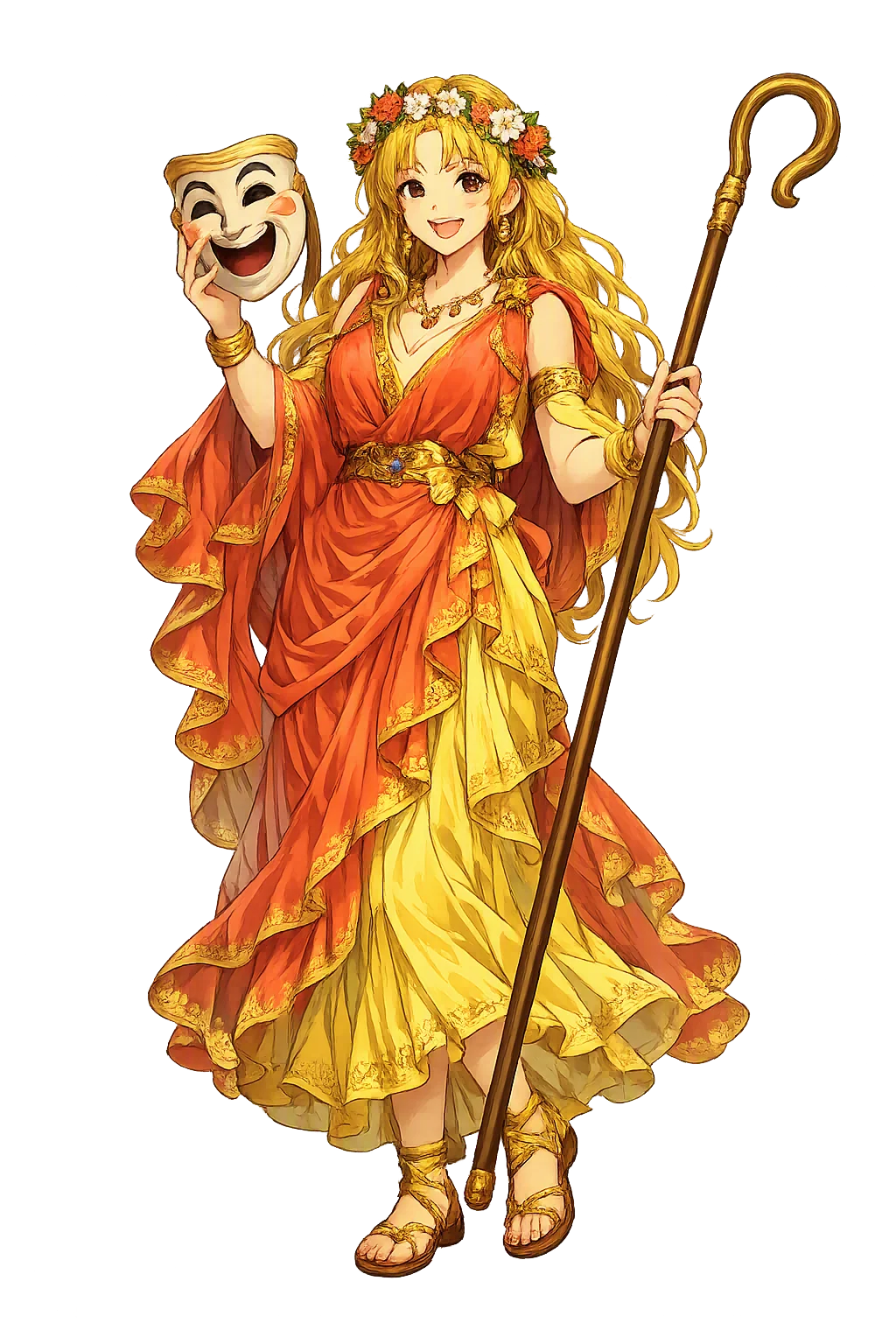
Sacred SymbolsComic mask, Shepherd's staff (pedum), Ivy wreath, Comic slipper (soccus), Frame drum
02

Etymology & Word Family

From original script to Unicode restoration

Original Script Θάλεια Tháleia — "Flourishing, blooming"
Unicode Restoration Tháleia Restored stress, length, and script
Modern ASCII thaleia Plain-ASCII fallback

Tháleia is Tier 1 because the Greek Θάλεια carries both stress (the acute on the initial alpha) and length (the long diphthong ει). The restoration preserves both: the acute on the á marks the accent, and the digraph -ei- keeps the long diphthong that plain ASCII Thalia erases.

03

Unicode Character Breakdown

Character-by-character philological analysis

CharacterUnicodeNameBlockPhonetic Role
TU+0054Latin Capital Letter TBasic LatinT uppercase
hU+0068Latin Small Letter HBasic Latinh same
áU+00E1Latin Small Letter A with AcuteLatin-1 SupplementAcute on a
lU+006CLatin Small Letter LBasic Latinl same
eU+0065Latin Small Letter EBasic Latine same
iU+0069Latin Small Letter IBasic Latini same
aU+0061Latin Small Letter ABasic Latina same

The Tier 1 classification reflects how much of the original phonology this restoration preserves — stress and vowel length for Greek names, distinctive letters and diacritics for every other tradition.

04

Cultural Significance

From ancient cult to modern Unicode

Ancient Domain

Tháleia is the Muse of comedy and idyllic poetry, one of the nine daughters Zeus fathered on Mnémosynē. Her name is the Greek word for flourishing — from θάλλω, 'to bloom' — and in the plural, θαλίαι, it means nothing less than festivities: the good cheer of the feast. The Greeks gave laughter a Muse, and they named her Blooming.

Tháleia in Later Traditions

Rome adopted the nine Musae almost without translation, and Thalia kept her Greek name; it was in late antique and Renaissance iconography that she was fixed once and for all as comedy's patron, mask in hand, one of the paired faces of the theater. Her namesake the Charis lived a parallel afterlife as one of the three Graces of Western art — Aglaia, Euphrosyne, and Thalia, the dancers of Botticelli's Primavera. Through her collective she passes into the very words 'music' and 'museum,' both children of the Greek Mousa.

Modern Legacy

No common English noun descends from Tháleia's name alone — her legacy travels under other flags. She presides in spirit over Theocritus's Idylls, the bucolic poems that gave English the word 'idyll' for every scene of pastoral peace. Theaters bear her name — Hamburg's Thalia Theater most famously — and the paired masks of comedy and tragedy that still sign for the stage are, by long convention, hers and Melpoménē's. As a given name, Thalia has never gone out of use; the Muse of laughter is one of the few Greek deities people still name their daughters after.

Unicode Restoration as Cultural Act

Restoring Tháleia in a domain name is more than orthographic accuracy. It is a statement that the internet should recognize the full range of human writing — not only the ASCII keyboard.

05

Frequently Asked Questions

Common questions about Tháleia, Comedy, Idyll, and Unicode restoration

01How do you pronounce Tháleia?

In reconstructed pronunciation, Tháleia is /ˈtʰa.leː.a/ — approximately 'TAH-lay-ah' — begin with a breathy t as in 'top', lean on the first syllable, and let the 'ei' glide long; the English 'th' of Thalia has no place in the Greek..

02What does Tháleia mean?

Tháleia means Flourishing, blooming in the greek tradition.

03What are the symbols of Tháleia?

Tháleia is associated with Comic mask (Her defining attribute in ancient iconography — laughter given a face), Shepherd's staff (pedum) (The bucolic world of idyllic poetry: flocks, shade, and song), Ivy wreath (The plant of Dionysos, god of the theater where comedy was performed), Comic slipper (soccus) (The low shoe of comic actors, set against tragedy's high cothurnus), Frame drum (The tambourine of the Corybantes, the ecstatic dancers said to be her sons).

04Why restore Tháleia in Unicode?

Plain ASCII thaleia strips the stress, length, and script that make the name specific. Unicode restoration returns the name to its original written dignity.

05What is the most important myth about Tháleia?

Hesiod tells how Mnémosynē, Memory herself, lay with Zeus for nine nights and bore the nine Muses 'to be a forgetting of evils and a rest from cares' (Theogony 53–62). When he names them, Tháleia stands third: 'Kleiṓ and Eutérpē and Tháleia and Melpoménē' (Theogony 76–79). From the beginning, then, laughter and festivity are numbered among the daughters of Memory — comedy is not beneath remembrance but one of its gifts.

06

Scholarly Sources

The philological foundations of this restoration

Every claim on this page is grounded in established scholarship. The orthographic restorations follow disciplinary convention. The etymological chain follows the best available reference works. This is not invention — it is resurrection through scholarship.

Lexicography & Philology

  • Hesiod
  • Liddell, H. G., Scott, R., & Jones, H. S. A Greek-English Lexicon. Oxford: Clarendon Press, 9th ed. 1996.

Primary Texts

  • Hesiod, Theogony
  • Homer, Iliad
  • Apollodorus
  • Pausanias

Archaeology & Art History

  • Material evidence — iconography, inscriptions, and temple archaeology — for Tháleia and related cults.
  • The great cult center of the Muses stood in the Valley of the Muses below Mount Helicon, near Thespiai, with its grove, its statues, and the Mouseia festival games; Pausanias (9.29–30) describes the sanctuary and the nearby spring Hippocrene at length. Tháleia herself survives visually on Roman-era Muses sarcophagi and mosaics, where she sits with the comic mask and shepherd's staff that became her invariable attributes. Comic masks further appear throughout theater-related dedications and Pompeian wall painting, the material trace of the genre she was believed to rule.

Religious Studies

  • Comparative studies of greek religion and the place of Tháleia within it.
Return

The Surface Awaits

You have traced the name from its earliest attestation to its Unicode restoration. Now return to the myth. The story is where the name lives.

Back to Lore
Tháleia mascot