PuniCodex

Extended Lore

太上 Tàishàng

Etymology · Phonology · Orthography · Cultural Legacy · Primary Sources

Tier 1 Tàishàng.com
Tàishàng — Supreme Lord, Dao
01

Quick Facts

Essential information about Tàishàng, Supreme Lord, Dao

Original Script太上
Unicode RestorationTàishàng
Reconstructed Pronunciation/tʰaɪ̯˥˩ ʂɑŋ˥˩/
PantheonChinese
DomainSupreme Lord, Dao
MeaningSupreme, great
ClassificationTier 1
Primary DomainTàishàng.com
Sacred SymbolsRuyi sceptre, Gourd of elixir, Crane, Tàijí disc
02

Etymology & Word Family

From original script to Unicode restoration

Original Script 太上 Tàishàng — "Supreme, great"
Unicode Restoration Tàishàng Restored stress, length, and script
Modern ASCII taishang Plain-ASCII fallback

太上 means 'Supreme, Most Exalted.' In Daoist theology it is the title of the deified Laozi as Tàishàng Lǎojūn, one of the Sānqīng (Three Pure Ones). The Pinyin restoration Tàishàng preserves both citation tones.

03

Unicode Character Breakdown

Character-by-character philological analysis

CharacterUnicodeNameBlockPhonetic Role
TU+0054Latin Capital Letter TBasic LatinSame, capitalized
àU+00E0Latin Small Letter A with GraveLatin-1 SupplementStress on a
iU+0069Latin Small Letter IBasic LatinSame
sU+0073Latin Small Letter SBasic LatinSame
hU+0068Latin Small Letter HBasic LatinSame
àU+00E0Latin Small Letter A with GraveLatin-1 SupplementStress on a
nU+006ELatin Small Letter NBasic LatinSame
gU+0067Latin Small Letter GBasic LatinSame

The Tier 1 classification reflects which ancient features stress, length, or script are preserved in this restoration.

04

Cultural Significance

From ancient cult to modern Unicode

Ancient Domain

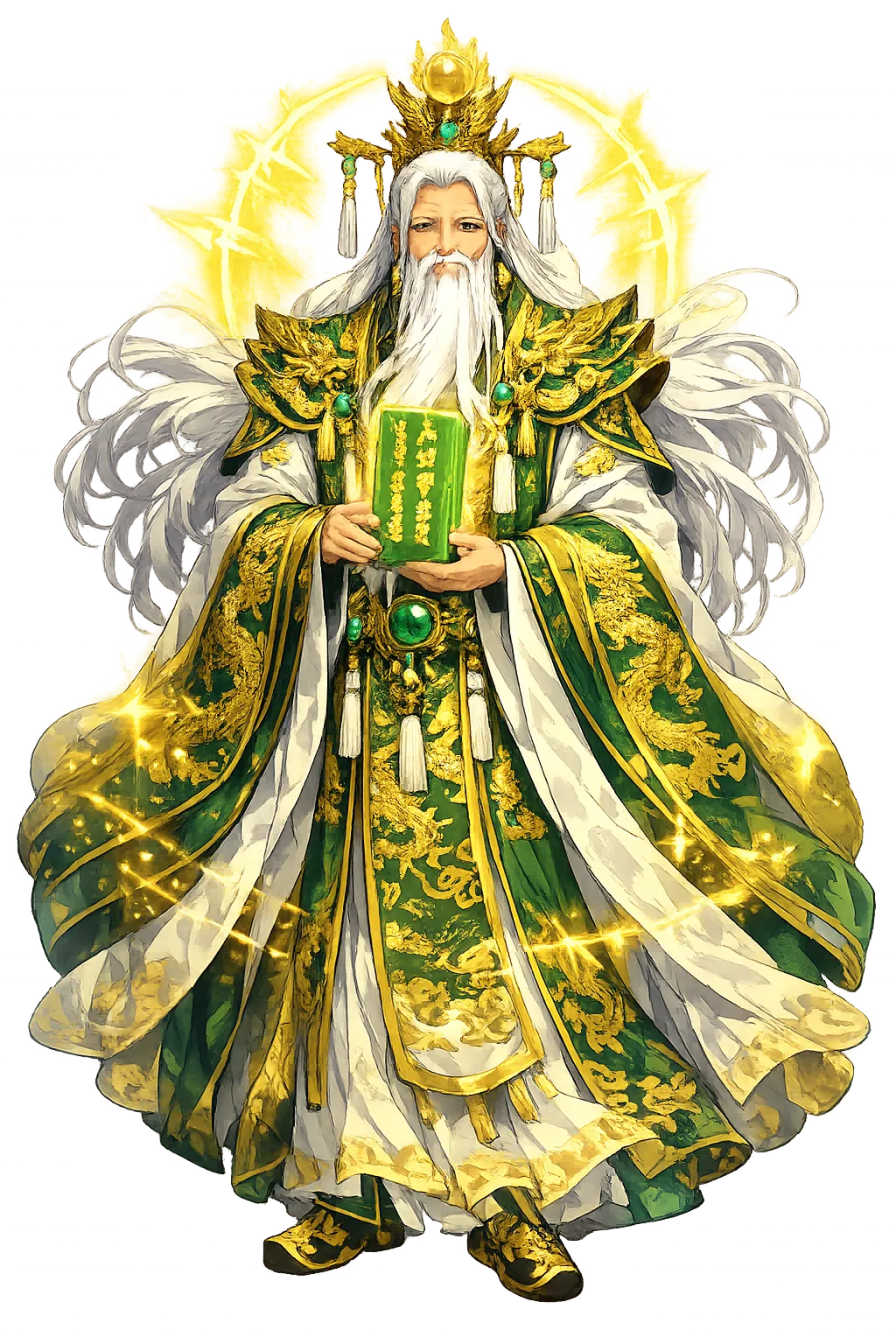
Tàishàng names the supreme station in Daoist cosmology. In its fullest form, Tàishàng Lǎojūn (Supreme Lord Lao) is the deified Laozi, the legendary author of the Dàodéjīng, elevated into one of the Three Pure Ones who stand at the summit of the Daoist pantheon. Where the historical Laozi taught wordless wisdom, the celestial Tàishàng Lǎojūn dispenses scriptures, elixirs, and revelations.

He is not a creator god in the Western sense. He is the personification of the Dao in its highest, most hidden aspect — the origin that cannot be named, named.

Tàishàng in Later Traditions

Tàishàng Lǎojūn is the Daoist answer to the question of how a philosophy becomes a religion. The historical Laozi, if he existed, was a thinker; Tàishàng Lǎojūn is a god. This transition mirrors the broader Chinese pattern of deifying sages, from Confucius to Guān Yǔ. Buddhism influenced the structure of his cult — the Three Pure Ones parallel Buddhist trikāya theology — while popular religion absorbed him into a vast pantheon of immortals, city gods, and celestial bureaucrats. In the West, Laozi is often read as a purely philosophical figure, but in Chinese temples he is honoured with incense, images, and prayers for longevity.

Modern Legacy

Tàishàng's legacy is inseparable from the Dàodéjīng, one of the most translated books in world literature. As Tàishàng Lǎojūn, he presides over Daoist temples, alchemical traditions, and popular practices of longevity and exorcism. His image appears in countless paintings, statues, and New Year prints, often riding a crane or holding a ruyi. Modern Daoist movements, martial-arts lineages, and global wellness culture all claim some connection to Laozi, though the sage would likely smile at the irony. The name Tàishàng has also become an adjective of highest rank, applied to emperors, elders, and even video-game bosses.

Unicode Restoration as Cultural Act

Restoring Tàishàng in a domain name is more than orthographic accuracy. It is a statement that the internet should recognize the full range of human writing — not only the ASCII keyboard.

05

Frequently Asked Questions

Common questions about Tàishàng, Supreme Lord, Dao, and Unicode restoration

01How do you pronounce Tàishàng?

In reconstructed pronunciation, Tàishàng is /tʰaɪ̯˥˩ ʂɑŋ˥˩/ — approximately TIE-SHUHNG — 'tai' like 'tie' with a sharp falling tone, 'shang' with a retroflex 'sh' and a falling tone..

02What does Tàishàng mean?

Tàishàng means Supreme, great in the chinese tradition.

03What are the symbols of Tàishàng?

Tàishàng is associated with Ruyi sceptre (The curved head-rest that signifies power, wish-fulfilment, and divine authority.), Gourd of elixir (The bottle that holds the medicine of immortality and the hidden medicine of the Dao.), Crane (Longevity and the celestial mount that carries the immortal to heaven.), Tàijí disc (The supreme polarity from which yin and yang unfold.).

04Why restore Tàishàng in Unicode?

Plain ASCII taishang strips the stress, length, and script that make the name specific. Unicode restoration returns the name to its original written dignity.

05What is the most important myth about Tàishàng?

According to tradition, Laozi grew weary of the Zhou court and rode west on a black ox. At the Hangu Pass the guard Yīn Xī recognised him and asked for a teaching. Laozi wrote the five thousand characters of the Dàodéjīng, then disappeared into the west. Later Daoism transformed this departure into an ascension: Laozi became Tàishàng Lǎojūn, the supreme immortal.

06

Scholarly Sources

The philological foundations of this restoration

Every claim on this page is grounded in established scholarship. The orthographic restorations follow disciplinary convention. The etymological chain follows the best available reference works. This is not invention — it is resurrection through scholarship.

Lexicography & Philology

  • Dao De Jing
  • Daoist Canon

Primary Texts

  • Primary sources in the chinese tradition for Tàishàng.

Archaeology & Art History

  • Material evidence — iconography, inscriptions, and temple archaeology — for Tàishàng and related cults.
  • The deification of Laozi is attested in Han dynasty texts and inscriptions, with imperial cults developing under the Tang dynasty, which claimed Laozi as an ancestor. Archaeological finds include Dàodéjīng manuscripts from Mawangdui and Guodian, Daoist talismans, steles, and temple inscriptions honouring Tàishàng Lǎojūn. Temples dedicated to him survive across China and the Chinese diaspora.

Religious Studies

  • Laozi, Daodejing (Tao Te Ching)
  • Daozang (Daoist Canon)
  • Sima Qian, Shiji (Records of the Grand Historian), Laozi biography
  • Bokenkamp, Early Daoist Scriptures
  • Kohn, Daoism and Chinese Culture
  • Unihan Database (Unicode Consortium)
Return

The Surface Awaits

You have traced the name from its earliest attestation to its Unicode restoration. Now return to the myth. The story is where the name lives.

Back to Lore
Tàishàng mascot