Unicode restoration and ASCII comparison
太上
The name in its original Chinese form. Tàishàng (太上) is attested in the source tradition — “Supreme, great”. Its original diacritics and script distinctions carry the full phonetic and orthographic weight of the source tradition.
taishang
Reduced to plain taishang, the name loses everything that made it specific: original diacritics and script distinctions. What remains is an ASCII string that machines can parse but that no longer speaks with its original voice.
Tàishàng
The Unicode restoration recovers what ASCII flattened. Tàishàng restores original diacritics and script distinctions, returning the name to its original written dignity. The domain encodes to Punycode, but the browser displays the truth.
Tàishàng.com → xn--tishng-itad.com
The non-ASCII characters in Tàishàng are encoded while the ASCII remains visible. To the DNS, it is Punycode. To humanity, it is Tàishàng.
How Tàishàng is preserved in writing
A bespoke provenance study for Tàishàng is being prepared by the PUNICODEX scholarly team.
Contribute scholarly provenance →How Tàishàng was spoken
Dao, Deification of Laozi, and Celestial Authority
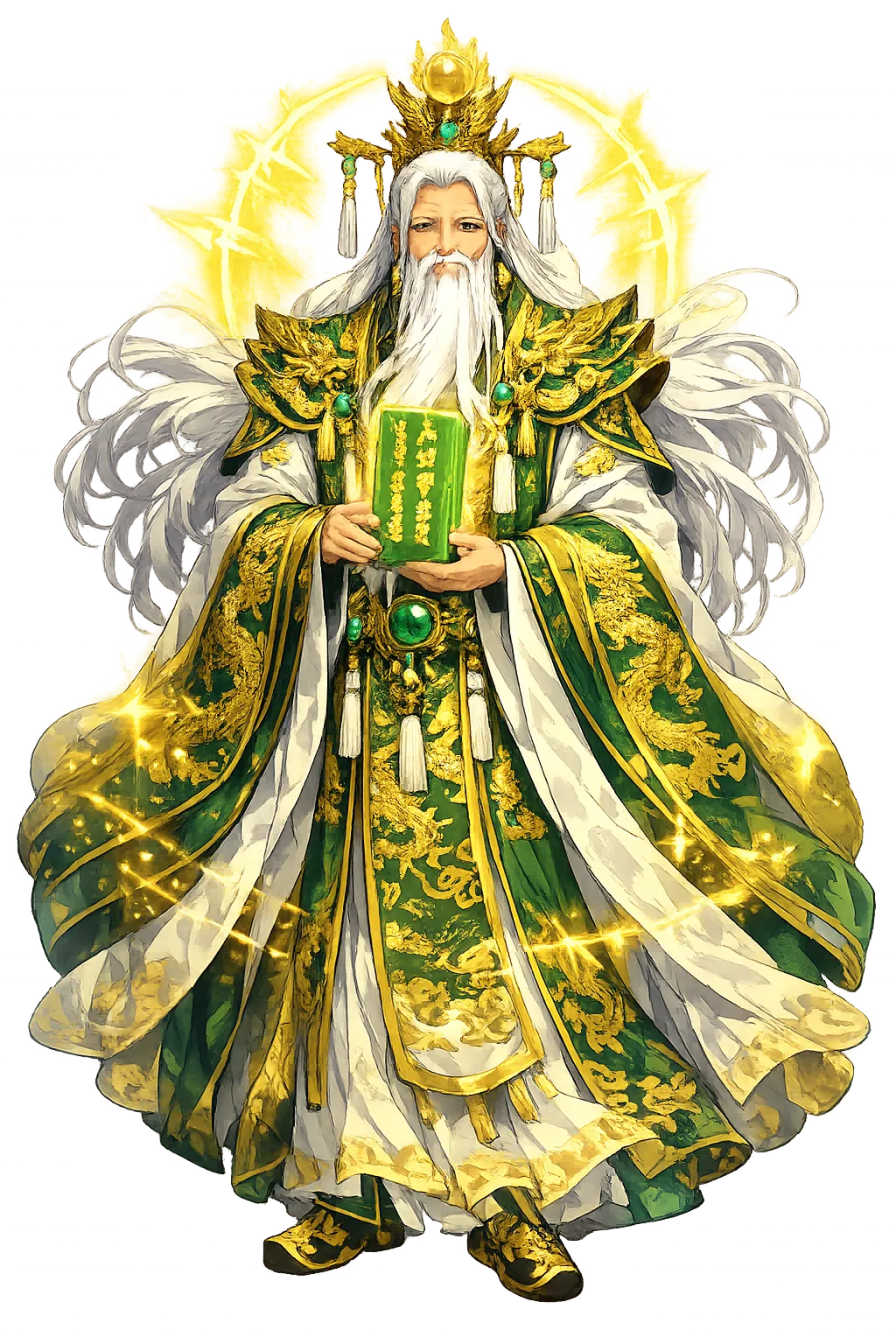
Tàishàng names the supreme station in Daoist cosmology. In its fullest form, Tàishàng Lǎojūn (Supreme Lord Lao) is the deified Laozi, the legendary author of the Dàodéjīng, elevated into one of the Three Pure Ones who stand at the summit of the Daoist pantheon. Where the historical Laozi taught wordless wisdom, the celestial Tàishàng Lǎojūn dispenses scriptures, elixirs, and revelations.
He is not a creator god in the Western sense. He is the personification of the Dao in its highest, most hidden aspect — the origin that cannot be named, named.
He embodies the nameless source from which heaven and earth arise.
Revealer of the Dàodéjīng and countless Daoist texts and talismans.
Patron of internal and external alchemy, longevity, and the pursuit of immortality.
Legendary instructor of sage-kings and source of imperial legitimacy.
Stories of Tàishàng
Tàishàng's mythology moves between history and cosmology: the shadowy philosopher Laozi becomes the celestial teacher who reveals the Dao to emperors, hermits, and alchemists.
According to tradition, Laozi grew weary of the Zhou court and rode west on a black ox. At the Hangu Pass the guard Yīn Xī recognised him and asked for a teaching. Laozi wrote the five thousand characters of the Dàodéjīng, then disappeared into the west. Later Daoism transformed this departure into an ascension: Laozi became Tàishàng Lǎojūn, the supreme immortal.
Medieval Daoist apocrypha claimed that Tàishàng Lǎojūn travelled west and transformed himself into the Buddha in order to convert the barbarians. The myth was a polemical attempt to place Daoism above Buddhism by making the Buddha a manifestation of Laozi. Though historically tendentious, it reveals the prestige Tàishàng held in medieval Chinese religion.
In formal Daoist theology, the Three Pure Ones (Sānqīng) personify the three stages of cosmic emanation. Tàishàng Lǎojūn corresponds to the third, the manifested Dao, the teacher who brings the formless principle into human language. Above him are YUánshǐ Tiānzūn and Língbǎo Tiānzūn, the even more primordial personifications of the Dao itself.
Tàishàng is the teaching that cannot be taught. The Dàodéjīng opens by saying that the Dao that can be spoken is not the eternal Dao, and yet the text goes on to speak of it for eighty-one brief chapters. Tàishàng Lǎojūn is the figure who resolves this paradox by embodying it: he is the sage who became a god by disappearing into the teaching he left behind.
Enter Extended Lore