
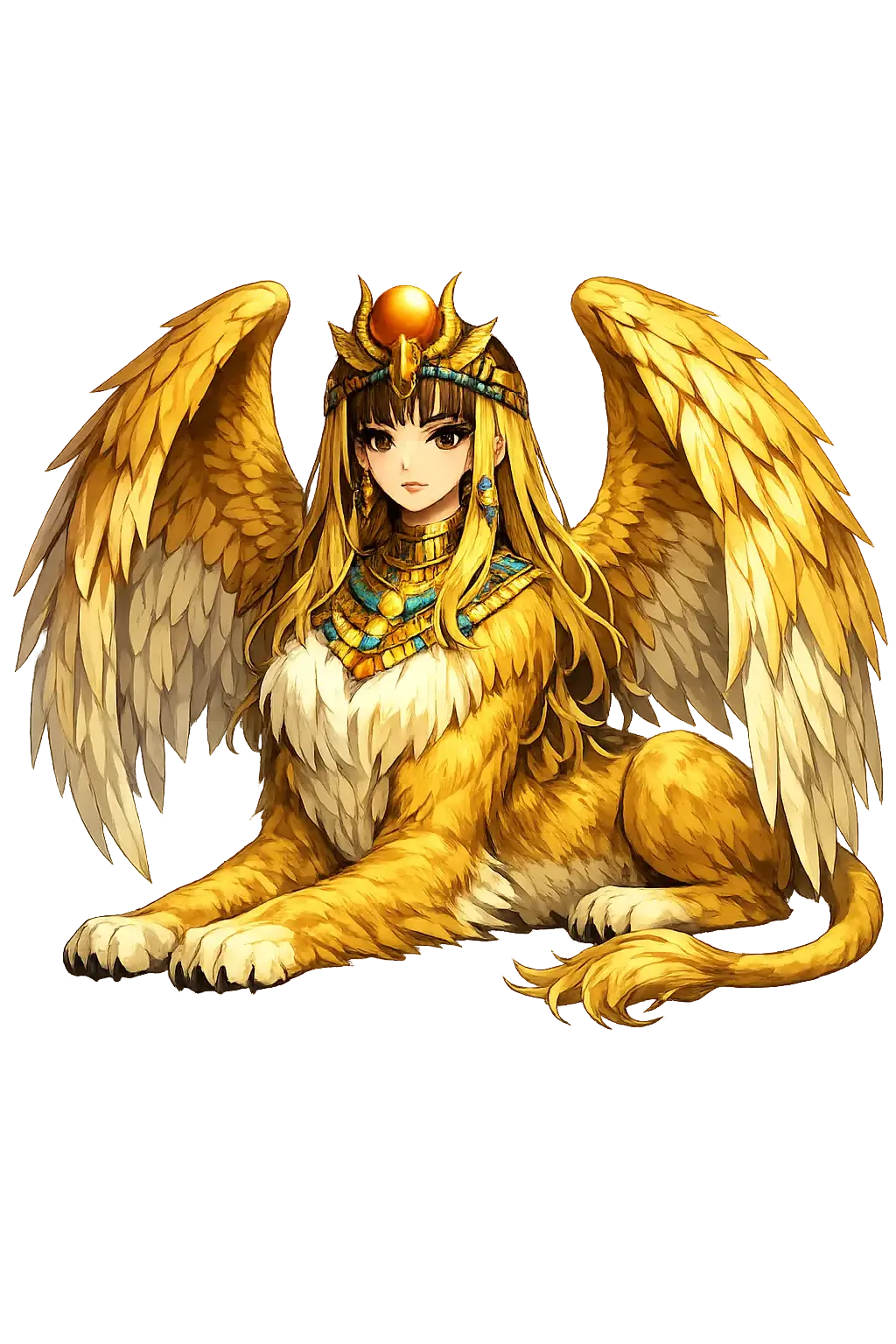
The many faces of Sphigx
No important name has only one face. Sphigx appears as a figure of myth, a scholarly reconstruction, a piece of material culture, a memory carried across languages, and — most recently — a Unicode domain. This post looks at each face in turn: the name and its roots, the Greek original, the reconstructed pronunciation, the mythological record, the symbols and sanctuaries, the cross-cultural afterlife, and the engineering that lets the restored spelling resolve in a browser. Taken together, those faces explain why sphigx was never going to be enough — and why the restored form is worth a domain of its own.
At a Glance
- Restored name: Sphigx
- ASCII form: sphigx
- Meaning: "Strangler"
- Domain of influence: Riddling Monster
- Pantheon: Greek
- Classification: Tier 2
- Original script: Σφίγξ (Greek)
- Live domain: sphigx.com
Overview
Sphigx (sphigx) — the Greek Sphinx (Σφίγξ) — is the winged lion-woman who crouched outside Thebes and destroyed those who could not answer her riddle. Hesiod knows her earliest name as Φίξ (Phíx), 'a destruction to the Cadmeans', born to Echidna by the hound Orthus; later mythography makes her the daughter of Echidna and Typhon and has Hera send her against Thebes. Her riddle — the creature that walks on four feet in the morning, two at noon, and three in the evening — was solved by Oedipus with the single word 'man', and the defeated monster threw herself from her rock. She is not merely a monster but a guardian of thresholds: the creature who bars entry until the traveller proves worthy of understanding.
PuniCodex restores the name as Sphigx and serves this temple at sphigx.com. The name preserves one prosodic feature — stress — rather than both, which places it in Tier 2. The project form keeps the Greek letters γξ visible as gx where English flattens them to nx.
The Name
The name is attested in Greek as Σφίγξ. Etymologically it means "Strangler" — the ancients connected it with the verb σφίγγω, 'to squeeze, bind, strangle'.
The ASCII form sphigx survives only because the early domain-name system could not carry diacritics; it is a technological compromise, not an ancient spelling. The Unicode restoration Sphigx keeps the Greek consonant cluster γξ legible as gx directly in the address bar: in standard scholarly transliteration the gamma before xi is nasalized and written 'n' (Sphínx), and English inherits the flattened form through Latin Sphinx. The project spelling preserves the Greek orthography rather than the Latinized one. The original preserves one prosodic feature — stress — rather than both, which places the name in Tier 2.
The letter-by-letter transformation runs:
- s → S — S uppercase
- p → p — p same
- h → h — h same
- i → i — i same
- g → g — g same — restores Greek gamma [ŋg] cluster
- x → x — x same
Attested and derived spellings of the name:
- Sphinx — ASCII form: Common English form
The project holds the domain sphigx.com (sphigx.com) as the canonical home of this name.
The Original Script
The name is written in Greek as Σφίγξ. This original script is the form against which the ASCII fallback sphigx and the PuniCodex restoration Sphigx are measured: the restoration keeps the consonant skeleton of the written form, so that a reader typing the modern address still speaks the ancient name.
The Greek is Σφίγξ, connected by the ancients with σφίγγω, 'to squeeze, strangle' — appropriate for a monster that throttled her victims. The stem Σφιγγ- (genitive Σφιγγός) shows the gamma doubled before the velar; Latin borrowed the word as Sphinx, nasalizing γξ to 'nx', and English inherited the Latin form. PuniCodex uses Sphigx to keep the Greek gamma-ksi cluster legible in Latin script: a spelling choice, transparently acknowledged, not a claim of attestation. The Egyptian sphinx, though visually related, is a separate cultural entity with its own name and history.
Pronunciation
The reconstructed pronunciation of the name is /spʰíŋks/ — Ancient Greek Reconstruction.
Phoneme by phoneme:
- Sph- — Aspirated cluster [spʰ]: voiceless sibilant plus aspirated stop.
- -i- — Short close front vowel [i], stressed in the Greek form.
- -ng- — Velar nasal [ŋ] before the final stop.
- -ks — Voiceless velar stop [k] plus voiceless sibilant [s], the standard ending.
For the modern speaker, the closest approximation is: 'SFINGKS' — aspirate the 'p' as you release it, stress the first syllable, and end with a sharp 'ks'.
Kindred and historical forms of the name:
- Greek — Σφίγξ (Sphíngks), 'the strangling one'.
- Egyptian — The Great Sphinx at Giza, a guardian lion with human head, predates the Greek myth by millennia.
- Modern — The word 'sphinx' has become a synonym for any enigma or riddling presence.
The PUNICODEX form Sphigx restores the Greek letters γξ as gx. A note on conventions: before a velar, Greek gamma is pronounced as a nasal [ŋ], so standard scholarly transliteration writes Sphínx, and Latin carried the word as Sphinx. The Sphigx spelling is a project restoration of the Greek orthography, keeping the etymological 'strangling' cluster — σφίγγω, 'to strangle' — visible rather than nasalized away.
Mythology
The Greek Sphinx is a daughter of monstrous parents, sent by Hera to punish Thebes. Her story is inseparable from the tragedy of Oedipus.
Child of Echidna (Genealogy)
The traditions differ on her father, and both should be named. Hesiod makes Echidna bear the Phix 'by the hound Orthus', among a litter that includes the Nemean Lion; Apollodorus gives her the more famous parentage of Typhon and Echidna, which makes her siblings Cerberus, the Hydra, and the Chimaira. Either way she inherits a hybrid form and a destructive temper — a perfect engine of ordeal.
The Riddle of the Sphinx (Theban)
Sent by Hera to ravage Thebes, the Sphinx settled on Mount Phicium and stopped travellers with her riddle. Those who failed she seized and devoured. Thebes was paralysed — Creon offered the kingdom and the widowed queen to whoever solved it — until Oedipus, the exile from Corinth, answered 'man'. The Sphinx, defeated by human intelligence, threw herself from the cliff.
The Great Sphinx of Giza (Egyptian)
The Greek sphinx owes part of its form to Egypt, where colossal lion-bodied statues with royal human heads guarded temples and tombs for more than two thousand years before the Theban monster was conceived. The name was borrowed, but the riddle and the strangling are Greek inventions.
Child of Echidna and Typhon (Genealogy)
The Sphinx was born from Echidna, the half-woman half-serpent, and Typhon, the storm-giant who once challenged Zeus. Her siblings included Cerberus, the Hydra, and the Nemean Lion. She inherited her mother's hybrid form and her father's destructive temper, a perfect engine of ordeal.
Symbols & Iconography
The iconography associated with Sphigx concentrates in a small set of recurring attributes, each a compressed statement about the name:
- Lion's body — Royal power and the dangerous strength of the threshold guardian; the Egyptian model supplied the form, the Greeks the menace.
- Wings — The aerial, predatory nature of the creature: the Greek type is winged, the Egyptian is not, and Greek art marks the difference from the archaic period onward.
- Woman's head — Intelligence and speech, the source of the deadly riddle; Sophocles' chorus remembers her as a singing maiden.
- Cliff or gate — The liminal place between safety and destruction: Mount Phíkion in myth, the column she perches on in art, from the Naxian dedication at Delphi to the Oedipus Painter's cup.
The Greek Sphinx is one of the best-attested monsters in ancient art. Archaic winged sphinxes serve apotropaic and funerary roles: the Sphinx dedicated by the Naxians at Delphi (c. 560 BCE) sat atop a tall Ionic column beside the Sacred Way, and marble sphinxes crown Classical Attic grave stelai. The narrative type — Oedipus seated before her — is fixed by the Attic red-figure kylix of the Oedipus Painter (c. 470 BCE), where she perches on a column facing the hero; Aeschylus' Seven Against Thebes already knows her as a shield device clutching a Cadmean. Egyptian sphinxes — recumbent lions with human heads — supplied the form but never the riddle.
Epithets & Cult Titles
The Sphinx's descriptors run from Hesiod's archaic formula to the chorus of Sophocles:
- Φίξ (Phíx) — the Hesiodic name of the Theban Sphinx, probably from Mount Phíkion where she perched.
- ὀλοή (oloḗ) — 'baneful, destructive' — the Theogony's adjective for her.
- Καδμείοισιν ὄλεθρον — 'a destruction to the Cadmeans' — Hesiod's periphrasis for her devastation of Thebes (Theogony 326).
- γαμψώνυξ (gampsṓnyx) — 'hook-clawed' — the chorus of Sophocles' Oedipus Tyrannus remembers her as the hook-clawed maiden who sang oracles (OT 1199–1200).
Two registers meet in the list: epic remembers the devastation, tragedy the eerie, musical intelligence that set the trap.
The Homeric Hymns
No Homeric Hymn mentions the Sphinx; the hymn corpus passes over the Theban cycle. Her earliest hexameter attestation is Hesiod's Theogony, which calls her Φίξ (Phíx): Echidna, 'mating with the hound Orthus, bore the baneful Phix, a destruction to the Cadmeans'. Homer never names her. The famous riddle itself is absent from early epic: it surfaces fully only in later sources — tragedy, mythography, and the scholia — while Sophocles' Oedipus Tyrannus presupposes the whole encounter without ever quoting the riddle verbatim. Apollodorus gives the standard later account of her parentage, her riddle, and her death at Oedipus' answer.
Oracle Sites & Sanctuaries
The Sphinx received no cult and guarded no oracle of her own; she was an ordeal, not a deity. Her geography is Theban: tradition perched her on Mount Phíkion outside Thebes, whence she snatched the city's young men, and Pausanias, touring Boeotia in the second century CE, still records the mountain and its association with her, along with local variants of her story. Her wider sacred connections are borrowed forms: in Egypt the sphinx was a guardian of temple avenues and an image of the solar king, and the Great Sphinx of Giza received cult as Horemakhet, 'Horus in the Horizon', whose sanctuary between the monument's paws drew New Kingdom pilgrims — but that Egyptian theology belongs to another creature than the Greek riddler.
Archaeology & Evidence
The Greek Sphinx received no cult, but she has left major monuments. The marble Sphinx dedicated by the Naxians at Delphi (c. 560 BCE) sat atop a tall Ionic column beside the Sacred Way — an archaic masterpiece now in the Delphi Archaeological Museum — and winged sphinxes crowned Classical Attic grave stelai as guardians of the dead, the finest the fragmentary sphinx from Spata (c. 570 BCE) in the National Archaeological Museum, Athens. The narrative type survives on the Attic red-figure name vase of the Oedipus Painter (c. 470 BCE, Vatican Museums): Oedipus seated before the monster perched on her column. Her Egyptian prototype is the most famous sculpture on earth: the Great Sphinx of Giza, carved for the pharaoh Khafre (c. 2550 BCE) and worshipped in the New Kingdom as Horemakhet, 'Horus in the Horizon'.
Realm & Domain
The Sphinx is the winged lion-woman who crouched outside Thebes and strangled those who could not answer her riddle. She is not merely a monster but a guardian of thresholds: the creature who bars entry until the traveller proves worthy of understanding.
Guardian of Thebes
She perched on a cliff — Mount Phíkion in the Theban tradition — and posed a riddle to every traveller.
The Riddle
'What walks on four feet in the morning, two at noon, and three in the evening?'
Strangler
Her name means 'the strangling one', from σφίγγω; she killed all who failed.
Defeated by Oedipus
Oedipus answered 'man'; she leaped to her death in shame, and Thebes was freed.
Across Cultures
The Greek Sphinx merged with the much older Egyptian sphinx guardian, and the composite figure travelled through Roman, Byzantine, and Renaissance art. The transmission was material as much as literary: Greek artists of the Orientalizing period took the winged sphinx type from Near Eastern and Egyptian models and set it to apotropaic work — guarding graves, crowning columns, facing the dead. Renaissance emblem books made her the hieroglyph of enigma itself, and modern psychology borrowed the 'Riddle of the Sphinx' as a metaphor for the Oedipus complex that Freud named from Sophocles' hero. Within the corpus her story belongs to [[thebai|Thēbaí]], the city she besieged; to [[oedipus|Oedípus]], who answered her; and to her monstrous kin [[typhon|Typhōn]] and [[chimaira|Chímaira]].
Cultural Legacy
The Sphinx is one of the most durable images in world art. The Great Sphinx of Giza remains an icon of ancient Egypt — still guarding Khafre's pyramid after four and a half thousand years — while the Greek riddling sphinx dominates literature from Sophocles onward; Freud named the Oedipus complex after the man who answered her, and the 'riddle of the Sphinx' became the standing metaphor for the enigma of human life. Natural history borrowed her too: the hawk-moth family Sphingidae takes its name from the caterpillar's habit of rearing up like the monster of the vases. In popular culture she persists as gatekeeper and puzzle-master, preserving the ancient idea that knowledge is the price of passage.
The Scholarly Record
The account of Sphigx given in this edition rests on the witnesses and reference works listed below. Tragedy and mythography supply the Theban narrative; Hesiod the genealogy; Pausanias the Theban topography; Egyptology the prototype.
- Sophocles, Oedipus Tyrannus (esp. 34–40, 391, 1199–1200).
- Apollodorus, Bibliotheca Epitome 5.8. Full text
- Hesiod, Theogony 326–332, Loeb Classical Library No. 57. Full text
- Euripides, Phoenissae 45–54 (the riddle and the city's losses).
- Pausanias, Description of Greece 9.26 (Mount Phíkion and the Sphinx tradition).
- LSJ (Liddell-Scott-Jones), s.v. σφίγξ, σφίγγω.
- Wilkinson, The Complete Gods and Goddesses of Ancient Egypt (the Egyptian sphinx and Horemakhet).
A Meditation
The Sphinx does not ask for strength or beauty; she asks for understanding. Her riddle is not a trick but a compressed account of human life: four legs, two legs, three legs. To answer is to accept mortality. Oedipus answers and so enters Thebes—and into the very fate he thought he had escaped.
The Sphinx teaches that thresholds are guarded by insight, not force. Every important transition demands that we name what we are. Those who cannot answer remain outside, devoured by their own incomprehension. The monster is not the danger; the inability to understand oneself is. It is the sharpest irony in Sophocles that the man who solved the riddle of the human walked blind into the riddle of himself.
The Unicode Restoration
Sphigx is classified as Tier 2: the original preserves at least one philological feature that ASCII cannot encode. The ASCII fallback sphigx still resolves everywhere, but it is the restored form that carries the name's full information. That is the whole thesis of this temple: the marks are the message.
Name Variations
The lexicon records 1 additional form of the name:
- Sphinx (ascii) — Common English form
The temple uses Sphigx as the primary form: it is the spelling that best balances philological accuracy with the practical limits of DNS.
The Domain Name
The restored name is live as a working domain: sphigx.com, which the DNS carries in punycode form as sphigx.com — an ASCII-compatible encoding that lets a non-ASCII name travel the global network without breaking older infrastructure. The visitor sees Sphigx; the machines see the encoding. That duality is the engineering compromise on which the entire restoration rests, and it is why a name written the way its own tradition wrote it in Greek can now be typed into any browser on earth.
Why This Restoration Matters
Myth, script, sound, cult, legacy, domain: the faces of Sphigx add up to a single argument — that a name is a record, and records deserve fidelity. The PuniCodex restoration keeps that record in working order: the temple presents it, the Scholarly Edition footnotes it, the lexicon catalogs it, and the domain makes it addressable. sphigx will always exist as a fallback. But fallback is not identity. Sphigx is the name; everything else is a convenience.
Explore Further
This post is one doorway into the temple. The home page carries the full character breakdown and the ambient canvas; the lore page tells the myths in long form; the Scholarly Edition preserves the sources, pronunciation data, and revision history; and the patron wall supports the restoration directly. For the wider map, browse the Lexicon, explore the Pantheon, or return to the PuniCodex blog.
Related Names
Sources
The full scholarly apparatus — every citation, revision, and review — lives in the Scholarly Edition. Key references for this post:
- Hesiod, Theogony 326–327 (Echidna bears the Phix by Orthus).
- Apollodorus, Bibliotheca Epitome 5.8 (the Sphinx, her riddle, and Oedipus).
- Liddell-Scott-Jones Greek-English Lexicon, 9th ed., s.v. σφίγξ, σφίγγω.
- Apollodorus, Bibliotheca.
- Sophocles, Oedipus Tyrannus (genitive Σφιγγός at line 391).
- Pausanias, Description of Greece 9.26 (Mount Phíkion).
- Lexicon Iconographicum Mythologiae Classicae (LIMC), s.v. 'Sphinx'.
- Lexicon authorities for this entry: Sophocles, LSJ.