PuniCodex

Extended Lore

सीता Sītā

Etymology · Phonology · Orthography · Cultural Legacy · Primary Sources

Tier 1 Sītā.com
Sītā — Virtue, Devotion, Fertility
01

Quick Facts

Essential information about Sītā, Virtue, Devotion, Fertility

Original Scriptसीता
Unicode RestorationSītā
Reconstructed Pronunciation/sˈiːtaː/
PantheonSanskrit
DomainVirtue, Devotion, Fertility
Meaninga furrow, the track or line of a ploughshare (also personified, and apparently once worshipped as a kind of goddess resembling Pomona; in RV. iv, 57, 6
ClassificationTier 1
Primary DomainSītā.com
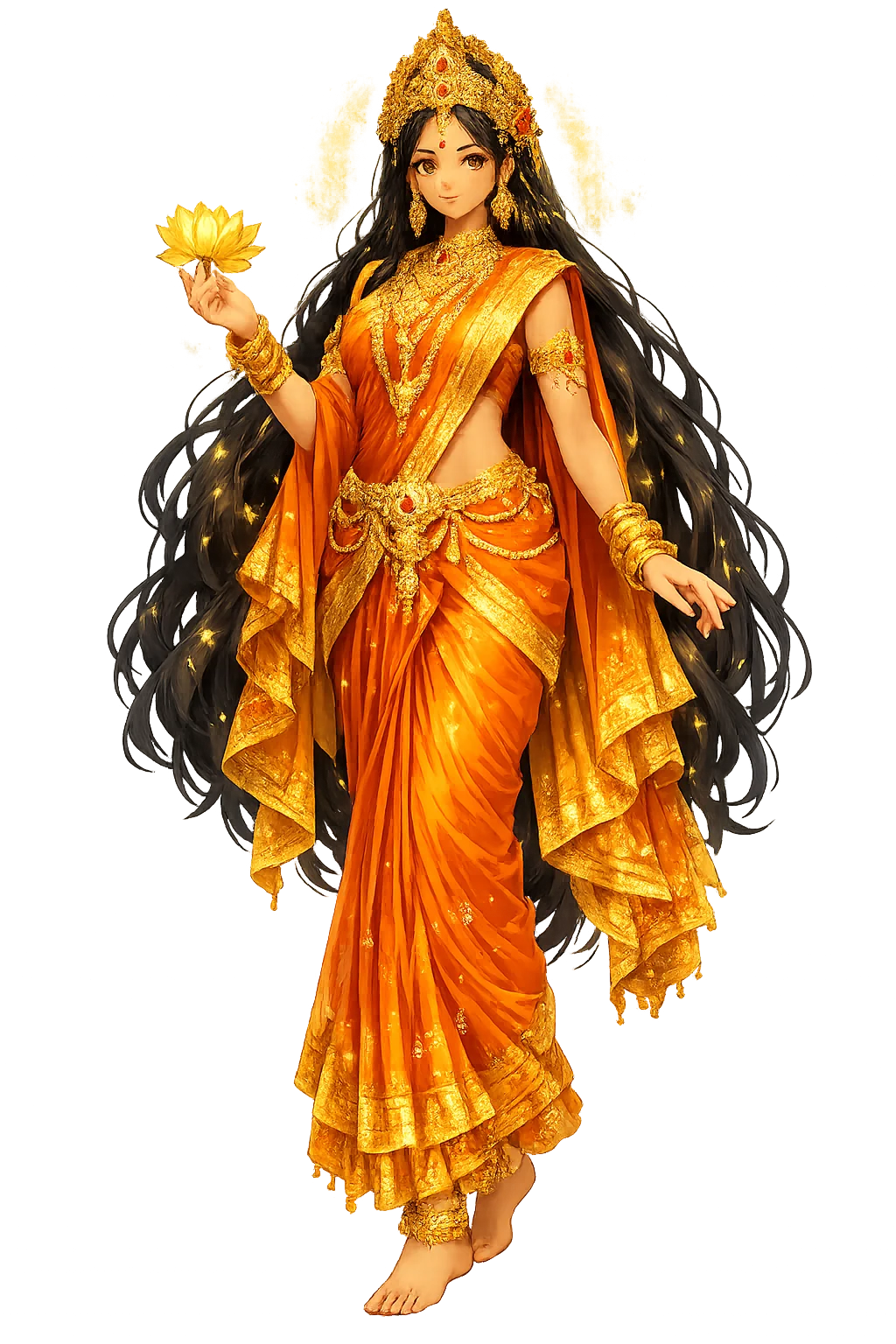
Sacred SymbolsThe furrow, The golden deer, The fire, The lotus
02

Etymology & Word Family

From original script to Unicode restoration

Original Script सीता Sītā — "a furrow, the track or line of a ploughshare (also personified, and apparently once worshipped as a kind of goddess resembling Pomona; in RV. iv, 57, 6"
Unicode Restoration Sītā Restored stress, length, and script
Modern ASCII sita Plain-ASCII fallback

Sanskrit sītā carries two long vowels; the restoration Sītā keeps both macrons. Her name means "furrow" — the plough-line of the field from which she rose — making hers the rare theonym that is a farm word before it is a goddess, and the two macrons are the whole of its written dignity.

03

Unicode Character Breakdown

Character-by-character philological analysis

CharacterUnicodeNameBlockPhonetic Role
SU+0053Latin Capital Letter SBasic LatinSame
īU+012BLatin Small Letter I with MacronLatin Extended-AMacron: long i
tU+0074Latin Small Letter TBasic LatinSame
āU+0101Latin Small Letter A with MacronLatin Extended-AMacron: long a

The Tier 1 classification reflects which ancient features stress, length, or script are preserved in this restoration.

04

Cultural Significance

From ancient cult to modern Unicode

Ancient Domain

Sītā is the epic of India told from its quiet center: the furrow-born princess whose abduction sets the Rāmāyaṇa in motion, whose fidelity survives fire, and whose final return is not to her husband but to the earth that bore her. She is virtue tested past every reasonable limit — and found whole.

Sītā in Later Traditions

Across Asia she travels with the epic: Thailand's **Sida** in the Ramakien, Cambodia's and Laos' Reamker versions, Indonesia's Kakawin Rāmāyaṇa, and the Jain tellings that soften the fire. In Nepal she is Janaki, daughter of Janakpur — the nation claims her birthplace and keeps her festival. The bhakti traditions make her inseparable from Rāma (Sītā-Rāma as one object of worship), and the Śākta readings make her the goddess herself in human trial: the earth-goddess borrowing a biography.

Modern Legacy

Sītā is the standard by which Indian womanhood has been both honored and constrained — the "Sītā ideal" of fidelity and endurance, and the modern feminist re-reading that asks why the proving was hers to do. Her festivals (Sītānavamī, Vivāha Panchamī at Janakpur) draw millions; the Madhubani painting tradition of her Mithilā homeland depicts her in every home; Bollywood and television return to her constantly. Every debate on dignity, loyalty, and who owes whom proof in India runs, sooner or later, through the furrow.

Unicode Restoration as Cultural Act

Restoring Sītā in a domain name is more than orthographic accuracy. It is a statement that the internet should recognize the full range of human writing — not only the ASCII keyboard.

05

Frequently Asked Questions

Common questions about Sītā, Virtue, Devotion, Fertility, and Unicode restoration

01How do you pronounce Sītā?

In reconstructed pronunciation, Sītā is /sˈiːtaː/ — approximately SEE-taa — both vowels long, even and open..

02What does Sītā mean?

Sītā means a furrow, the track or line of a ploughshare (also personified, and apparently once worshipped as a kind of goddess resembling Pomona; in RV. iv, 57, 6 in the sanskrit tradition.

03What are the symbols of Sītā?

Sītā is associated with The furrow (Her name and origin: the ploughed line — fertility, labor, and the earth's patience), The golden deer (The lure that crossed her threshold — desire engineered as trap), The fire (Proof demanded of the innocent; the trial that should never have been asked), The lotus (Her purity in every depiction from temple bronze to Madhubani painting).

04Why restore Sītā in Unicode?

Plain ASCII sita strips the stress, length, and script that make the name specific. Unicode restoration returns the name to its original written dignity.

05What is the most important myth about Sītā?

King Janaka of Mithilā, ploughing a sacrificial field, struck something that was not stone: an infant in the furrow, whom he named Sītā — "furrow" — and raised as his daughter. Earth-born, not womb-born, the texts insist: her mother is the field itself, and the Rāmāyaṇa's most beloved heroine begins as a gift of agriculture. Her marriage to Rāma follows the bow of Śiva that only he could string.

06

Scholarly Sources

The philological foundations of this restoration

Every claim on this page is grounded in established scholarship. The orthographic restorations follow disciplinary convention. The etymological chain follows the best available reference works. This is not invention — it is resurrection through scholarship.

Lexicography & Philology

  • MW
  • KEWA

Primary Texts

  • The Ṛgveda; the Śatapatha Brāhmaṇa; the early Upaniṣads; the Śiva Purāṇa and Liṅga Purāṇa.

Archaeology & Art History

  • Material evidence — iconography, inscriptions, and temple archaeology — for Sītā and related cults.
  • Janakpur in Nepal's Terai keeps her city: the Janaki Mandir (1911, on older foundations) marks the site tradition calls her birthplace-home, and the Ram-Janaki Vivāha festival re-enacts the wedding annually. Mithilā's painted tradition (Madhubani/Maithil art, from the kohbar wedding-chamber murals) is among the world's oldest continuously practiced narrative arts. The Rāmāyaṇa sites across India and Sri Lanka — the Aśoka Vatika candidates near Nuwara Eliya, the Sītā Amman temple there — form the epic's living pilgrimage map.

Religious Studies

  • Ramayana
  • Monier-Williams
  • Puranas
  • MW
  • Cambridge
  • Oxford
Return

The Surface Awaits

You have traced the name from its earliest attestation to its Unicode restoration. Now return to the myth. The story is where the name lives.

Back to Lore
Sītā mascot