
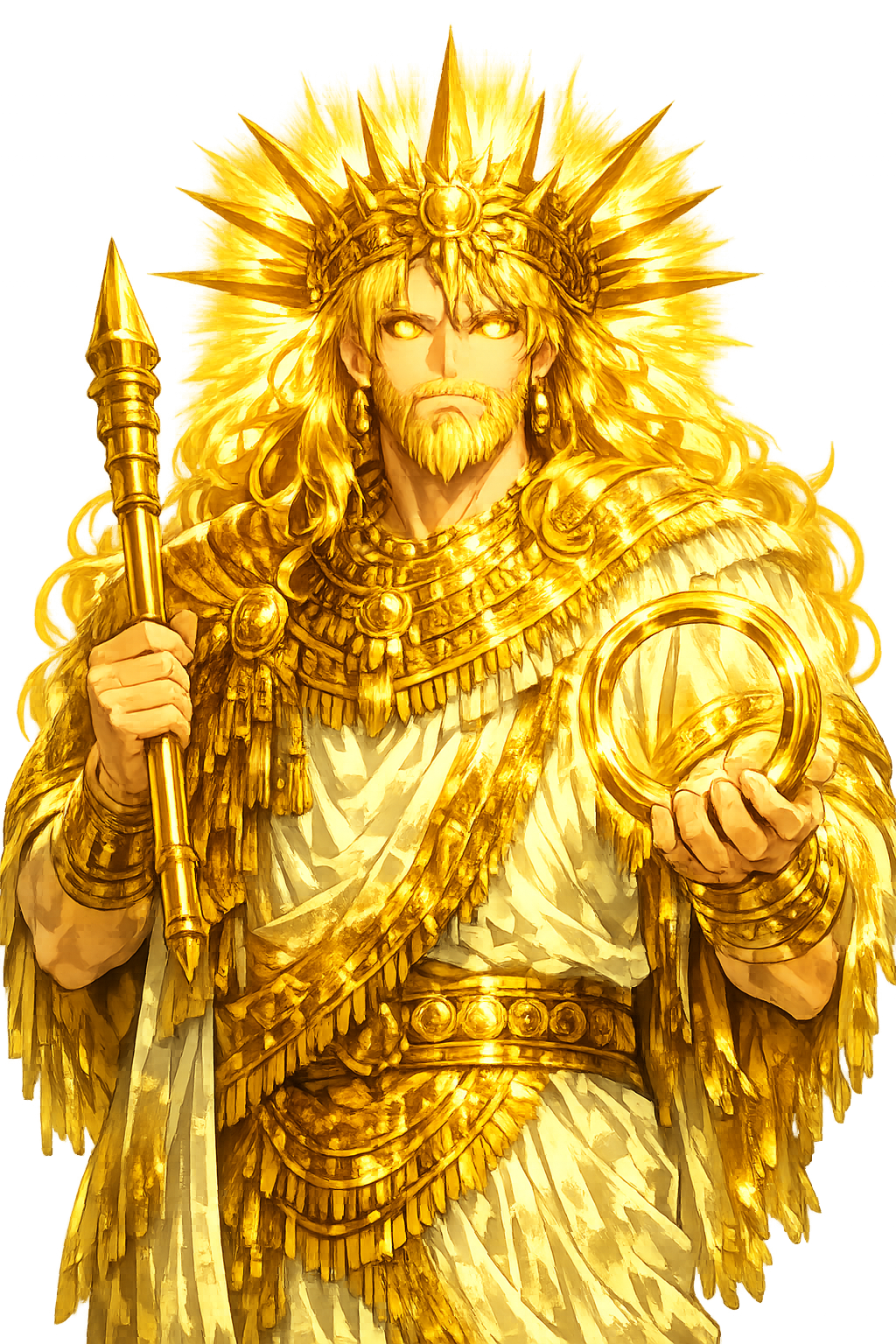
Why Šamaš is spelled that way — and what it costs to get it right
There is a version of this name the early internet had to settle for: shamash. This is the file on how Šamaš replaced it.
Šamaš's myths are hymns, legal preludes, and royal testimonies rather than long narratives. His power is assumed, praised, and appealed to; his daily rising is the central miracle that needs no elaborate story to be authoritative.
At a Glance
- Restored name: Šamaš
- ASCII form: shamash
- Meaning: "Sun (Akkadian Šamaš)"
- Domain of influence: Sun, Justice, Law
- Pantheon: Mesopotamian
- Classification: Tier 1
- Original script: 𒀭𒌓
- Series: The Restoration Files, No. 219 of 271
The Name Before the Marks
Spoken, the name runs `/ˈʃa.maʃ/` — 'SHAH-mahsh' — both sh sounds are like English 'ship'; stress the first syllable.
The Temple That Stands Now
The restored name is not a plaque; it is an address. The temple of Šamaš lives at /sites/shamash/, with its mythology in the lore halls, its peer-reviewed record in the Scholarly Edition, and its place in the pattern atlas on the patterns floor.
Tier-1 is not a compliment; it is a measurement. This restoration keeps something the ASCII form provably loses, and the measurement is repeatable.
Where the Name Stood First
Šamaš's principal cult center was the E-babbar ('White House') at Sippar, excavated by Iraqi and British teams; temple archives yielded hundreds of administrative and hymnic tablets. A second major temple stood at Larsa, where rulers such as Rim-Sîn and Hammurabi sponsored renovations. The famous stele of Hammurabi, now in the Louvre, depicts the Babylonian king receiving authority from Šamaš. Sun-discs, door-sockets, and royal inscriptions naming Šamaš have been recovered from Ur, Babylon, Nineveh, and Assur, testifying to a cult that spanned the whole Mesopotamian floodplain. The temple on the web is the newest of these addresses — the first one that fits in a pocket.
The Archetype at Work
The pattern atlas seats this temple in 4 industries, each match argued and weighted: Legal, Justice & Compliance (the sun of justice who handed Hammurabi his laws.); Solar & Renewable Energy (the physical light that climbs the eastern mountains each morning; Mesopotamia’s sun made god, the industry’s daylight deified.); Finance, Wealth & Commerce (honest merchants weighed their goods before him; the scales of fair dealing.). The Resonance File reads those seats through the myths themselves.
In the Sacred Texts
The Mesopotamian tradition is not a vibe; it is a library. The Sacred Texts collection holds Enūma Eliš and The Epic of Gilgamesh — the primary sources the temple's scholarship is built on. The temple is the argument; the texts are the evidence.
The File Continues
The temple's founding dispatch tells the name's story; its Resonance File reads the myths into the industries; the blog index holds the whole archive.
Continue the series — previous file: Śākyamuni (read it here) · next file: Ṣàngó (read it here).
The Restoration Files are written from the same canonical record as the temples themselves: the lexicon, the lore catalog, the pattern atlas, and the cited scholarly sources. If a file ever disagrees with its temple, the temple is right — tell us, and the file will be corrected.