PuniCodex

Extended Lore

𓋇𓏏𓁐 Sšꜣt

Etymology · Phonology · Orthography · Cultural Legacy · Primary Sources

Tier 1 Sšꜣt.com
Sšꜣt — Writing, Architecture
01

Quick Facts

Essential information about Sšꜣt, Writing, Architecture

Original Script𓋇𓏏𓁐
Unicode RestorationSšꜣt
Reconstructed Pronunciation/ˈsɛː.ʃat/
PantheonEgyptian
DomainWriting, Architecture
MeaningShe who scrivens
ClassificationTier 1
Primary DomainSšꜣt.com
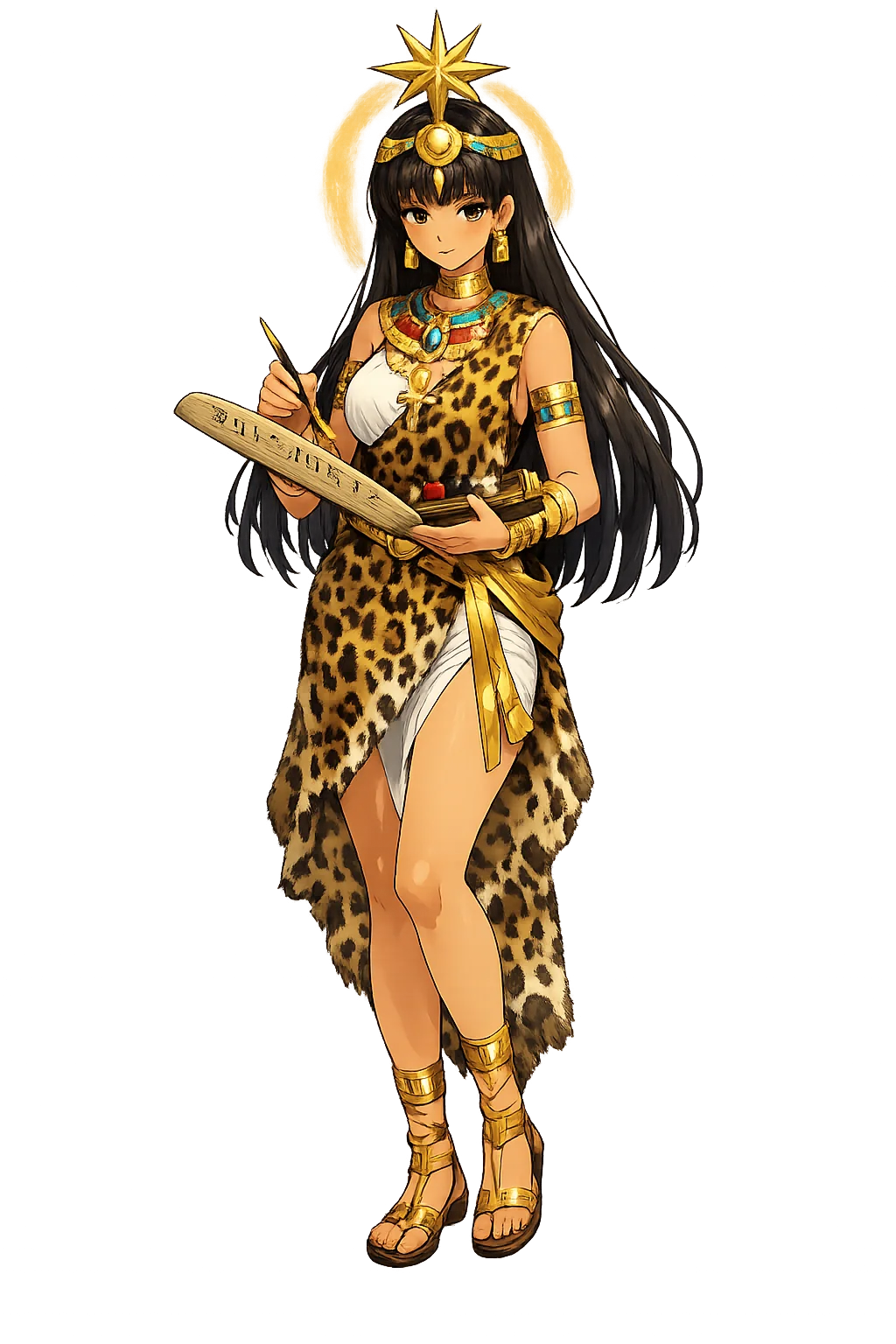
Sacred SymbolsThe seven-pointed star, The palm-rib, The leopard skin, The writing kit
02

Etymology & Word Family

From original script to Unicode restoration

Original Script 𓋇𓏏𓁐 Sšꜣt — "She who scrivens"
Unicode Restoration Sšꜣt Restored stress, length, and script
Modern ASCII seshat Plain-ASCII fallback

sšꜣt is conventionally vocalized "Seshat"; the doubled s of older "Sesheta" spellings and the final t mark her as the female counterpart of Thoth in both function and grammar. The ꜣ (Gardiner G1, the vulture) is the glottal stop the restoration keeps, where older books printed a plain "a."

03

Unicode Character Breakdown

Character-by-character philological analysis

CharacterUnicodeNameBlockPhonetic Role
SU+0053Latin Capital Letter SBasic LatinSame, capitalized
šU+0161Latin Small Letter S with CaronLatin Extended-ASibilant š (palatal s)
U+A723Latin Small Letter Egyptological AlefLatin Extended-DAlef ꜣ: glottal stop
tU+0074Latin Small Letter TBasic LatinSpecial phonetic character
N/ADropped characterEgyptian orthographyDropped: vowel not written

The Tier 1 classification reflects which ancient features stress, length, or script are preserved in this restoration.

04

Cultural Significance

From ancient cult to modern Unicode

Ancient Domain

sšꜣt is Egypt's goddess of everything written down: founder of libraries, keeper of the royal annals, and the king's partner in the "stretching of the cord" — the rite that laid every temple's axis on the stars. Seven-pointed star above her head, palm-rib in her hand, she is precision itself.

Sšꜣt in Later Traditions

The Greeks found no clean equivalent — she sits between the Muses, Mnemosyne, and Athena Polias' architectural side — and mostly left her untranslated, a mark of how specifically Egyptian the office was. In Hermetic literature her functions migrate toward Thoth-Hermes Trismegistus: the great scribe absorbs his lady's archive. Modern revivals quietly restored her: she is the unofficial patroness of librarians, archivists, and surveyors who know her seven-pointed star.

Modern Legacy

She embodies an idea the modern world runs on: that power follows from record — the survey, the ledger, the archive. Egyptologists cite her rite in every study of temple alignment (the "stretching of the cord" is the founding document of archaeoastronomy), and her palm-rib is the ancestor of every tally, census, and database. Wherever a foundation stone is laid by measure rather than by guess, her cord is still stretched.

Unicode Restoration as Cultural Act

Restoring Sšꜣt in a domain name is more than orthographic accuracy. It is a statement that the internet should recognize the full range of human writing — not only the ASCII keyboard.

05

Frequently Asked Questions

Common questions about Sšꜣt, Writing, Architecture, and Unicode restoration

01How do you pronounce Sšꜣt?

In reconstructed pronunciation, Sšꜣt is /ˈsɛː.ʃat/ — approximately SEH-shaht; the middle consonant is the aleph (ꜣ), not the ayin..

02What does Sšꜣt mean?

Sšꜣt means She who scrivens in the egyptian tradition.

03What are the symbols of Sšꜣt?

Sšꜣt is associated with The seven-pointed star (Her crown-emblem — celestial order marked above the leopard skin), The palm-rib (The tally of years; chronology as sacred craft), The leopard skin (The priestly robe she wears — keeper of the deepest rites), The writing kit (Palette and reed — the tools that make memory permanent).

04Why restore Sšꜣt in Unicode?

Plain ASCII seshat strips the stress, length, and script that make the name specific. Unicode restoration returns the name to its original written dignity.

05What is the most important myth about Sšꜣt?

The "stretching of the cord" opens every temple: at night, sighting the stars, the king and sšꜣt stretch the cord between stakes to fix the building's axis. Reliefs from Seti I's Abydos to the Ptolemaic temples show the rite exactly: the goddess facing the king, mallet and pole in hand, the text saying "I hold the peg." A temple in Egypt is not built; it is measured into alignment with the turning sky.

06

Scholarly Sources

The philological foundations of this restoration

Every claim on this page is grounded in established scholarship. The orthographic restorations follow disciplinary convention. The etymological chain follows the best available reference works. This is not invention — it is resurrection through scholarship.

Lexicography & Philology

  • Faulkner, R. O. A Concise Dictionary of Middle Egyptian. Oxford: Griffith Institute, 1962.
  • Wb

Primary Texts

  • The Pyramid Texts; The Coffin Texts; The Book of the Dead.

Archaeology & Art History

  • Material evidence — iconography, inscriptions, and temple archaeology — for Sšꜣt and related cults.
  • Her iconography is remarkably consistent across three millennia: leopard-skin robe, seven-pointed emblem on a double horizontal bar, palm-rib in hand. The finest foundation reliefs — Seti I at Abydos, Hatshepsut's foundation deposits, Edfu and Dendera's Ptolemaic versions — show the cord-stretching in identical form, a ritual grammar unchanged from Old Kingdom to Rome. Foundation deposits under real temples (model tools, plaques, the cord's physical traces) confirm the rite was performed, not just pictured.

Religious Studies

  • Gardiner
  • Te Velde
  • Allen, Middle Egyptian
  • Bonneau
  • Egyptology
Return

The Surface Awaits

You have traced the name from its earliest attestation to its Unicode restoration. Now return to the myth. The story is where the name lives.

Back to Lore
Sšꜣt mascot