Unicode restoration and ASCII comparison
Πόντος
The name in its original Greek form. Póntos (Πόντος) is attested in the source tradition — “Sea (from πόντος)”. Its acute accents carry the full phonetic and orthographic weight of the source tradition.
pontos
Reduced to plain pontos, the name loses everything that made it specific: acute accents. What remains is an ASCII string that machines can parse but that no longer speaks with its original voice.
Póntos
The Unicode restoration recovers what ASCII flattened. Póntos restores acute accents, returning the name to its original written dignity. The domain encodes to Punycode, but the browser displays the truth.
Póntos.com → xn--pntos-0ta.com
The non-ASCII characters in Póntos are encoded while the ASCII remains visible. To the DNS, it is Punycode. To humanity, it is Póntos.
How Póntos travels from ancient script to the modern URL
Greek Πόντος; from πόντος “sea"; the personification of the sea.
The Primordial Sea
The Unicode restoration Póntos preserves Greek stress and length; the ASCII form pontos loses these features.
How Póntos was spoken
Open Water, Sea Creatures, and the Dangerous Deep
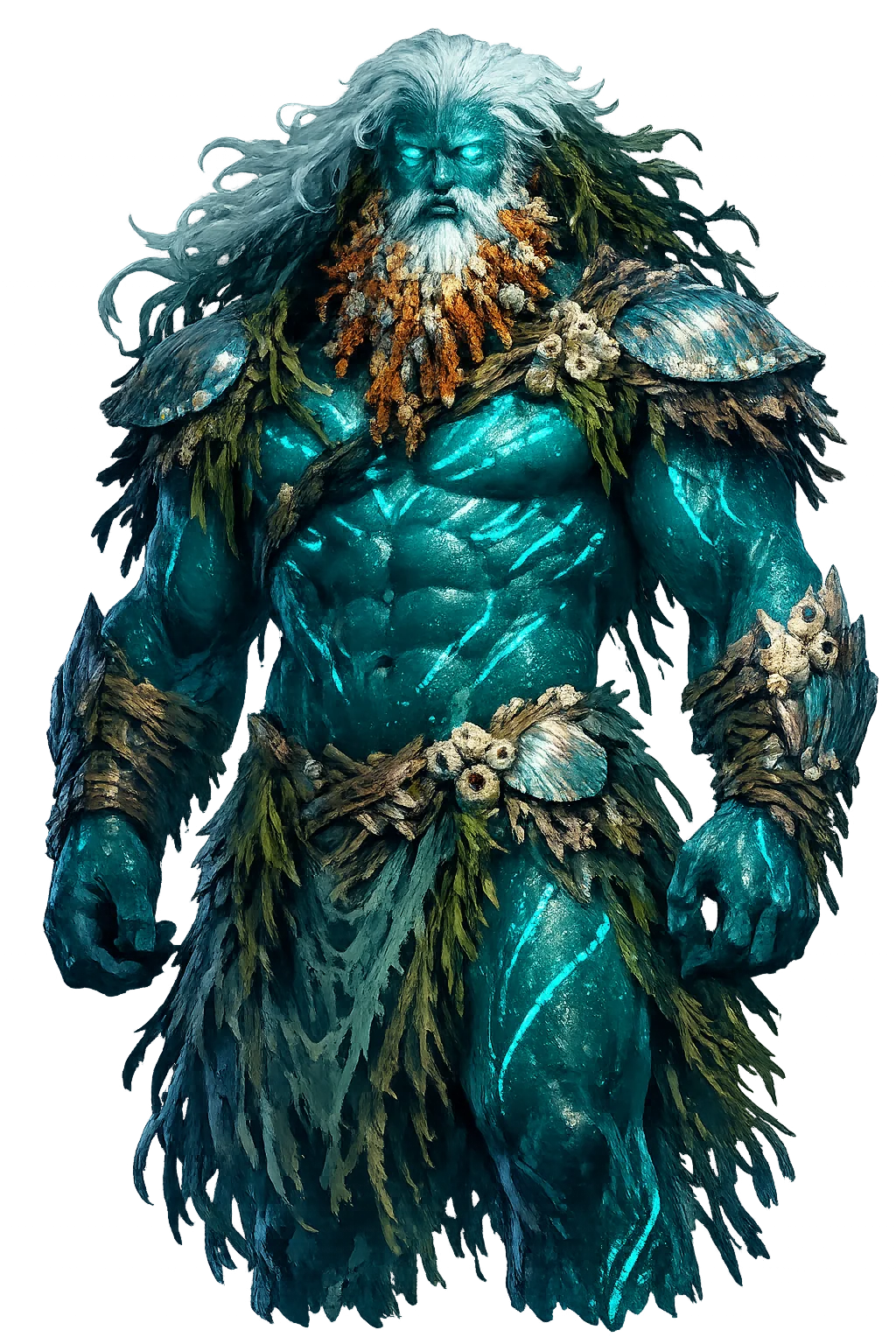
Póntos is the sea as primordial body, older than Poseidôn's rule. He is Gaia's son, the father of sea-gods and sea-monsters, the surface across which Greek life depended and beneath which Greek sailors feared to go. Where Poseidôn is the storm, Póntos is the water.
The surface of the deep, the path between cities, the barrier and highway of the Greek world.
His children include Nereus the Old Man of the Sea, Phorcys and Ceto the parents of monsters, and Thaumas father of the Harpies.
Beneath his surface lie monsters, chasms, and the unknown; sailors propitiated him before voyages.
The Euxine Pontos — the 'Hospitable Sea' — was named after him; Greek colonization spread across his waters.
The etymology of Pontos is debated: some connect it to PIE *pont-eh2 "path" or "crossing," while Beekes argues for a Pre-Greek substrate. The name of the Black Sea, Pontos Euxeinos, is itself a euphemism — the earlier form was Pontos Axeinos, "Inhospitable Sea." The shift from hostility to hospitality is a study in Greek colonial rhetoric.
Stories of Póntos
Póntos has few myths because he is a personification rather than a character. His importance is genealogical: he is the source of the sea's divine population.
In Hesiod's Theogony (131–132), Gaia bears Pontos 'without delightful love' — that is, parthenogenetically. He is therefore as old as the mountains and as fundamental as the sea itself. His birth from Gaia makes him the wet, mobile counterpart to the Ourea, the mountains born from her at the same time.
With Gaia, Pontos fathered Nereus (the Old Man of the Sea, father of the Nereids), Thaumas (father of Iris and the Harpies), Phorcys and Ceto (parents of the Gorgons and Graeae), and Eurybia (goddess of the mastery of the sea). This genealogy makes Pontos the ancestor of everything monstrous and marvelous in the Mediterranean.
The Greeks called the Black Sea the Euxine Pontos, the 'Hospitable Sea' — a euphemism, since its storms and hostile shores made it dangerous. Greek colonies lined its coast from the eighth century BCE onward, and the sea became a major artery of trade, grain, and culture. To sail the Pontos was to enter the god's own territory.
Póntos received sacrifices and prayers from sailors, fishermen, and coastal cities. Unlike Poseidôn, who had major Panhellenic sanctuaries, Pontos was worshipped locally and impersonally — the sea itself rather than a ruling god. His cult reflects the Greek awareness that the sea was too vast and indifferent to be fully personified.
Póntos is the sea before it has a mood. He is not angry or calm; he simply is. This makes him less dramatic than Poseidôn but more fundamental. The Greeks crossed him, fished him, feared him, and named him, but they never fully domesticated him.
Enter Extended Lore