The Authentic Orthography
Titaness of Prophecy · Titaness of Prophecy · Bright, shining
Unicode restoration and ASCII comparison
Φοίβη
The name in its original Greek form. Phoíbē (Φοίβη) is attested in the source tradition — “Bright, shining”. Its diphthongs, long vowels, and acute accents carry the full phonetic and orthographic weight of the source tradition.
phoebe
Reduced to plain phoebe, the name loses everything that made it specific: diphthongs, long vowels, and acute accents. What remains is an ASCII string that machines can parse but that no longer speaks with its original voice.
Phoíbē
The Unicode restoration recovers what ASCII flattened. Phoíbē restores diphthongs, long vowels, and acute accents, returning the name to its original written dignity. The domain encodes to Punycode, but the browser displays the truth.
Phoíbē.com → xn--phob-xpa3u.com
The non-ASCII characters in Phoíbē are encoded while the ASCII remains visible. To the DNS, it is Punycode. To humanity, it is Phoíbē.
How Phoíbē is preserved in writing
A bespoke provenance study for Phoíbē is being prepared by the PUNICODEX scholarly team.
Contribute scholarly provenance →Owned, ideal, and ASCII forms of Phoíbē
Phoíbē
Restores Φοίβη. The live temple domain — phoíbē.com.
phoebe
Flattens Φοίβη. The plain ASCII fallback — what DNS and legacy systems see.
How Phoíbē was spoken
Titaness of Prophecy, Keeper of the Oracle before Apollo
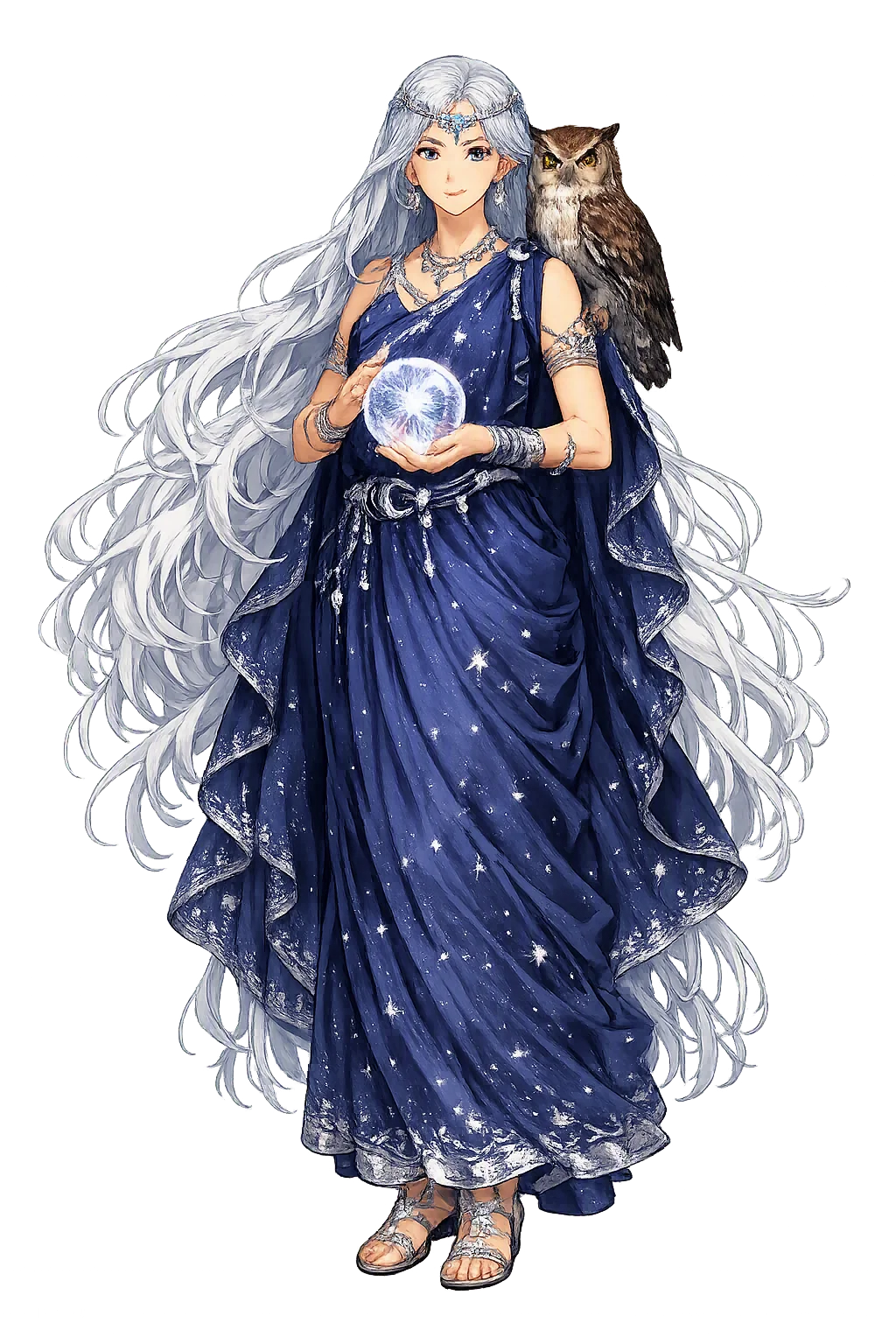
Phoíbē is the Titaness of prophecy, the 'shining one' whose name is simply the feminine of φοῖβος, 'bright'. Before Apollo ever spoke at Delphi, the Pythia's own prayer names her the oracle's third keeper — after Gaia and Themis — who passed the seat to her grandson as a birthday gift. She is light as foresight: the radiance that sees before it shines.
Aeschylus gives Delphi’s succession as Earth, then Themis, then Phoíbē — who yields the seat to Apollo as a birthday gift (Eumenides 1–8).
Her name is the feminine of Phoîbos, “the bright one” — the shining, prophetic power she hands down to her grandson.
Stories of Phoíbē
Phoíbē stands quietly at the hinge of Greek myth: a Titan of the eldest generation whose role is to inherit and to hand on — the oracle to Apollo, the bloodline to Leto. Her myths are genealogies that glow: everything she touches passes light forward.
In the Theogony (132–136), Hesiod catalogues the twelve Titans born to Ouranos and Gaia — Ocean, Koios, Krios, Hyperion, Iapetus, Theia, Rheia, Themis, Mnemosyne, Tethys, and Kronos — and among them 'Phoíbē of the golden crown' (Φοίβην τε χρυσοστέφανον). She is one of the few in the list to carry an epithet at all, and hers is an epithet of light. Hesiod records no deed of hers; the eldest Titans are not actors but origins, the generation from which the Olympian world descends.
Later in the Theogony (404–410), Phoíbē 'ascended the much-desired couch of Koios' (Φοίβη δ' αὖ Κοίου πολυήρατον ἷξε λέχος εἰσαναβᾶσα) and conceived Leto — 'dark-robed, gentle, the mildest of all who dwell on Olympus'. The line continues without pause: Leto bears 'Apollo and arrow-pouring Artemis' to Zeus (Theogony 918–920), so Phoíbē stands at the head of the Delphic family, grandmother to the two Olympians of light. Hesiod gives the marriage no quarrel and no story beyond the bed and the child; for a Titaness of the first generation, the genealogy is the myth.
The opening lines of Aeschylus' Eumenides (1–8) preserve her greatest role. The Pythia, praying at Delphi, names Gaia 'first of prophets' and Themis second upon her mother's seat; third — 'with her consent, and by no violence' — sat 'another Titan, a child of Earth, Phoíbē'. Phoíbē then gave the throne to Apollo 'as a birthday gift' (γενέθλιον δόσιν), 'and he bears his name Phoíbos as a namesake from hers' (τὸ Φοίβης δ' ὄνομ' ἔχει παρώνυμον). It is the only peaceful succession in the violent history of the Greek gods: the oracle changes hands as a family inheritance, and the new god's famous epithet is, the tragedian insists, simply his grandmother's name.
Apollodorus (Library 1.4.1) gives her motherhood its full shape: from Koios and Phoíbē spring two daughters, Asteria and Leto. Asteria, 'the starry one', bears Hekátē to Perses (Theogony 409–412), the torch-bearing goddess of crossroads whom Zeus honors above all; Leto bears Apollo and Artemis. Through one daughter flows the lineage of night sky and moonlight, through the other the lineage of sunlit prophecy: both of Delphi's lights, in effect, are Phoíbē's grandchildren.
Phoíbē is nearly invisible in Greek worship, and that invisibility is the point: her significance is structural rather than devotional. She is the lawful transmission of prophecy. In a myth-world built on violent succession — Ouranos castrated by Kronos, Kronos overthrown by Zeus — Aeschylus makes hers the sole peaceful one: the oracle passes 'with consent and by no violence', as a gift, and even leaves its name behind as a family inheritance. The Greeks seem to have felt that foresight, unlike kingship, could not be seized; it had to be bequeathed. Her shining is therefore not the blaze of the sun but the quiet lamp of knowledge kept burning across generations — from Earth, through law in Themis, through her, into Apollo's daylight.
Enter Extended Lore