PuniCodex

Extended Lore

大国主 Ōkuninushi

Etymology · Phonology · Orthography · Cultural Legacy · Primary Sources

Tier 1 Ōkuninushi.com
Ōkuninushi — Nation-building, Marriage
01

Quick Facts

Essential information about Ōkuninushi, Nation-building, Marriage

Original Script大国主
Unicode RestorationŌkuninushi
Reconstructed Pronunciation/oːkɯnʲiɲɯɕi/
PantheonJapanese
DomainNation-building, Marriage
MeaningGreat land master
ClassificationTier 1
Primary DomainŌkuninushi.com
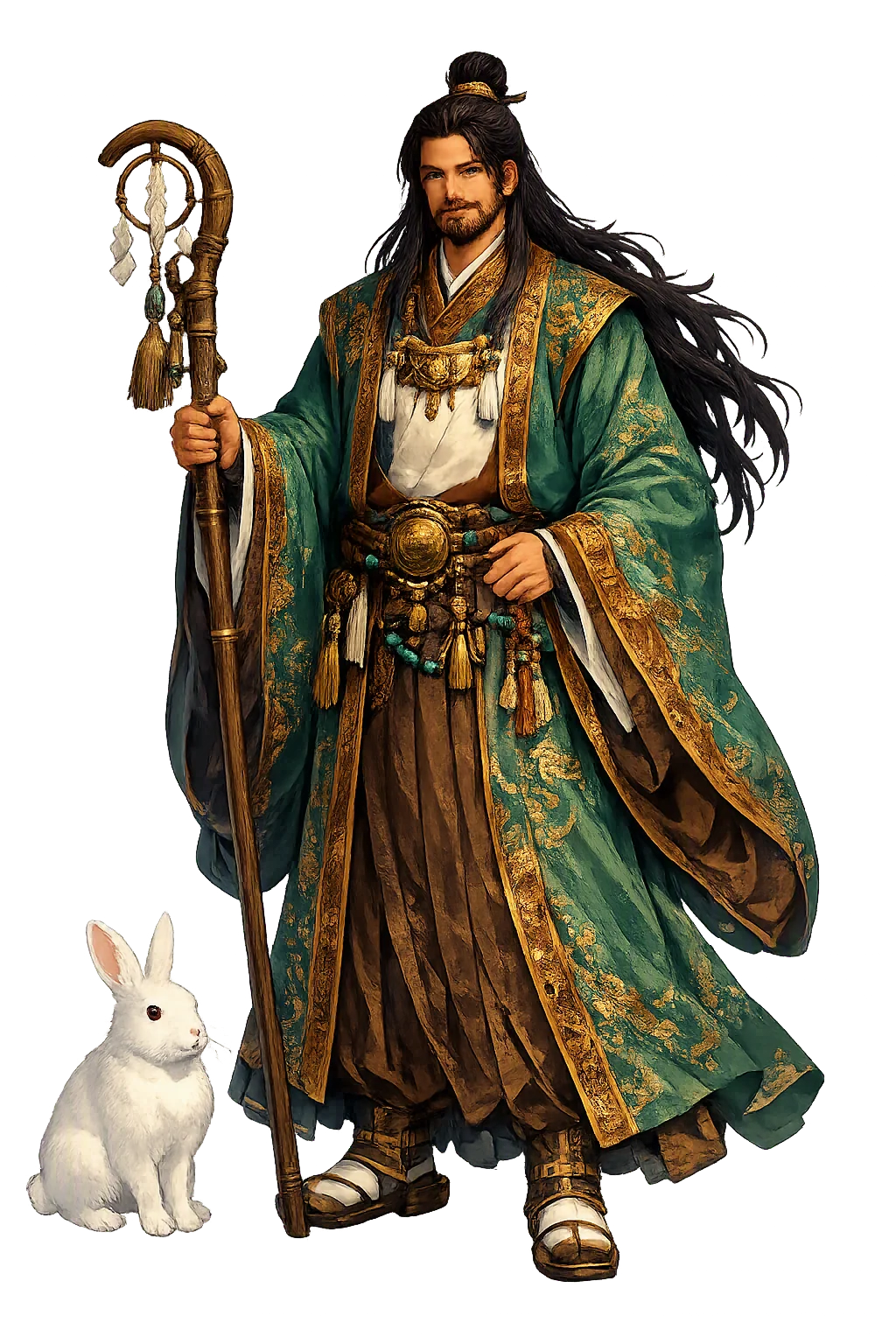
Sacred SymbolsWhite hare of Inaba, The great shimenawa, Susanoo's sword, bow and lute, The tiny boat of Sukunabikona, Herbs and the mortar
02

Etymology & Word Family

From original script to Unicode restoration

Original Script 大国主 Ōkuninushi — "Great land master"
Unicode Restoration Ōkuninushi Restored stress, length, and script
Modern ASCII okuninushi Plain-ASCII fallback

Tier-1: the restoration Ōkuninushi preserves the long vowel (macron Ō) that the ASCII Okuninushi erases — the very feature that marks Ō- 'great' as distinct from a plain o-. One preserved feature, mechanically verifiable: a single-tier Tier-1 name.

03

Unicode Character Breakdown

Character-by-character philological analysis

CharacterUnicodeNameBlockPhonetic Role
ŌU+014CLatin Capital Letter O with MacronLatin Extended-ALong vowel
kU+006BLatin Small Letter KBasic LatinSame
uU+0075Latin Small Letter UBasic LatinSame
nU+006ELatin Small Letter NBasic LatinSame
iU+0069Latin Small Letter IBasic LatinSame
nU+006ELatin Small Letter NBasic LatinSame
uU+0075Latin Small Letter UBasic LatinSame
sU+0073Latin Small Letter SBasic LatinSame
hU+0068Latin Small Letter HBasic LatinSame
iU+0069Latin Small Letter IBasic LatinSame

The Tier 1 classification reflects how much of the original phonology this restoration preserves — stress and vowel length for Greek names, distinctive letters and diacritics for every other tradition.

04

Cultural Significance

From ancient cult to modern Unicode

Ancient Domain

Ōkuninushi — the Great Land-Master — is the earthly sovereign of Japanese myth: the heir of Susanoo who subdued wild Izumo, built it into a nation with the dwarf-god Sukunabikona, and codified medicine, agriculture and the rites of marriage. His was the visible world — Ashihara no Nakatsukuni, the Central Land of Reed-Plains — until he ceded it to the heavenly line of Amaterasu in the act of statecraft the chronicles call kuni-yuzuri, the transfer of the land.

Ōkuninushi in Later Traditions

Japan's gods met no Roman pantheon; Ōkuninushi's later travels ran through Buddhism instead. Through the folk reading Daikoku-sama of the characters 大国, he was identified with Daikokuten, the Japanese form of Mahākāla, becoming the smiling god of wealth and the household hearth — one of the Seven Gods of Fortune. At Izumo the older identity survived intact: there he remains the great matchmaker of en-musubi, the binding of marriage fates, and in the month the rest of Japan calls Kannazuki, 'the godless month', Izumo calls it Kami-ari-zuki — 'the month the gods are here', when the eight million kami convene at his shrine.

Modern Legacy

Ōkuninushi still anchors the Izumo region of Shimane, where Izumo-taisha draws millions of pilgrims and couples across Japan pray to him as the nation's matchmaker. The white hare of Inaba endures as the emblem of Tottori prefecture, and his son Kotoshironushi presides over the great pilgrimage shrine of Kotohira in Shikoku. The word kuni-yuzuri itself remains the standard term for the peaceful cession of sovereignty — the god's abdication absorbed into the political vocabulary of Japan.

Unicode Restoration as Cultural Act

Restoring Ōkuninushi in a domain name is more than orthographic accuracy. It is a statement that the internet should recognize the full range of human writing — not only the ASCII keyboard.

05

Frequently Asked Questions

Common questions about Ōkuninushi, Nation-building, Marriage, and Unicode restoration

01How do you pronounce Ōkuninushi?

In reconstructed pronunciation, Ōkuninushi is /oːkɯnʲiɲɯɕi/ — approximately 'OH-koo-nee-NOO-shee' — five even morae; the long Ō is a doubled plain O, never an English diphthong; 'shi' is the soft Japanese shibilant..

02What does Ōkuninushi mean?

Ōkuninushi means Great land master in the japanese tradition.

03What are the symbols of Ōkuninushi?

Ōkuninushi is associated with White hare of Inaba (His first patient and his prophet: the flayed hare of Cape Keta whose healing proved Ōkuninushi's medicine and foretold his marriage to Yakami-hime; emblem of the province of Inaba.), The great shimenawa (The colossal sacred rope hung across the halls of Izumo-taisha — among the largest in Japan — marking the boundary of his enshrined presence.), Susanoo's sword, bow and lute (The regalia of lordship he carried out of Ne-no-Kuni with Susanoo's blessing — the storm-god's own charter for his rule over the land.), The tiny boat of Sukunabikona (The skiff of Metaplexis pod-husks (ama-no-kagami-no-fune) and the moth-skin cloak of the dwarf-god, emblem of the small partner in nation-building.), Herbs and the mortar (The pharmacology he and Sukunabikona devised for gods and men — beginning with the remedy of fresh water and katami (cattail) pollen prescribed for the hare.).

04Why restore Ōkuninushi in Unicode?

Plain ASCII okuninushi strips the stress, length, and script that make the name specific. Unicode restoration returns the name to its original written dignity.

05What is the most important myth about Ōkuninushi?

In the Kojiki (Book I), a hare from the isle of Oki tricks the wani sea-beasts into forming a bridge, is flayed for the deception, and meets the eighty cruel brothers of Ōnamuji, who mockingly prescribe a bath in salt sea-water — agony for its wounds. The youngest brother, Ōnamuji (later Ōkuninushi), advises instead a rinse in fresh river water and a roll in the pollen of katami, the cattail rush; the hare is healed. Grateful, the hare prophesies that Ōnamuji — not his eighty brothers — will win the hand of the princess Yakami-hime of Inaba. It is the first medical prescription in Japanese myth, and the deed that marks the future land-master out from his rivals.

06

Scholarly Sources

The philological foundations of this restoration

Every claim on this page is grounded in established scholarship. The orthographic restorations follow disciplinary convention. The etymological chain follows the best available reference works. This is not invention — it is resurrection through scholarship.

Lexicography & Philology

  • Kojiki
  • Nihon Shoki

Primary Texts

  • Kojiki
  • Nihon Shoki

Archaeology & Art History

  • Material evidence — iconography, inscriptions, and temple archaeology — for Ōkuninushi and related cults.
  • Izumo-taisha (Taisha-machi, Izumo, Shimane) is among the oldest and grandest shrines of Japan; the present main hall dates to 1744, but excavations in 2000 uncovered massive clustered pillar bases confirming medieval records of a towering earlier hall — the 'high pillars' the kuni-yuzuri myth demands. The region's cultic antiquity is independently attested by the 1984 Kojindani discovery, a ritual cache of 358 bronze swords, the largest single find of its kind in Japan.

Religious Studies

  • Comparative studies of japanese religion and the place of Ōkuninushi within it.
Return

The Surface Awaits

You have traced the name from its earliest attestation to its Unicode restoration. Now return to the myth. The story is where the name lives.

Back to Lore
Ōkuninushi mascot