Unicode restoration and ASCII comparison
Νίκη
The name in its original Greek form. Níkē (Νίκη) is attested in the source tradition — “Victory, conquest”. Its long vowels and acute accents carry the full phonetic and orthographic weight of the source tradition.
nike
Reduced to plain nike, the name loses everything that made it specific: long vowels and acute accents. What remains is an ASCII string that machines can parse but that no longer speaks with its original voice.
Níkē
The Unicode restoration recovers what ASCII flattened. Níkē restores long vowels and acute accents, returning the name to its original written dignity. The domain encodes to Punycode, but the browser displays the truth.
Níkē.com → xn--nk-nja7m.com
The non-ASCII characters in Níkē are encoded while the ASCII remains visible. To the DNS, it is Punycode. To humanity, it is Níkē.
How Níkē travels from ancient script to the modern URL
Greek Νίκη; from νίκη “victory"; the personification of victory.
Victory
The Unicode restoration Níkē preserves Greek stress and length; the ASCII form nike loses these features.
How Níkē was spoken
Triumph in War, Athletics, and Contests
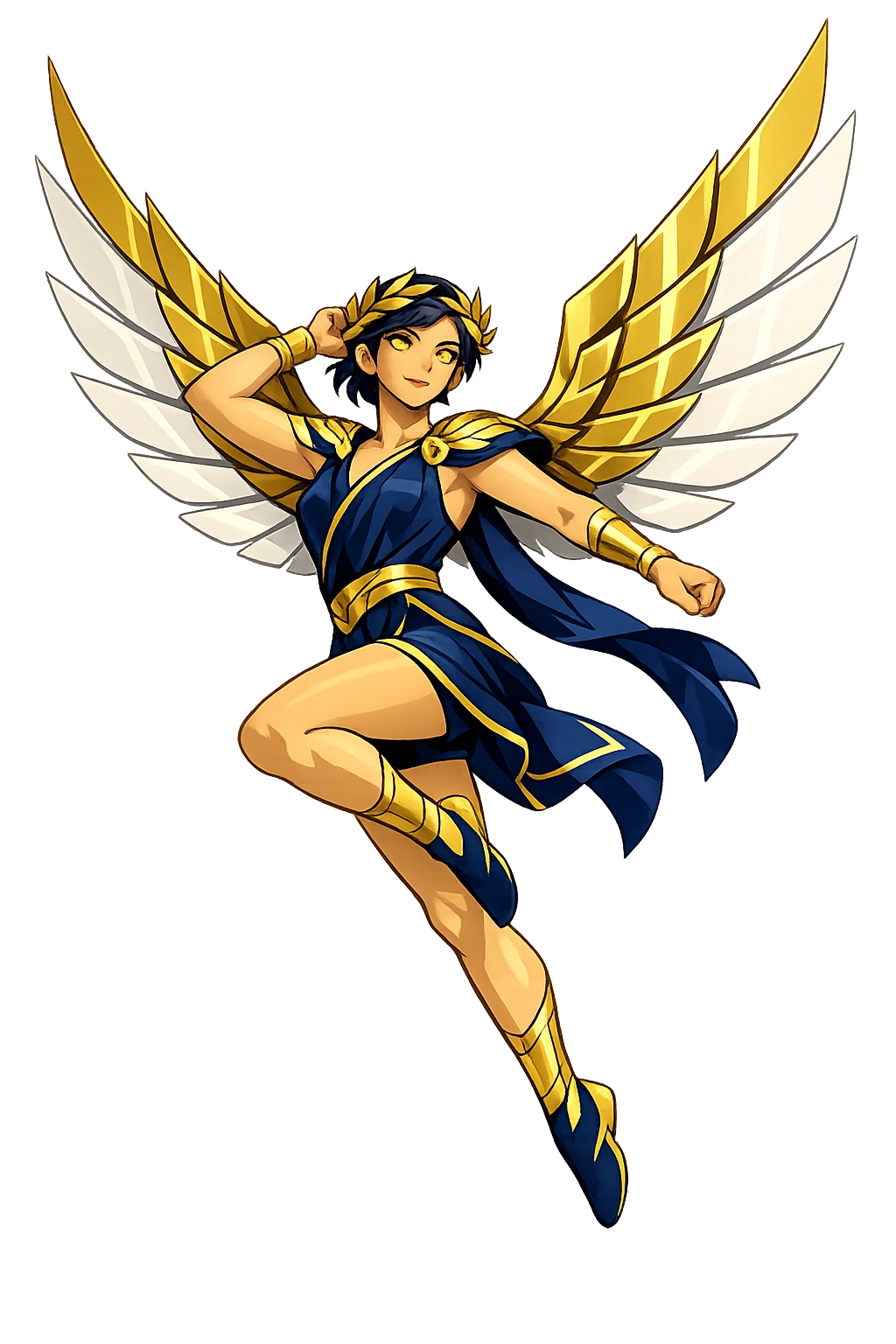
Níkē is not merely a personification; she is the divine power of winning. She stands beside Athena, Zeús, and Athletes, crowning the victor with laurel or fillet. In a culture that made competition the organizing principle of politics, athletics, and warfare, Níkē was everywhere.
She descends with Zeús to turn the tide of battle; she crowns the conqueror.
Every Panhellenic games ended with a victor crowned in her name; she is the glory of competition.
She is often winged, swift as rumor, bringing news of victory across land and sea.
She stands with Athena Nike on the Athenian Acropolis, the most famous victory cult in Greece.
Stories of Níkē
Níkē has few independent myths because she is an attribute of victory rather than a narrative protagonist. But her presence is decisive: she appears at the moment when struggle becomes triumph.
In the Theogony (384–385), Styx brings her children Zelos (Rivalry), Nike (Victory), Kratos (Power), and Bia (Force) to Zeús's side at the beginning of the Titanomachy. Níkē is therefore one of the first divine powers to align with the new Olympian order. Her presence guarantees that the war against the Titans will end in triumph.
On the Athenian Acropolis, Athena was worshipped as Athena Nike, 'Athena Victory.' A small temple stood at the edge of the citadel, its frieze depicting the victory over the Persians. The cult fused Athens's patron goddess with the abstract power of winning, making military success a religious obligation. The temple's remains still stand, one of the most elegant buildings in Greece.
The Athenians famously kept a statue of Níkē without wings in the city so that victory could never fly away from Athens. The temple of Níkē Apteros stood near the entrance to the Acropolis. This ritual immobilization of the goddess reveals the Greek anxiety that victory, like all good things, is fleeting unless bound by piety.
After Alexander the Great, Níkē became the standard goddess of royal and imperial victory. She crowns conquerors on coins, floats above battle scenes, and inscribes trophies. The Romans adopted her as Victoria; her image appears on countless imperial monuments. The winged figure of Victory became one of the most durable symbols of triumph in Western art, eventually influencing the Christian angel.
Níkē is the goddess of the decisive moment. She does not fight; she arrives when the fighting is done. She is not effort but its recognition, not struggle but its resolution. That is why the Greeks made her winged: victory is swift and can disappear just as quickly.
Enter Extended Lore