The Authentic Orthography
Middle Enclosure (Earth) · Middle enclosure (from mið + garðr)
Unicode restoration and ASCII comparison
ᛘᛁᚦᚴᛅᚱᚦᛁ
The name in its original Norse form. Miðgarðr (ᛘᛁᚦᚴᛅᚱᚦᛁ) is attested in the source tradition — “Middle enclosure (from mið + garðr)”. Its original diacritics and script distinctions carry the full phonetic and orthographic weight of the source tradition.
midgardr
Reduced to plain midgardr, the name loses everything that made it specific: original diacritics and script distinctions. What remains is an ASCII string that machines can parse but that no longer speaks with its original voice.
Miðgarðr
The Unicode restoration recovers what ASCII flattened. Miðgarðr restores original diacritics and script distinctions, returning the name to its original written dignity. The domain encodes to Punycode, but the browser displays the truth.
Miðgarðr.com → xn--migarr-qwad.com
The non-ASCII characters in Miðgarðr are encoded while the ASCII remains visible. To the DNS, it is Punycode. To humanity, it is Miðgarðr.
How Miðgarðr travels from ancient script to the modern URL
Old Norse Miðgarðr; from miðr “middle" + garðr “enclosure, yard"; the world of humans.
Middle Enclosure (Earth)
The Unicode restoration Miðgarðr uses registrable Thorn and vowel accents; the runic form is not used because runic TLD support is impractical.
How Miðgarðr was spoken
The domain of Miðgarðr
In the norse tradition, Miðgarðr governed middle enclosure (earth). The name encodes a sphere of power that shaped ritual, narrative, and social order.
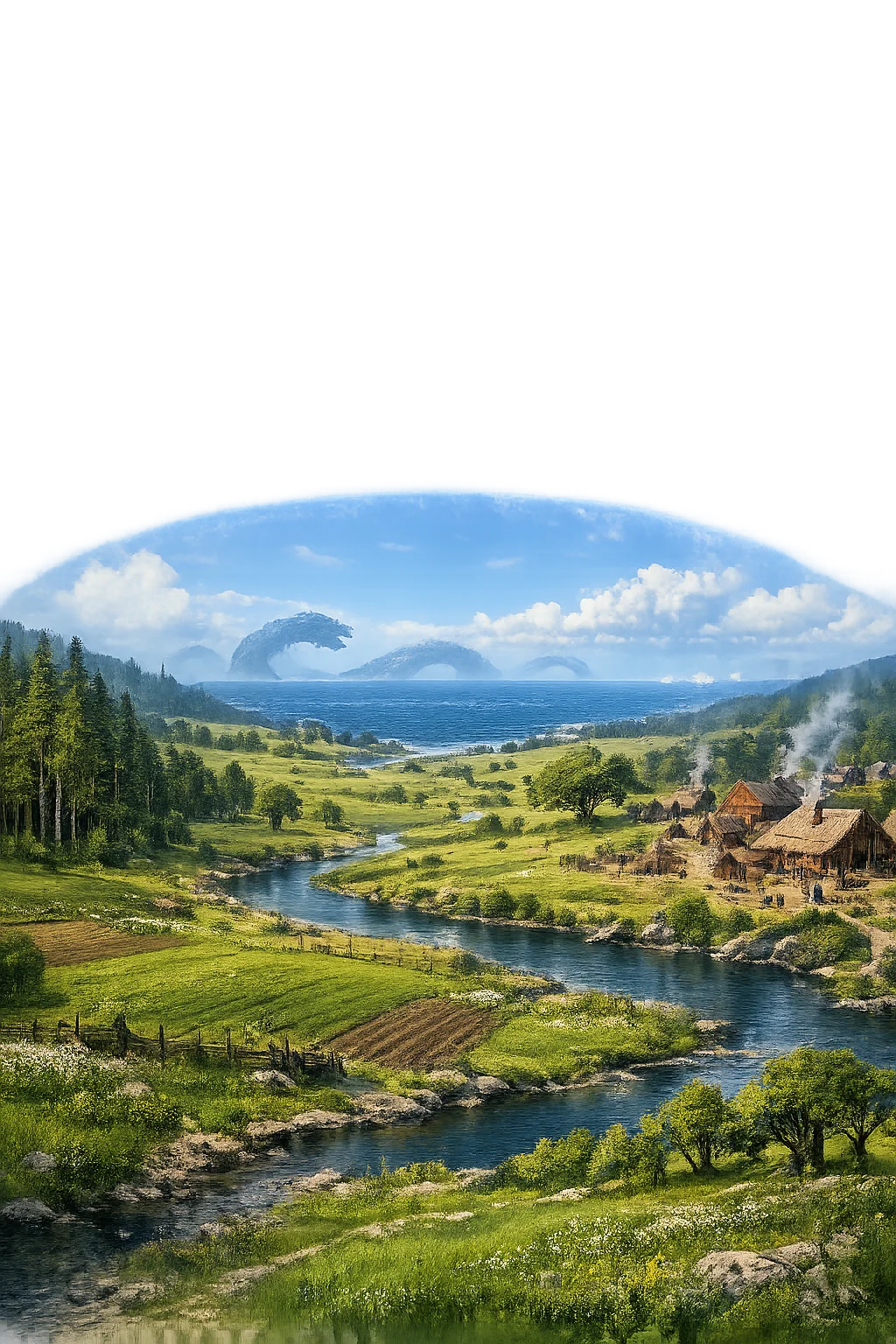
Miðgarðr is the fenced ring of human habitation carved from Ymir's flesh and set between gods and giants.
The gods made the earth from the giant's flesh, mountains from his bones, seas from his blood, and sky from his skull.
The world serpent encircles all land in the surrounding ocean, held at bay by Þórr's vigilance.
A garðr is a bounded enclosure; Miðgarðr is the protected middle world surrounded by wilderness and sea.
Stories of Miðgarðr
Miðgarðr is the middle enclosure, the world of human beings suspended between the divine realm of Ásgarðr above and the underworlds below. The gods carved it from Ymir's flesh, made its mountains from his bones, its seas from his blood, and set the Miðgarðsormr to encircle all land in the surrounding ocean. A fence of green fortification protects it from the giants, yet it remains permeable: gods cross its boundaries, and at Ragnarǫk those boundaries will fail. Within this ring dwell the races of women and men, placed there by the gods and granted the fields, forests, and shores that make mortal life possible. The very name survives in Old English middangeard and Old High German mittilagart, a shared Germanic image of the human dwelling-place ringed by the unknown. Miðgarðr is protected from the giants by the world-encircling sea and, in some sources, by a fence or the gods' vigilance. Its human inhabitants farm, trade, argue, and bury their dead within this bounded space. The concept gave Norse culture a powerful image of the civilized world as a fragile garden surrounded by wilderness, chaos, and the sea.
After the sons of Borr slew the primeval giant Ymir, his body became the substance of the world. His flesh was fashioned into earth, his blood into the sea, his bones into mountains, his hair into trees, and his skull into the sky. From his eyebrows the gods built a fence around the dwelling of men, and from his brains the clouds were scattered across the heavens.
This act of cosmic carpentry makes Miðgarðr literally a piece of the giant translated into habitable form. The violence at the origin of the world is never forgotten; it lingers in the landscape and in the giant's body that still surrounds and supports human life.
Þórr goes fishing with the giant Hymir, using the head of an ox as bait. He hooks none other than the Miðgarðsormr, the serpent that lies in the sea encircling Miðgarðr. As Þórr pulls the beast up, its venom drips and its eyes glare; Hymir, terrified, cuts the line, and the serpent sinks back into the deep.
The encounter is one of the defining images of Miðgarðr's fragility: the world is surrounded by a creature that could crush it, held at bay only by the vigilance of the thunder-god. At Ragnarǫk, the serpent will rise and the two will kill one another.
Names are not merely labels; they are compressed worlds. Miðgarðr carries within it a norse understanding of middle enclosure (from mið + garðr). Unicode restoration returns that world to readable form.
Enter Extended Lore