
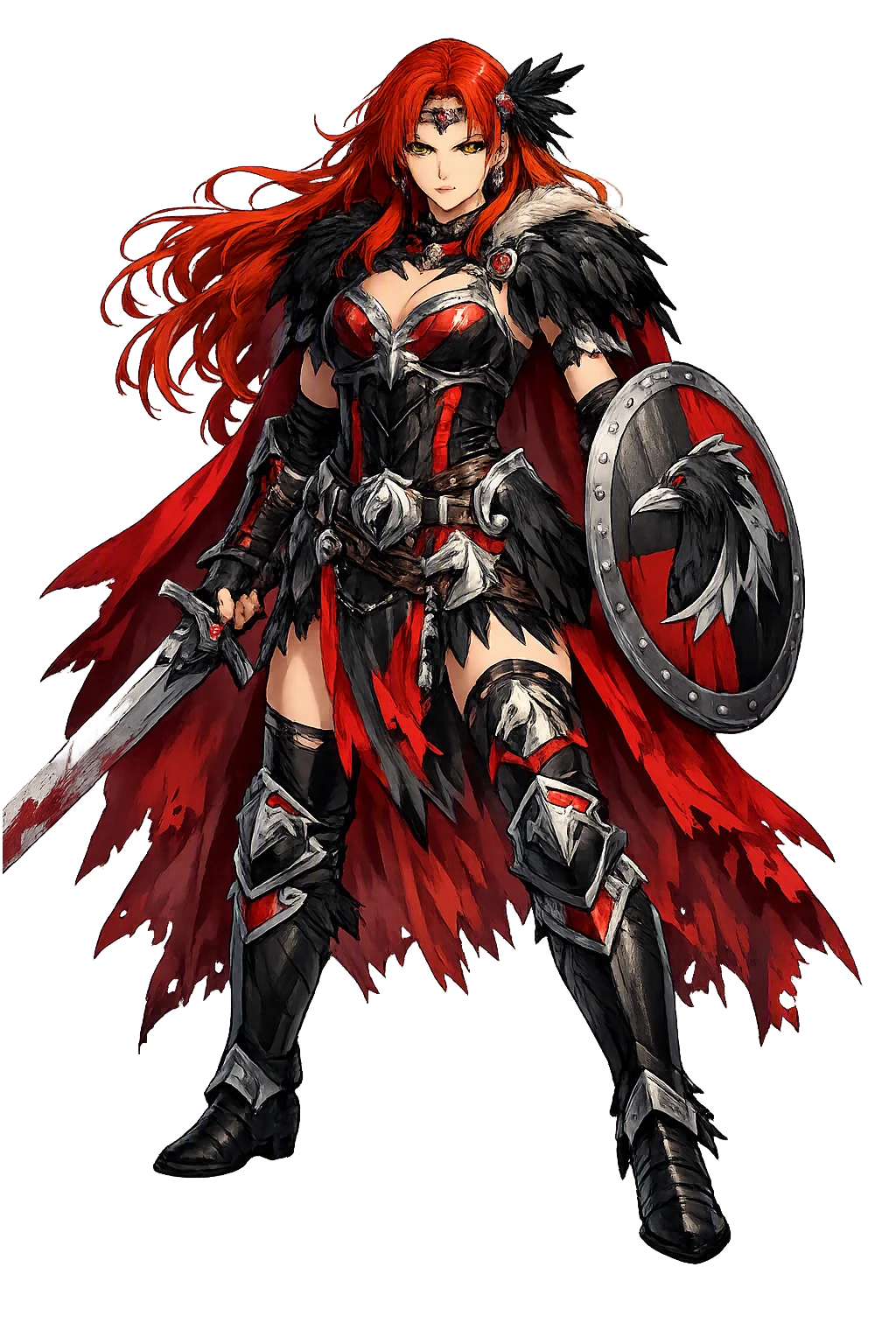
The provenance file on Macha
Provenance record 214 · Macha · one temple, fully accounted for.
Provenance
1. The attestation. —, from the tradition's own record. On record: Noínden Ulad (The Debility of the Ulaidians), ed. Vernam Hull, Celtica 8 (1968) — the woman at Cruinniuc's door; the race, the twins, and the curse, Táin Bó Cúailnge, Recension 1, ed. and trans. Cecile O'Rahilly (Dublin Institute for Advanced Studies, 1976) — the ces noínden in the epic; mesrad Machae, 'Macha's mast', Lebor Gabála Érenn, ed. and trans. R. A. S. Macalister (Irish Texts Society, 1938–56) — Macha wife of Nemed; Macha Mongrúad daughter of Áed Rúad; the three daughters of Ernmas, The dindsenchas of Emain Macha — the twinned etymologies: Macha's twins and Macha's brooch.
2. The narrative record. The Woman at Cruinniuc's Door — Cruinniuc mac Agnomain was a rich farmer of the Ulaid, a widower with sons, and one day a woman he had never seen walked into his house, set about the work of it without a word, and lay with him that night. She stayed, and under her hand everything prospered — the house, the cattle, the table — and she told him the one condition of their life together: he must never speak of her, never boast of her. The Race, the Twins, and the Curse — At the assembly Cruinniuc forgot the condition and boasted: his wife could outrun the king's chariot-horses. Conchobar had him seized, and sent for the woman — who was nine months gone with twins.
3. The physical record. Macha is a textual goddess: no ogham stone names her, no votive inscription invokes her, and Irish paganism generally left literature rather than dedications. Her manuscript witnesses are exact: Noínden Ulad survives in the Yellow Book of Lecan and its sister codices (Hull's edition in Celtica 8 rests on them), the Táin in its oldest recension in Lebor na hUidre, the Book of the Dun Cow (c. 1100), and the twelfth-century Book of Leinster, and the Lebor Gabála in the Book of Leinster and its companions. Her mythic address, by contrast, is one of the most instructive monuments in Atlantic Europe: Emain Macha is Navan Fort, Co. Armagh, where Waterman's excavations (1961–71) uncovered beneath the mound a forty-metre timber structure — a ring of great posts around a central oak — that dendrochronology dates to 95 BC, built in a single episode, filled with a stone cairn, burned, and buried under the mound still visible today. A building raised to be unmade is a ritual statement, not a residence; the standing interpretation, Lynn's, is a one-time ceremonial monument at the very seat the Ulster Cycle calls Macha's. No artifact names her; the identification of the fort with Emain Macha rests on the early medieval record, beginning with the annals and the Book of Armagh.
4. The current holding. The temple at /sites/macha/, classified Tier 2. The restoration keeps one feature the ASCII form drops. One is enough to matter, and the label says so plainly: Tier-2.
5. The documented resonances. Leadership, Governance & Public Administration, Sports, Fitness & Competition, History, Archives & Records — seats argued and weighted in the pattern atlas, read through the myths in this temple's Resonance File.
6. The continuing record. Macha rode the Celtic revival as the first wrong of the Ulster Cycle. Lady Gregory's Cuchulain of Muirthemne (1902) opens the epic with her — 'The Curse of Macha' — and made the race and the debility the gateway through which two generations of English readers entered the Táin.
At a Glance
- Restored name: Macha
- ASCII form: macha
- Meaning: "Field, plain"
- Domain of influence: War, Sovereignty, Horses
- Pantheon: Celtic
- Classification: Tier 2
- Original script: —
- Series: The Restoration Files, No. 214 of 397
The File Continues
Read the founding dispatch for the name's full story, the Resonance File for the archetype at work — or the whole archive in one sitting.
Continue the series — previous file: Mꜣꜥt (read it here) · next file: Magni (read it here).
The Restoration Files are written from the same canonical record as the temples themselves: the lexicon, the lore catalog, the pattern atlas, and the cited scholarly sources. If a file ever disagrees with its temple, the temple is right — tell us, and the file will be corrected.