The Authentic Orthography
Wealth, Fortune, Beauty · of the goddess of fortune and beauty (frequently in the later mythology identified with Śrī and regarded as the wife of Viṣṇu or Nārāyaṇa; accord. to R. i, 45
Unicode restoration and ASCII comparison
लक्ष्मी
The name in its original Sanskrit form. Lakṣmī (लक्ष्मी) is attested in the source tradition — “of the goddess of fortune and beauty (frequently in the later mythology identified with Śrī and regarded as the wife of Viṣṇu or Nārāyaṇa; accord. to R. i, 45”. Its emphatic consonants, macron-length vowels, and palatal/retroflex sibilants carry the full phonetic and orthographic weight of the source tradition.
lakshmi
Reduced to plain lakshmi, the name loses everything that made it specific: emphatic consonants, macron-length vowels, and palatal/retroflex sibilants. What remains is an ASCII string that machines can parse but that no longer speaks with its original voice.
Lakṣmī
The Unicode restoration recovers what ASCII flattened. Lakṣmī restores emphatic consonants, macron-length vowels, and palatal/retroflex sibilants, returning the name to its original written dignity. The domain encodes to Punycode, but the browser displays the truth.
Lakṣmī.com → xn--lakm-tya2995b.com
The non-ASCII characters in Lakṣmī are encoded while the ASCII remains visible. To the DNS, it is Punycode. To humanity, it is Lakṣmī.
How Lakṣmī travels from ancient script to the modern URL
Sanskrit Lakṣmī; from lakṣma “mark, sign"; the goddess of fortune, beauty, and prosperity.
Wealth, Fortune, Beauty
The IAST form Lakṣmī uses registrable Latin diacritics; the Devanagari form is not supported in .com.
How Lakṣmī was spoken
Wealth, Beauty, Sovereignty, and Auspiciousness
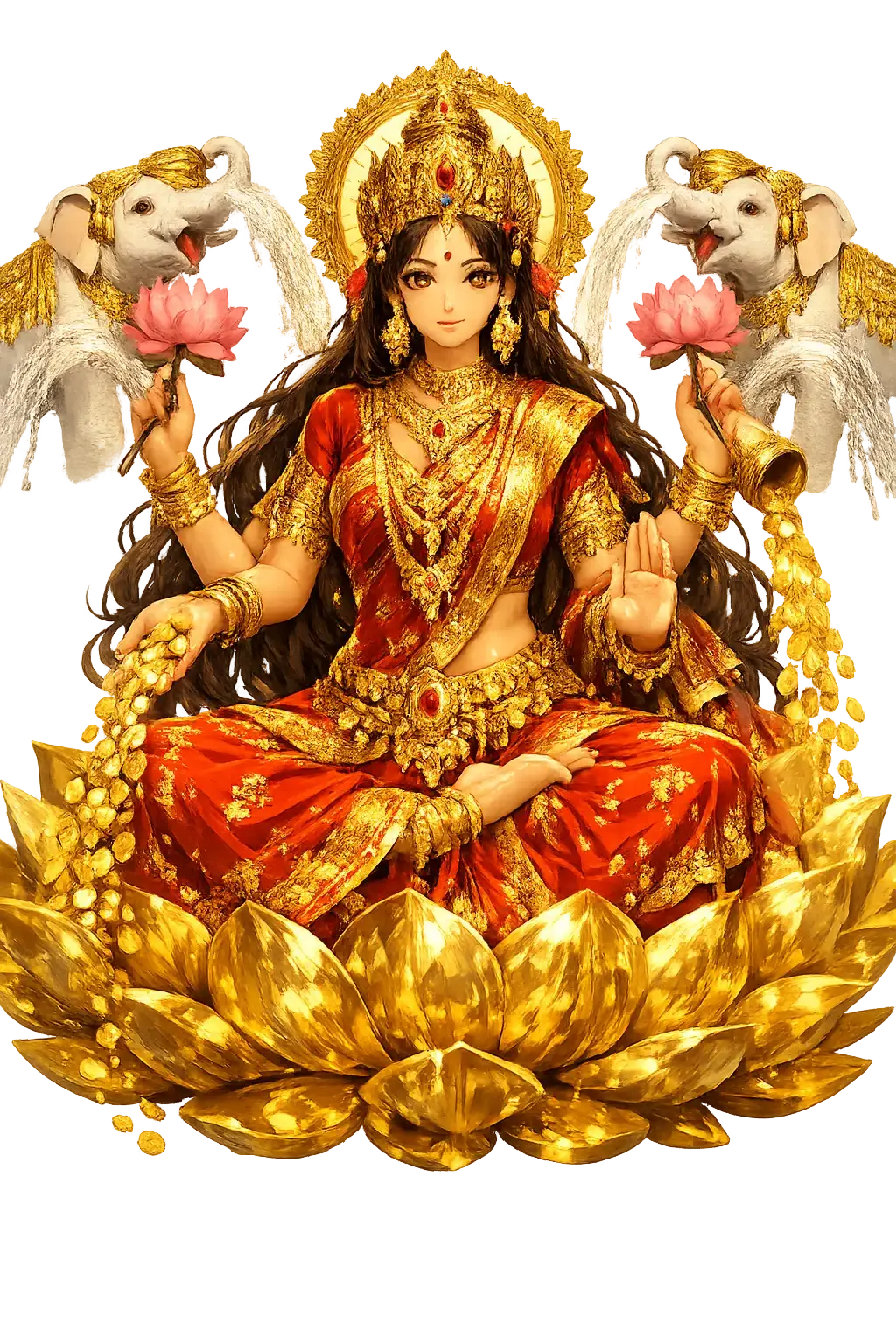
Lakṣmī is the goddess who turns possibility into prosperity. She is wealth in all its forms — gold grain, good children, royal power, moral merit, and the beauty that makes life worth living. In the Sanskrit imagination she is not mere money; she is śrī, the radiant splendor that surrounds any flourishing person, household, or kingdom. Where she dwells, there is abundance; where she departs, even palaces become deserts.
She is most often invoked as the consort of Viṣṇu, the preserving god, and she accompanies him in each of his earthly descents. But her origins are older and more independent, rooted in Vedic hymns to royal fortune and in the goddess Śrī celebrated for her loveliness and power.
She governs crops, cattle, gold, and every resource that sustains life; her name is invoked at markets, harvests, and account books.
As Śrī she is the fragrance, grace, and radiance that distinguish the noble and the divine from the merely ordinary.
Kingship is legitimized by her presence; the wheel of sovereignty turns only for the ruler whom Lakṣmī favors.
She accompanies the preserver in every avatāra, descending with him to restore dharma whenever the world grows dark.
Stories of Lakṣmī
Lakṣmī's mythology centers on emergence, courtship, and the precariousness of fortune. She rises from the churning ocean, chooses Viṣṇu as her lord, and moves restlessly among mortals and gods, testing their merit and generosity. Her stories teach that wealth must be cultivated through dharma, not merely seized.
When the gods and demons churned the cosmic ocean in search of amṛta, the first treasures to surface were poison, the moon, and the wish-fulfilling cow. Then, robed in lotuses and glowing like a second dawn, Lakṣmī rose from the foam. Every god stretched out his hand, but she passed them by and placed a garland around Viṣṇu's neck, choosing the preserver as her eternal consort. The gods cheered, for her choice meant that fortune itself had allied with cosmic order.
In the Rāmāyaṇa, Sītā is understood as an embodiment of Lakṣmī who has descended with Viṣṇu's avatāra Rāma. Her birth from a furrow in the earth, her marriage to Rāma, and her abduction by Rāvaṇa form the central narrative of the epic. Through loyalty, suffering, and final restoration, Sītā reveals Lakṣmī's capacity to remain pure and sovereign even in captivity.
The Mahābhārata tells how Lakṣmī once asked the sage Bhṛgu which among the gods was most worthy of her. Bhṛgu tested Brahmā, Śiva, and Viṣṇu; only Viṣṇu's forbearance pleased her. The story underlines a persistent theme: fortune is not loyal by nature. She dwells with truth, generosity, and patience, and she deserts the proud, the cruel, and the lazy.
Lakṣmī challenges the suspicion that wealth and spirituality cannot coexist. In her presence, abundance is not exploitation but flowering; beauty is not vanity but the radiance of a well-ordered life. She asks us to consider what we truly value and whether we are capable of receiving good things without clutching them.
Enter Extended Lore