PuniCodex

Extended Lore

लक्ष्मी Lakṣmī

Etymology · Phonology · Orthography · Cultural Legacy · Primary Sources

Tier 1 Lakṣmī.com
Lakṣmī — Wealth, Fortune, Beauty
01

Quick Facts

Essential information about Lakṣmī, Wealth, Fortune, Beauty

Original Scriptलक्ष्मी
Unicode RestorationLakṣmī
Reconstructed Pronunciation/lək.ʂmiː/
PantheonSanskrit
DomainWealth, Fortune, Beauty
Meaningof the goddess of fortune and beauty (frequently in the later mythology identified with Śrī and regarded as the wife of Viṣṇu or Nārāyaṇa; accord. to R. i, 45
ClassificationTier 1
Primary DomainLakṣmī.com
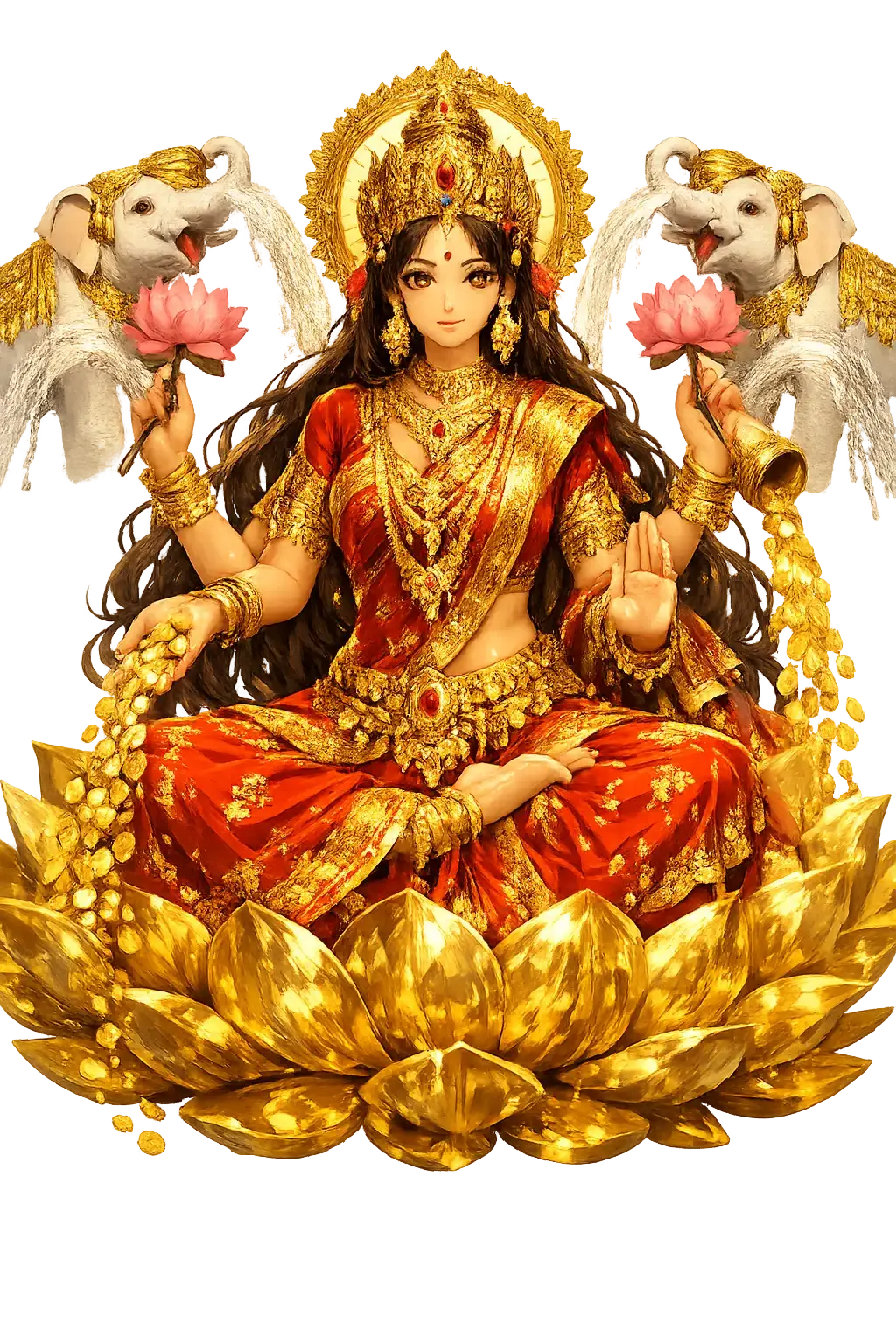
Sacred SymbolsLotus (padma), Gold coins, Owl (ulūka), Elephant (gaja), Conch and discus
02

Etymology & Word Family

From original script to Unicode restoration

Original Script लक्ष्मी Lakṣmī — "of the goddess of fortune and beauty (frequently in the later mythology identified with Śrī and regarded as the wife of Viṣṇu or Nārāyaṇa; accord. to R. i, 45"
Unicode Restoration Lakṣmī Restored stress, length, and script
Modern ASCII lakshmi Plain-ASCII fallback

Lakṣmī is Tier 1 because the final ī is long. The retroflex ṣ in the middle of the name is a distinct Sanskrit sound; English 'Lakshmi' with plain 'sh' loses this phonetic information.

03

Unicode Character Breakdown

Character-by-character philological analysis

CharacterUnicodeNameBlockPhonetic Role
LU+004CLatin Capital Letter LBasic LatinSame
aU+0061Latin Small Letter ABasic LatinShort /a/
kU+006BLatin Small Letter KBasic LatinSame
U+1E63Latin Small Letter S with Dot BelowUnknownS-dot-under: retroflex /ʂ/
N/ADropped characterSanskrit orthographyDropped: digraph simplified
mU+006DLatin Small Letter MBasic LatinSame
īU+012BLatin Small Letter I with MacronLatin Extended-AMacron: long /iː/

The Tier 1 classification reflects which ancient features stress, length, or script are preserved in this restoration.

04

Cultural Significance

From ancient cult to modern Unicode

Ancient Domain

Lakṣmī is the goddess who turns possibility into prosperity. She is wealth in all its forms — gold grain, good children, royal power, moral merit, and the beauty that makes life worth living. In the Sanskrit imagination she is not mere money; she is śrī, the radiant splendor that surrounds any flourishing person, household, or kingdom. Where she dwells, there is abundance; where she departs, even palaces become deserts.

She is most often invoked as the consort of Viṣṇu, the preserving god, and she accompanies him in each of his earthly descents. But her origins are older and more independent, rooted in Vedic hymns to royal fortune and in the goddess Śrī celebrated for her loveliness and power.

Lakṣmī in Later Traditions

Lakṣmī absorbed the Vedic goddess Śrī and, in later Hinduism, was identified with Rādhā, Sītā, and the various consorts of Viṣṇu. In Buddhism, the goddess Śrī or Lakṣmī appears as a protector of the Dharma and a bringer of royal fortune; in Jainism, similar auspicious goddesses guard the Jinas. Southeast Asian kings from Cambodia to Bali claimed her presence as a sign of legitimate rule. The ancient pairing of a goddess of abundance with a preserver god has parallels in Near Eastern and Greco-Roman divine couples, though Lakṣmī's specific association with the lotus and the churning ocean is distinctively Indic.

Modern Legacy

Lakṣmī remains one of the most widely worshipped goddesses in the Hindu world. Dīpāvalī, the festival of lights, is above all her festival: lamps are lit to welcome her into homes, businesses are closed and reopened with new account books, and families pray for a year of prosperity. Her image appears on coins, banknotes, corporate logos, and domestic shrines across South Asia and the diaspora. In classical and Bollywood dance, in temple sculpture, and in feminist reinterpretations, Lakṣmī continues to represent the idea that beauty and wealth are not vices but divine gifts that must be honored and shared.

Unicode Restoration as Cultural Act

Restoring Lakṣmī in a domain name is more than orthographic accuracy. It is a statement that the internet should recognize the full range of human writing — not only the ASCII keyboard.

05

Frequently Asked Questions

Common questions about Lakṣmī, Wealth, Fortune, Beauty, and Unicode restoration

01How do you pronounce Lakṣmī?

In reconstructed pronunciation, Lakṣmī is /lək.ʂmiː/ — approximately 'LUKH-shmee' — the middle consonant is a curled-tongue 'sh', and the final vowel is held long like 'ee' in 'see'..

02What does Lakṣmī mean?

Lakṣmī means of the goddess of fortune and beauty (frequently in the later mythology identified with Śrī and regarded as the wife of Viṣṇu or Nārāyaṇa; accord. to R. i, 45 in the sanskrit tradition.

03What are the symbols of Lakṣmī?

Lakṣmī is associated with Lotus (padma) (She stands or sits upon a lotus, a symbol of purity rising unstained from the waters of material existence), Gold coins (The shower of wealth that flows from her hands; prosperity as divine blessing), Owl (ulūka) (Her vehicle, associated with alertness and, in some readings, with the ability to find value in darkness), Elephant (gaja) (The showering elephants of the Samudra Manthan symbolize royal abundance and fertilizing rain), Conch and discus (Attributes shared with Viṣṇu, marking her identity as his śakti).

04Why restore Lakṣmī in Unicode?

Plain ASCII lakshmi strips the stress, length, and script that make the name specific. Unicode restoration returns the name to its original written dignity.

05What is the most important myth about Lakṣmī?

When the gods and demons churned the cosmic ocean in search of amṛta, the first treasures to surface were poison, the moon, and the wish-fulfilling cow. Then, robed in lotuses and glowing like a second dawn, Lakṣmī rose from the foam. Every god stretched out his hand, but she passed them by and placed a garland around Viṣṇu's neck, choosing the preserver as her eternal consort. The gods cheered, for her choice meant that fortune itself had allied with cosmic order.

06

Scholarly Sources

The philological foundations of this restoration

Every claim on this page is grounded in established scholarship. The orthographic restorations follow disciplinary convention. The etymological chain follows the best available reference works. This is not invention — it is resurrection through scholarship.

Lexicography & Philology

  • MW
  • KEWA

Primary Texts

  • Viṣṇu Purāṇa, Book 1, chapters 8–9 (churning of the ocean and Lakṣmī's birth)

Archaeology & Art History

  • Material evidence — iconography, inscriptions, and temple archaeology — for Lakṣmī and related cults.
  • Lakṣmī's earliest visual representations appear on Kuṣāṇa-period coins and in Gandhāran sculpture, often shown flanked by elephants in the gajalakṣmī motif. Gupta-era temples and early Hindu cave shrines include her among the guardians and consorts of Viṣṇu. From the medieval period onward, her iconography becomes highly standardized: standing on a lotus, holding lotuses, showering coins, and accompanied by elephants or owls. Archaeological and numismatic evidence across South and Southeast Asia confirms her presence as a royal and mercantile deity from the early centuries CE onward.

Religious Studies

  • Rāmāyaṇa, Bālakāṇḍa 66 (birth and marriage of Sītā)
  • Mahābhārata, Ādi Parvan (Lakṣmī and Bhṛgu)
  • Śrī Sūkta (Vedic hymn to royal fortune and abundance)
  • Monier-Williams, Sanskrit-English Dictionary (lakṣmī)
  • Kinsley, Hindu Goddesses: Visions of the Divine Feminine
  • Coburn, Encountering the Goddess: A Translation of the Devī-Māhātmya
Return

The Surface Awaits

You have traced the name from its earliest attestation to its Unicode restoration. Now return to the myth. The story is where the name lives.

Back to Lore
Lakṣmī mascot