The Authentic Orthography
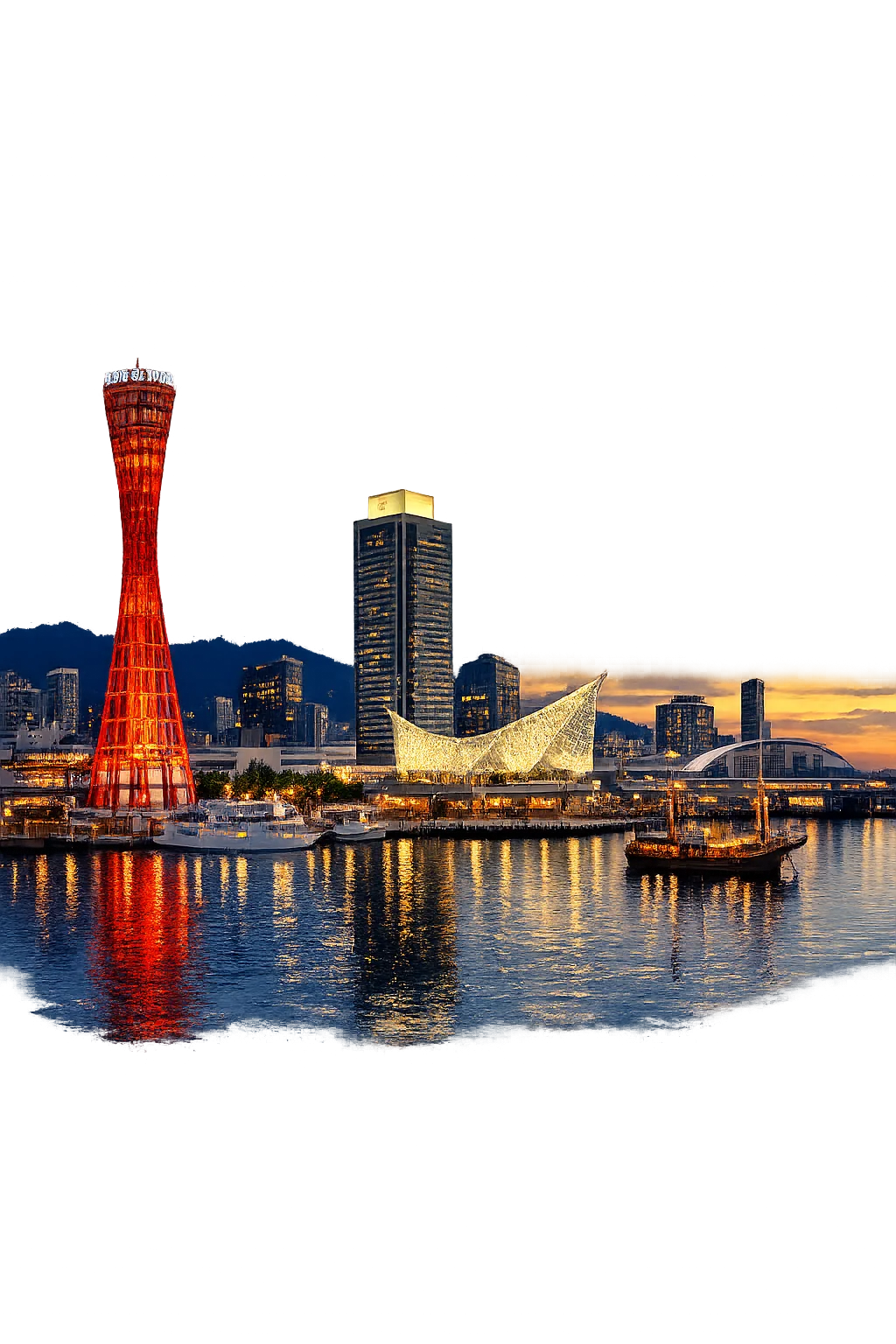
Port City, Hyōgo · Door to the gods or support door
Unicode restoration and ASCII comparison
神戸
The name in its original Japanese form. Kōbe (神戸) is attested in the source tradition — “Door to the gods or support door”. Its macron-length vowels carry the full phonetic and orthographic weight of the source tradition.
kobe
Reduced to plain kobe, the name loses everything that made it specific: macron-length vowels. What remains is an ASCII string that machines can parse but that no longer speaks with its original voice.
Kōbe
The Unicode restoration recovers what ASCII flattened. Kōbe restores macron-length vowels, returning the name to its original written dignity. The domain encodes to Punycode, but the browser displays the truth.
Kōbe.com → xn--kbe-qxa.com
The non-ASCII characters in Kōbe are encoded while the ASCII remains visible. To the DNS, it is Punycode. To humanity, it is Kōbe.
How Kōbe travels from ancient script to the modern URL
Japanese 神戸 Kōbe; from 神 kami “god, divine" + 戸 to “door", interpreted as “door to the gods" or “support door".
Port City, Hyōgo
The Unicode restoration Kōbe preserves the Hepburn macron; the kanji form is not registrable in .com.
How Kōbe was spoken
Shrine Estate · Maritime Threshold · Global Crossroads
Kōbe stands where the Rokkō mountains meet the Inland Sea, a city whose name remembers the families who served the Ikuta Shrine and whose history has turned on thresholds: between shrine estate and port, between seclusion and openness, between destruction and recovery.
The ancient Shinto shrine whose kanbe families lent their title to the city; its forest is Kōbe's mythic origin point.
Owada-no-tomari and the medieval port made Kōbe the arrival point for continental envoys, Buddhism, and trade.
The 1868 opening of the port brought Western merchants to Kitano-ijinkan-gai, creating Japan's most cosmopolitan hillside.
The 1995 Great Hanshin Earthquake levelled districts and broke the port, yet Kōbe rebuilt as a model of urban recovery.
Stories of Kōbe
Kōbe is a city of thresholds: between mountain and sea, between ancient shrine and modern port, between Japan and the wider world. Its name comes from kanbe, the title of the families who served the Ikuta Shrine, and its modern identity was forged when it opened to foreign trade in 1868.
The Nihon Shoki, Japan's second-oldest chronicle, records that Empress Jingū founded Ikuta Shrine in AD 201. The shrine gave its name to the surrounding district and to the kanbe — shrine-supporting families — from whom the modern city of Kōbe takes its name. For centuries the area around the shrine was a modest port settlement at the foot of the Rokkō mountains, looking out over the Inland Sea.
By the Nara and Heian periods the harbour here was known as Owada-no-Tomari, a stop for ships travelling between the imperial capital and western Japan. In 1180 Taira no Kiyomori briefly moved the capital to Fukuhara-kyō, in what is now Kōbe, hoping to control both court and commerce. Although the capital returned to Kyōto after only a few months, the episode revealed the strategic value of Kōbe's sheltered bay.
On 1 January 1868 the Port of Hyōgo opened to foreign shipping, ending more than two centuries of national seclusion. Foreign merchants settled on the low hills of the Yamate district — later known as Kitano-ijinkan-gai — bringing Western architecture, sports, and trade. Kōbe quickly became one of Japan's most cosmopolitan cities, a reputation it retains today.
On 17 January 1995 the Great Hanshin Earthquake struck Kōbe, killing more than six thousand people and destroying large parts of the port and city centre. The recovery became a model of urban reconstruction and disaster preparedness. Today Kōbe remains Japan's fourth-busiest container port and is known worldwide for Kōbe beef, Arima Onsen, and the resilient spirit of its people.
The lore you have read is the surface — the living myth. Beneath it lies the scholarship: etymology, reconstructed pronunciation, Unicode character breakdown, and the cultural legacy of Kōbe.
Enter Extended Lore