The Authentic Orthography
World Serpent · Huge monster (from jǫrmun + gandr)
Unicode restoration and ASCII comparison
ᛁᚢᚱᛘᚢᚾᚴᛅᚾᛏᚱ
The name in its original Norse form. Jǫrmungandr (ᛁᚢᚱᛘᚢᚾᚴᛅᚾᛏᚱ) is attested in the source tradition — “Huge monster (from jǫrmun + gandr)”. Its original diacritics and script distinctions carry the full phonetic and orthographic weight of the source tradition.
jormungandr
Reduced to plain jormungandr, the name loses everything that made it specific: original diacritics and script distinctions. What remains is an ASCII string that machines can parse but that no longer speaks with its original voice.
Jǫrmungandr
The Unicode restoration recovers what ASCII flattened. Jǫrmungandr restores original diacritics and script distinctions, returning the name to its original written dignity. The domain encodes to Punycode, but the browser displays the truth.
Jǫrmungandr.com → xn--jrmungandr-ejd.com
The non-ASCII characters in Jǫrmungandr are encoded while the ASCII remains visible. To the DNS, it is Punycode. To humanity, it is Jǫrmungandr.
How Jǫrmungandr travels from ancient script to the modern URL
How Jǫrmungandr was spoken
The Midgard Worm and Thor's Doom
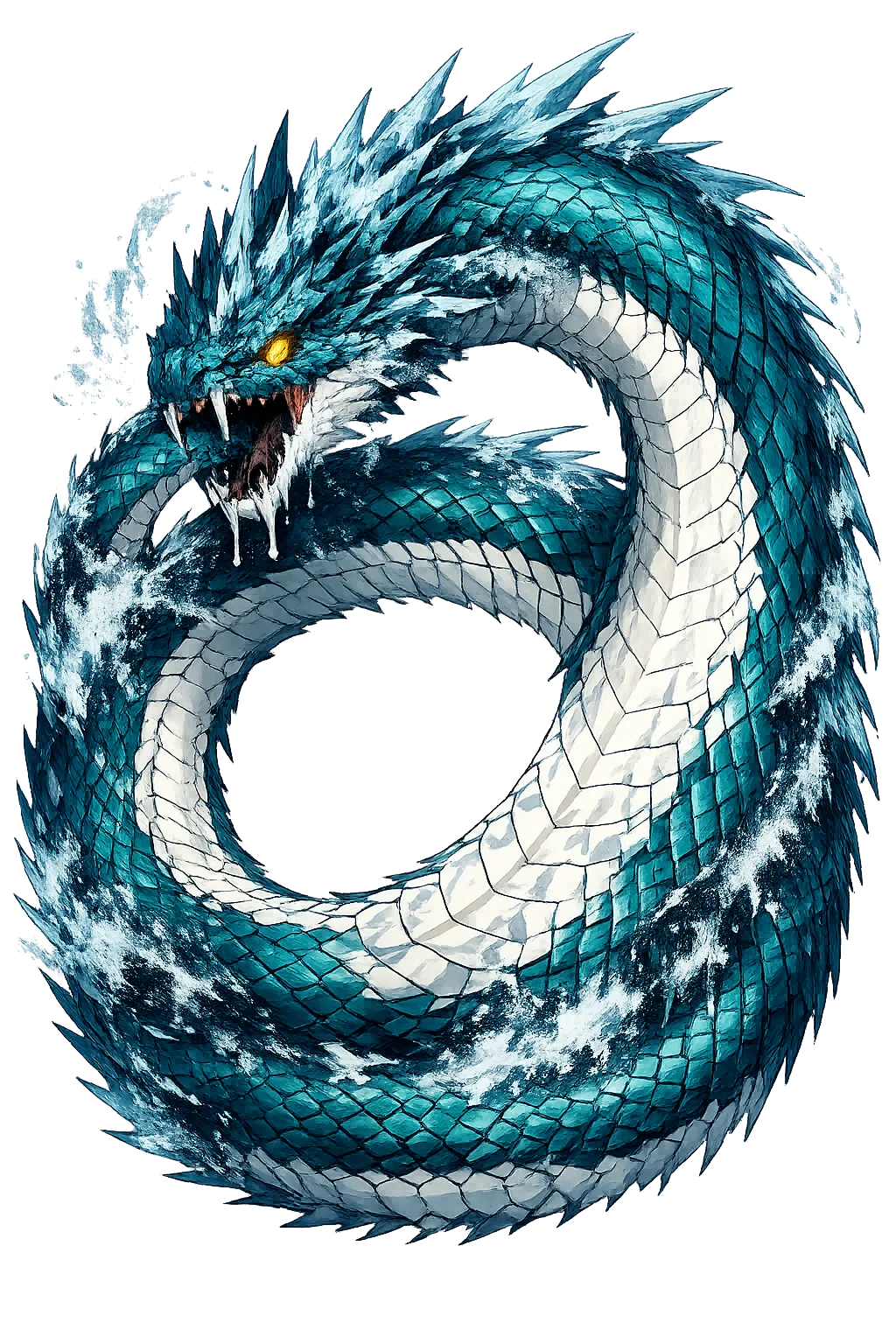
Jǫrmungandr is the great serpent that encircles Miðgarðr, biting its own tail. One of the three monstrous children of Loki and Angrboða, it was cast into the ocean by Óðinn and grew until it surrounded the entire world. It is the nemesis of Þórr, and at Ragnarök the two will finally kill one another.
So vast that it grips its own tail beneath the ocean that surrounds the human world.
Their enmity shapes two myths: the fishing trip and the final battle at Ragnarök.
Born of Loki and the giantess Angrboða in Jötunheimr, then hurled into the sea.
The tail-biting serpent becomes an image of cyclical time and cosmic boundary.
Stories of Jǫrmungandr
Jǫrmungandr is one of the three great threats to the gods, alongside Fenrir and Hel. It does not speak in the myths, yet its body defines the shape of the world and its final battle with Þórr is one of the climactic moments of Ragnarök.
When the gods learned that Loki and Angrboða had produced three monstrous children — Fenrir, Jǫrmungandr, and Hel — they seized them. Fenrir they bound, Hel they cast into Niflhel, and Jǫrmungandr they threw into the sea that surrounds all lands. There it grew so large that it encircled Miðgarðr and bit its own tail. The gods' attempt to neutralize the threat merely made it cosmic.
Þórr goes fishing with the giant Hymir, using the head of Hymir's best ox as bait. He hooks Jǫrmungandr and pulls it up until its venom drips and the sea boils around the boat. Hymir, terrified, cuts the line, and the serpent sinks back into the deep. The episode foreshadows their final meeting: the fisher who hooks the world is fated to be killed by it.
At Ragnarök, Jǫrmungandr will rise from the sea and poison land and sky. Þórr will slay it with Mjölnir, but after walking nine paces he will fall dead from the serpent's venom. It is a mutual killing: the guardian of order and the beast of chaos destroy each other, leaving the world to be inherited by quieter gods.
Jǫrmungandr is the boundary made flesh. It holds the world in place by encircling it, yet its very presence is a threat. The serpent is not evil in a moral sense; it is simply too large, too ancient, too other to coexist peacefully with the gods.
Enter Extended Lore