Unicode restoration and ASCII comparison
Iūppiter
The name survives only in scholarly transliteration. Iūppiter is the standard Roman romanisation, documented in academic sources — “'Sky-father' (from *Dyēu-pater)”. Its macron-length vowels preserve distinctions lost in plain ASCII.
The original script for this roman name has not yet been added to PUNICODEX. The form shown is a scholarly transliteration.
iuppiter
Reduced to plain iuppiter, the name loses everything that made it specific: macron-length vowels. What remains is an ASCII string that machines can parse but that no longer speaks with its original voice.
Iūppiter
The Unicode restoration recovers what ASCII flattened. Iūppiter restores macron-length vowels, returning the name to its original written dignity. The domain encodes to Punycode, but the browser displays the truth.
Iūppiter.com → xn--ippiter-0sb.com
The non-ASCII characters in Iūppiter are encoded while the ASCII remains visible. To the DNS, it is Punycode. To humanity, it is Iūppiter.
How Iūppiter is preserved in writing
A bespoke provenance study for Iūppiter is being prepared by the PUNICODEX scholarly team.
Contribute scholarly provenance →How Iūppiter was spoken
Oaths, Triumphs, and the Capitol
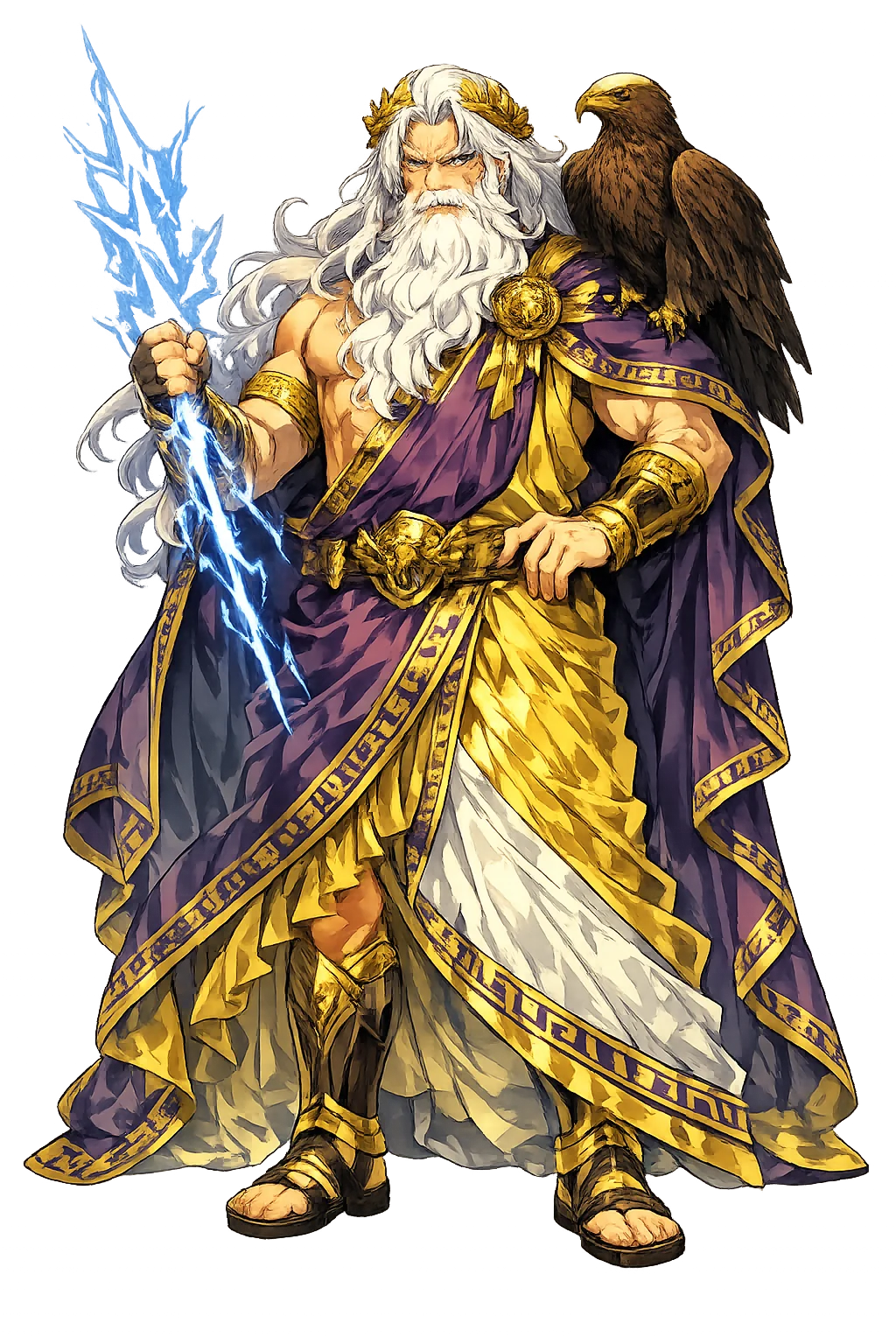
Iūppiter is the god in whose name Rome swore: Optimus Maximus, "best and greatest," the witness of every treaty, the dedicatee of every victory, and the direct linguistic heir of the Indo-European sky father — the oldest divine name the West still speaks.
His weapon and signature — the bolt that marks where sovereignty lands.
His great temple, dedicated in 509 BCE — the year of the Republic's own beginning.
The bird at the head of every legion; to lose its standard was Rome's deepest shame.
The general robed as the god for one day — and the slave whispering mortality in his ear.
Stories of Iūppiter
Roman myth made Zeús' biography his own, but Iūppiter's truest stories are Roman institutions: the oath, the triumph, the dedication of spoils — religion as constitutional machinery.
The most binding Roman oath was sworn per Iovem Lapidem — by Jupiter the Stone — while holding a flint from his altar and reciting the formula of the fetial priests: "If I deceive, may Iuppiter strike me as I strike this pig." Law, treaty, and contract all rested on his witness; the stone was his body in the courtroom of nations.
In the triumph, the victorious general rode in Iūppiter's own regalia — purple and gold, face painted red like the god's terracotta statue — while a slave held the crown and whispered "memento mori." Rome let its greatest man borrow the god's face for one day, and made the god remind him to give it back: sovereignty rehearsed and returned.
The rarest honour in Rome belonged to Iūppiter Feretrius: the spolia opima, "rich spoils," taken when a Roman commander slew the enemy king in single combat — won by Romulus, by Cossus, and by Marcellus at Clastidium (222 BCE), and never again. Augustus blocked the fourth claimant on a technicality: some honours were too royal for an emperor's subjects.
Every legion carried his aquila into battle, and its loss was the deepest disgrace Rome knew — the eagles of Varus' three legions, lost in the Teutoburg Forest, were recovered a generation later by Germanicus' campaigns and treated as returning citizens. The sky father marched, in bronze, at the head of the army that built the Mediterranean's order.
Iūppiter is the god of the spoken bond. Lightning, empire, and law are one idea in his name: that the highest power is the one by which promises are kept. Every signature, every oath of office, every treaty since has borrowed his architecture — the sky as witness, the word as bond, the bolt as the penalty for perjury of the soul.
Enter Extended Lore