Unicode restoration and ASCII comparison
Ὕπνος
The name in its original Greek form. Hýpnos (Ὕπνος) is attested in the source tradition — “Sleep”. Its acute accents carry the full phonetic and orthographic weight of the source tradition.
hypnos
Reduced to plain hypnos, the name loses everything that made it specific: acute accents. What remains is an ASCII string that machines can parse but that no longer speaks with its original voice.
Hýpnos
The Unicode restoration recovers what ASCII flattened. Hýpnos restores acute accents, returning the name to its original written dignity. The domain encodes to Punycode, but the browser displays the truth.
Hýpnos.com → xn--hpnos-qva.com
The non-ASCII characters in Hýpnos are encoded while the ASCII remains visible. To the DNS, it is Punycode. To humanity, it is Hýpnos.
How Hýpnos is preserved in writing
A bespoke provenance study for Hýpnos is being prepared by the PUNICODEX scholarly team.
Contribute scholarly provenance →How Hýpnos was spoken
Sleep, Dreams, Release
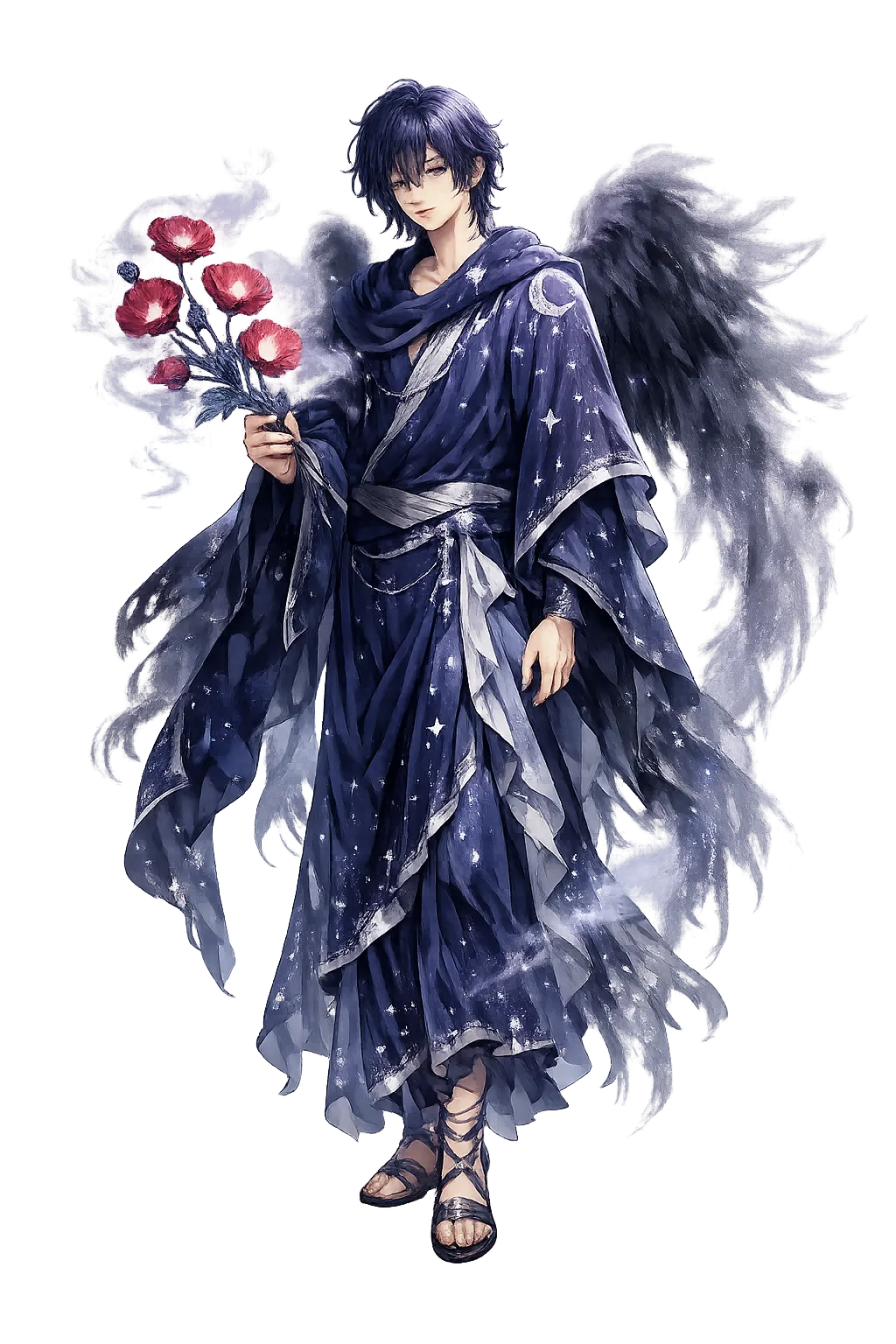
Hýpnos is the personification of sleep, the gentle twin of death who brings rest to gods and mortals. He moves through the world on silent wings, touching tired eyelids with a branch or a whisper.
One of the children of Nyx; sleep comes to all equally, slave and king.
Often shown with wings at his temples or heels, swift and soundless.
He opens the gates through which Oneiroi, dream-spirits, pass to sleeping mortals.
Thanatos and Hypnos together carry the dead from the battlefield.
Stories of Hýpnos
Hýpnos is a minor but indispensable power. Gods call on him when they need a mortal or immortal to fall unconscious, and poets love him as the brother who daily rescues humanity from wakefulness.
In Iliad 14, Hera asks Hypnos to lull Zeus to sleep so she can aid the Greeks. Hypnos recalls an earlier occasion when Zeus had hurled him from heaven in anger and demands a guarantee. Hera promises him Pasithea, one of the Graces, and he agrees. He pours sleep over Zeus's eyes while the god embraces Hera on Mount Ida.
When Zeus's son Sarpedon is killed by Patroklos, he instructs Apollo to have Hypnos and Thanatos carry the body to Lycia for burial. The twins lift the hero gently, 'swift as thought,' and bear him away. The scene is one of the Iliad's tenderest images of death.
Hesiod makes Hypnos a child of Nyx, born without a father alongside Thanatos, the Keres, and other dark powers. He dwells in a cave near the land of the Cimmerians, where the sun never enters, and from there he moves across sea and land to bring rest.
Hýpnos is the god who visits everyone. Rich and poor, hero and coward, all close their eyes at his touch. In this he is more democratic than any Olympian. Yet he is also dangerous: sleep can be bribery, escape, or the doorway to deception, as when Hera uses him against Zeus.
Enter Extended Lore