Unicode restoration and ASCII comparison
Ὕδρα
The name in its original Greek form. Hýdra (Ὕδρα) is attested in the source tradition — “Water serpent”. Its acute accents carry the full phonetic and orthographic weight of the source tradition.
hydra
Reduced to plain hydra, the name loses everything that made it specific: acute accents. What remains is an ASCII string that machines can parse but that no longer speaks with its original voice.
Hýdra
The Unicode restoration recovers what ASCII flattened. Hýdra restores acute accents, returning the name to its original written dignity. The domain encodes to Punycode, but the browser displays the truth.
Hýdra.com → xn--hdra-5ra.com
The non-ASCII characters in Hýdra are encoded while the ASCII remains visible. To the DNS, it is Punycode. To humanity, it is Hýdra.
How Hýdra is preserved in writing
A bespoke provenance study for Hýdra is being prepared by the PUNICODEX scholarly team.
Contribute scholarly provenance →How Hýdra was spoken
Regeneration, Stagnant Water, Heroic Trial
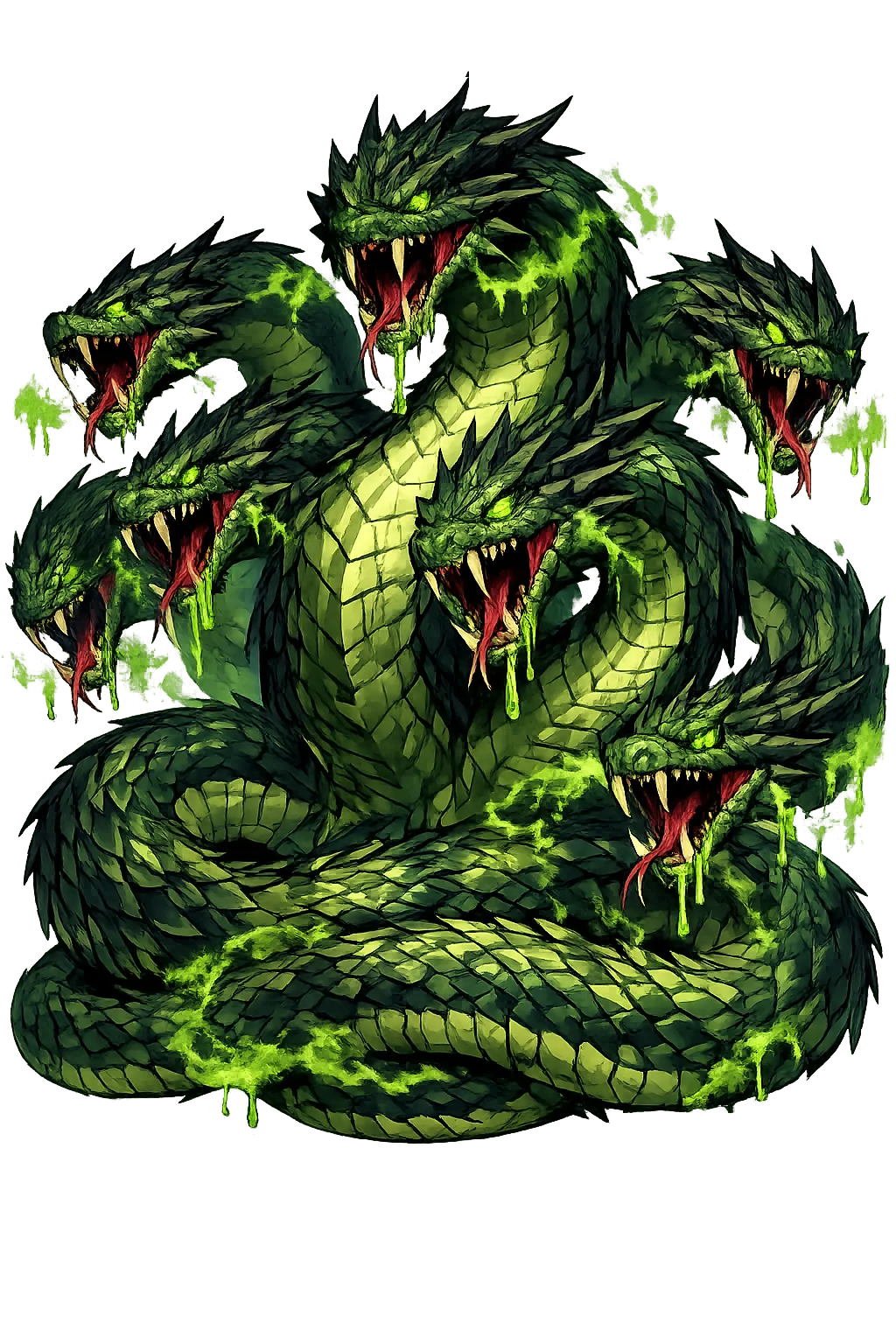
Hýdra is the monstrous water-serpent of Lerna, whose heads grew back when cut off. For Herakles, killing it required more than strength; it required fire, teamwork, and the recognition that some evils multiply when opposed directly.
Cut off one head and two grew back; the monster embodied the paradox of unending struggle.
A marshy, stagnant region near Argos; the Hydra personifies corrupted water and hidden disease.
The greatest of Greek heroes defeated the Hydra with torch and club, aided by Iolaos.
One head could not be killed; Herakles buried it beneath a rock, still hissing.
Stories of Hýdra
Hýdra's myth is a labor of escalation. Herakles must discover that brute force alone feeds the monster; victory comes only when fire meets flesh at the exact moment of severance.
Eurystheus assigned Herakles the Hydra of Lerna. The creature had a huge dog-like body and many heads, one of them immortal. Herakles struck off heads with his club, but for every head lost, two grew back. Hera also sent a crab to nip at his feet.
Seeing the heads multiply, Iolaos brought fire and cauterized each neck as Herakles cut it. This stopped the regeneration. The immortal head Herakles severed and buried under a heavy rock on the road from Lerna to Elaious, where it still breathed poison.
Herakles dipped his arrows in the Hydra's gall, making them lethally poisonous. The weapon that killed the monster became the instrument of later tragedies, including Herakles' own death by the poisoned shirt of Nessos.
Hýdra is the lesson that some enemies cannot be defeated by the same energy that animates them. Cut a head and the body grows stronger; meet rage with rage and the conflict feeds itself. The myth recommends precision, partnership, and the right tool at the right moment.
Enter Extended Lore