PuniCodex

Extended Lore

ᚼᛁᚱᛘᚢᚦᚱ Hermóðr

Etymology · Phonology · Orthography · Cultural Legacy · Primary Sources

Tier 1 Hermóðr.com
Hermóðr — Messenger, Courage
01

Quick Facts

Essential information about Hermóðr, Messenger, Courage

Original Scriptᚼᛁᚱᛘᚢᚦᚱ
Unicode RestorationHermóðr
Reconstructed Pronunciation/ˈher.moːðr/
PantheonNorse
DomainMessenger, Courage
MeaningWar-spirit
ClassificationTier 1
Primary DomainHermóðr.com
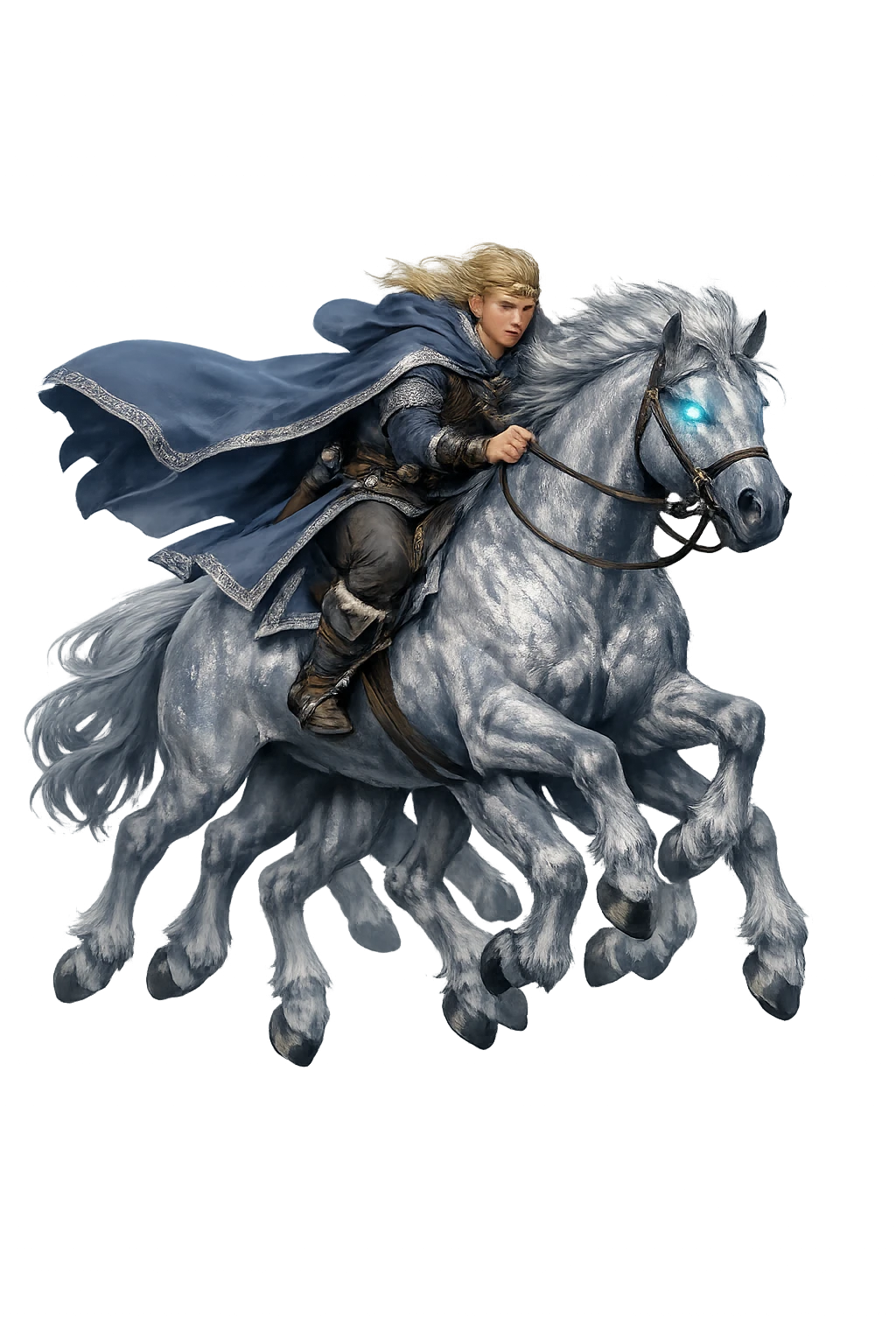
Sacred SymbolsSleipnir's eight legs, The ring Draupnir, The nine nights
02

Etymology & Word Family

From original script to Unicode restoration

Original Script ᚼᛁᚱᛘᚢᚦᚱ Hermóðr — "War-spirit"
Unicode Restoration Hermóðr Restored stress, length, and script
Modern ASCII hermod Plain-ASCII fallback

Old Norse Hermóðr is a transparent compound: herr ("host, army") + móðr ("spirit, mood, courage" — the same word as English "mood" and German "Mut"), whence the standard rendering "war-spirit." The restoration Hermóðr keeps the two things the ASCII form "Hermod" erases: the long ó and the letter ð (eth), the voiced dental fricative Old Norse wrote with its own character. Tier-1 by rule: two distinctive features preserved.

03

Unicode Character Breakdown

Character-by-character philological analysis

CharacterUnicodeNameBlockPhonetic Role
HU+0048Latin Capital Letter HBasic LatinSame, capitalized
eU+0065Latin Small Letter EBasic LatinSame
rU+0072Latin Small Letter RBasic LatinSame
mU+006DLatin Small Letter MBasic LatinSame
óU+00F3Latin Small Letter O with AcuteLatin-1 SupplementLong ó (ON ó = /oː/)
ðrU+00F0Character U+00F0Latin-1 SupplementEth (ð) + nominative -r

The Tier 1 classification reflects how much of the original phonology this restoration preserves — stress and vowel length for Greek names, distinctive letters and diacritics for every other tradition.

04

Cultural Significance

From ancient cult to modern Unicode

Ancient Domain

Hermóðr is Óðinn's son and the boldest rider of the Æsir: the god who volunteered, when Baldr lay dead, to mount Sleipnir and ride nine nights through darkness to the halls of Hel, to ransom the light of the world back from the land of the dead.

Hermóðr in Later Traditions

The temptation to compare Hermóðr with Hermēs is as old as philology itself — the divine messenger riding between worlds looks like the Greek god's portrait. The comparison has been argued and abandoned for a century: the name is transparently Germanic (herr + móðr), not a borrowing, and the errand-rider is a role the North could grow on its own. What the comparison gets right is the shape of the job: where Hermēs is a psychopomp by office, Hermóðr becomes one for a single night, by courage. His cognate in the heroic record is Beowulf's Heremōd, and his kin in the pantheon are the other sons Óðinn spends on impossible errands — none of whom rode farther.

Modern Legacy

Hermóðr left few traces outside the texts — no cult, no toponyms securely his — but the ride itself became one of the defining images of Norse myth: the nine nights, the golden bridge, the gate leapt in the dark. Modern retellings from Victorian mythographies to present-day novels and games cast him as the North's answer to Orpheus, the one who goes down to bargain with death and nearly wins. His name survives in the Icelandic given name Hermóður, and in scholarship as the standing example of the Edda's gift for making a minor god carry the grief of the whole world.

Unicode Restoration as Cultural Act

Restoring Hermóðr in a domain name is more than orthographic accuracy. It is a statement that the internet should recognize the full range of human writing — not only the ASCII keyboard.

05

Frequently Asked Questions

Common questions about Hermóðr, Messenger, Courage, and Unicode restoration

01How do you pronounce Hermóðr?

In reconstructed pronunciation, Hermóðr is /ˈher.moːðr/ — approximately HAIR-mohthr — the ó is long; the ð is the soft 'th' of 'this'; the final -r is the nominative ending, lightly sounded..

02What does Hermóðr mean?

Hermóðr means War-spirit in the norse tradition.

03What are the symbols of Hermóðr?

Hermóðr is associated with Sleipnir's eight legs (The stride that crosses the boundary between worlds), The ring Draupnir (The token carried back from death as evidence and promise), The nine nights (The counted darkness of the road to Hel — the Edda's measure of a hero's patience).

04Why restore Hermóðr in Unicode?

Plain ASCII hermod strips the stress, length, and script that make the name specific. Unicode restoration returns the name to its original written dignity.

05What is the most important myth about Hermóðr?

When Baldr fell to the mistletoe dart and the gods' grief had spent itself, Frigg asked who among the Æsir would ride the road to Hel and offer a ransom. Hermóðr the Bold, called Óðinn's sveinn — his lad, his attendant — stood up. They brought him Sleipnir, and he rode nine nights through valleys so dark and deep that he saw nothing until he reached the river Gjöll and the Gjallarbrú, the bridge roofed with glowing gold. There the maiden Móðguðr asked his name and lineage, and told him the bridge had thundered less under five companies of the dead the day before than under him alone.

06

Scholarly Sources

The philological foundations of this restoration

Every claim on this page is grounded in established scholarship. The orthographic restorations follow disciplinary convention. The etymological chain follows the best available reference works. This is not invention — it is resurrection through scholarship.

Lexicography & Philology

  • Poetic Edda
  • Cleasby-Vigfusson

Primary Texts

  • Prose Edda (Gylfaginning)
  • Beowulf

Archaeology & Art History

  • Material evidence — iconography, inscriptions, and temple archaeology — for Hermóðr and related cults.
  • Hermóðr is a textual figure: his attestations are the Codex Regius and its sister manuscripts of the Prose Edda (13th-14th c.) and the Hyndluljóðr preserved in the Flateyjarbók. No cult sites, toponyms, or inscriptions name him securely. The Gotland picture stones are his nearest material kin: the rider on the eight-legged horse on stones such as Ardre VIII is conventionally read as Óðinn or a hero on Sleipnir, and scholars have long wondered whether the image tradition knew the descent-ride that Gylfaginning tells.

Religious Studies

  • Hyndluljóðr
  • Cleasby-Vigfusson
  • Zoëga
Return

The Surface Awaits

You have traced the name from its earliest attestation to its Unicode restoration. Now return to the myth. The story is where the name lives.

Back to Lore
Hermóðr mascot