The Authentic Orthography
Fire, Forge, Craftsmen · Unknown; possibly pre-Greek
Unicode restoration and ASCII comparison
Ἥφαιστος
The name in its original Greek form. Hēphaistos (Ἥφαιστος) is attested in the source tradition — “Unknown; possibly pre-Greek”. Its aspirated consonants, diphthongs, and acute accents carry the full phonetic and orthographic weight of the source tradition.
hephaistos
Reduced to plain hephaistos, the name loses everything that made it specific: aspirated consonants, diphthongs, and acute accents. What remains is an ASCII string that machines can parse but that no longer speaks with its original voice.
Hēphaistos
The Unicode restoration recovers what ASCII flattened. Hēphaistos restores aspirated consonants, diphthongs, and acute accents, returning the name to its original written dignity. The domain encodes to Punycode, but the browser displays the truth.
Hēphaistos.com → xn--hphaistos-bhb.com
The non-ASCII characters in Hēphaistos are encoded while the ASCII remains visible. To the DNS, it is Punycode. To humanity, it is Hēphaistos.
How Hēphaistos travels from ancient script to the modern URL
Greek Ἥφαιστος; of unknown, probably pre-Greek origin; the smith-god.
Fire, Forge, Craftsmen
The Unicode restoration Hēphaistos preserves Greek stress and length; the ASCII form hephaistos loses these features.
How Hēphaistos was spoken
Fire, Craft, Metalwork, and Volcanoes
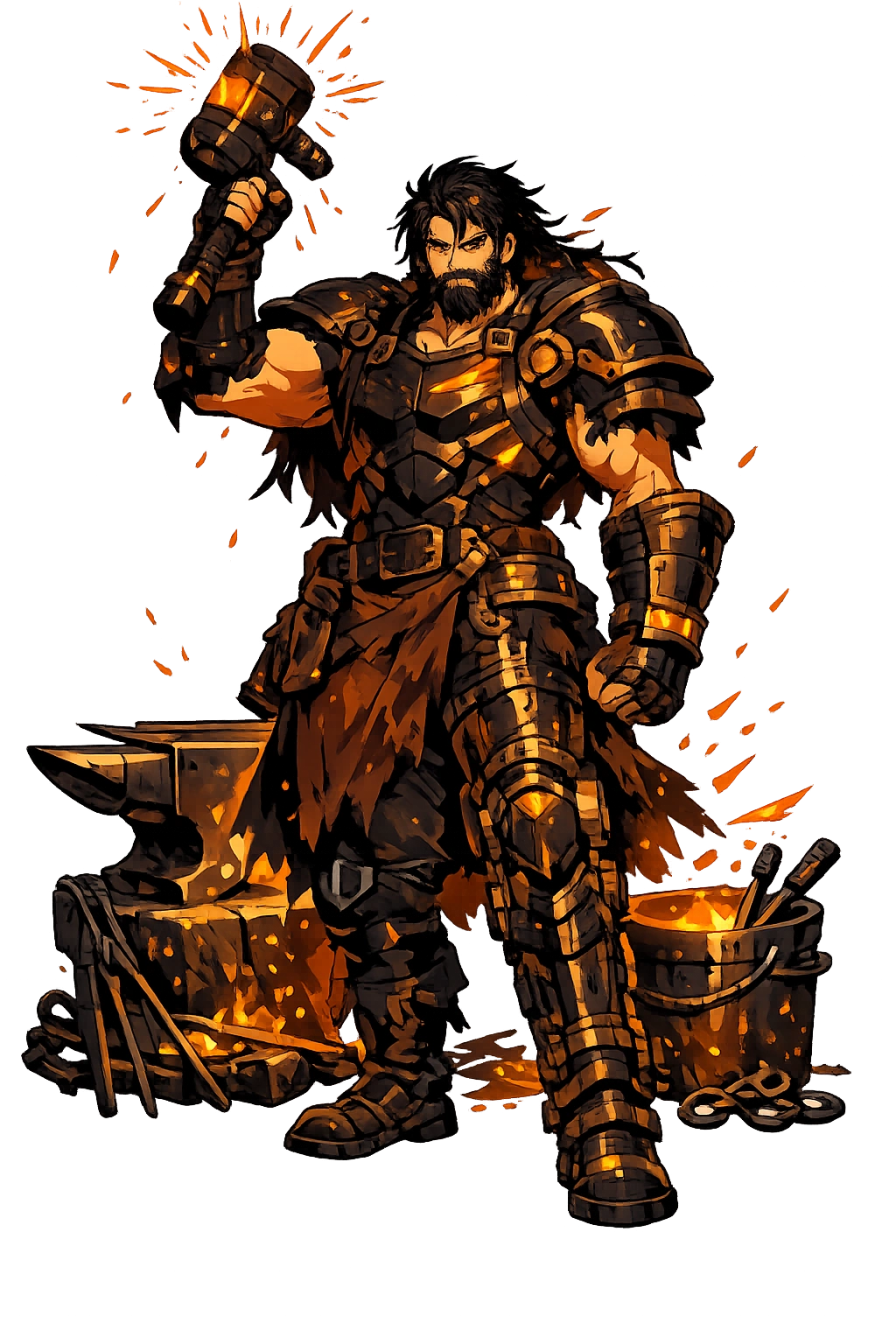
Hēphaistos is the only ugly Olympian, the only crippled one, and the only one who works for a living. His craft gives the gods their weapons and armor, and his forges lie beneath the volcanoes of the Aegean. He is the god who proves that making is a form of divinity.
The elemental fire that shapes metal; his workshops lie under Lemnos, Etna, and Hiera.
Armorer to the gods; maker of Achilles' shield, Athena's aegis, and countless automata.
His lame gait matches the earth's limp; every eruption is his forge at work.
He builds self-moving tripods, golden maidens, and unbreakable chains — the first robots in Western literature.
Stories of Hēphaistos
Hēphaistos's myths turn disability into mastery. Rejected at birth, he returns to Olympus as the indispensable artisan.
Hēra bore Hēphaistos without male aid, and when she saw he was lame, she cast him from Olympus. He fell for a full day and landed in the sea, where the nymphs Thetis and Eurynome raised him in a cave. There he learned his craft, forging jewelry so fine that Thetis wore it to Olympus. The myth makes rejection the origin of skill.
Hēphaistos sent Hēra a golden throne as a gift. When she sat in it, invisible bonds held her fast. No god could release her until Dionysos made Hēphaistos drunk and led him back to Olympus. The smith exacted recognition from the queen who had thrown him away, and was restored to divine society.
In Iliad 18, Thetis asks Hēphaistos to forge new armor for her son Achilles. The shield he creates is a microcosm of the world — cities at war and peace, plowing, harvest, vineyards, herds, a dance floor, and the great Ocean surrounding all. It is the most elaborate ekphrasis in ancient literature and a testament to the smith's cosmic vision.
Zeús gave Aphrodítē to Hēphaistos in marriage, a union of beauty and craft that proved unstable. When Aphrodítē took Árēs as her lover, Hēphaistos trapped them in an unbreakable net and displayed them to the gods. The myth is comic but sad: the maker of the world cannot make his own marriage whole.
Hēphaistos is the god of the limp and the masterpiece. Thrown from heaven for being imperfect, he becomes the source of every perfect thing the gods possess. His disability is not erased; it is transformed into the patience that craft requires. The Greeks did not sentimentalize this — they made him ridiculous and indispensable at once.
Enter Extended Lore