
Ancient Domain
In the norse tradition, Helheimr governed realm of the dead. The name encodes a sphere of power that shaped ritual, narrative, and social order.
Extended Lore
Etymology · Phonology · Orthography · Cultural Legacy · Primary Sources
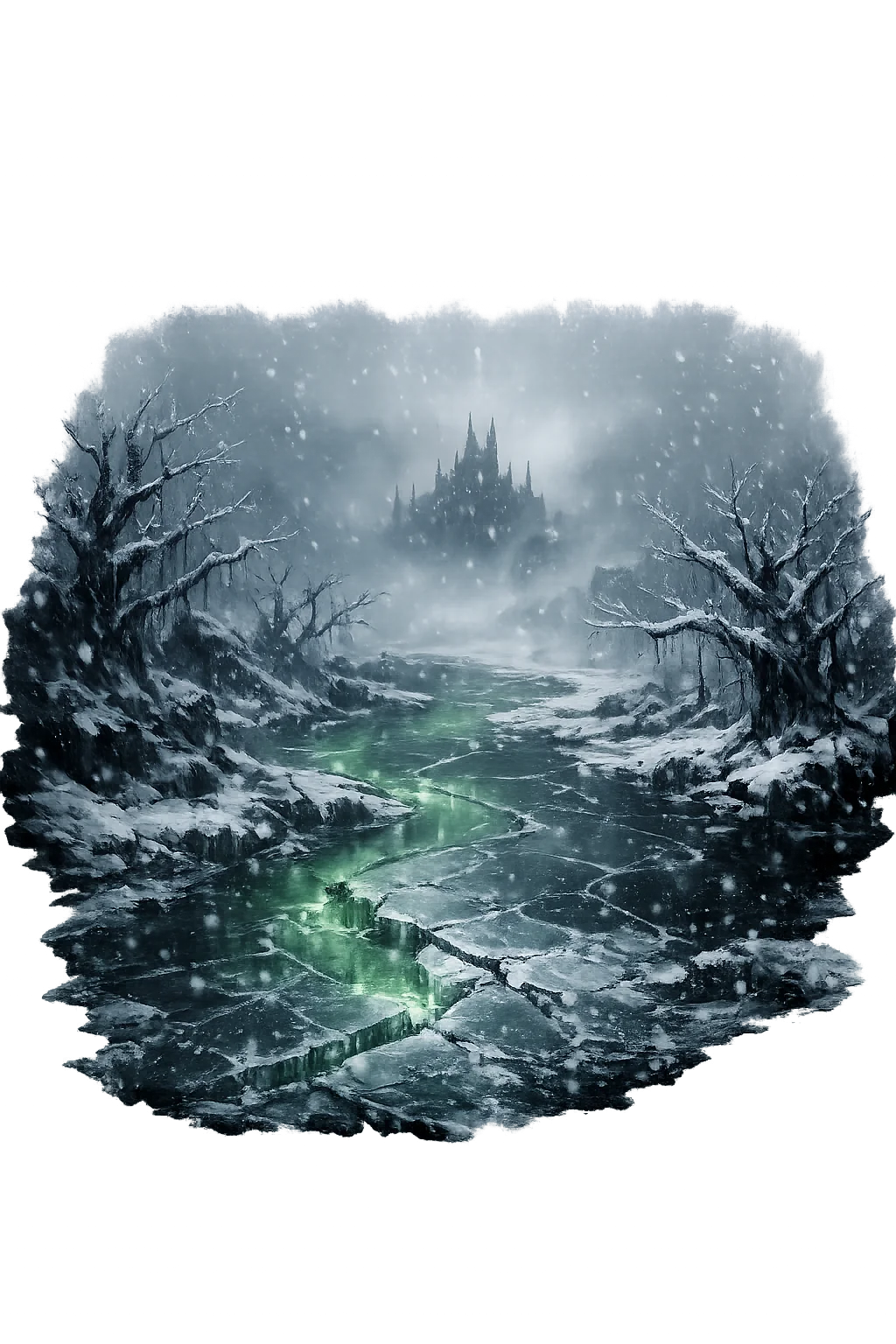
Essential information about Helheimr, Realm of the Dead
From original script to Unicode restoration
Helheimr is a transparent Old Norse compound of Hel + heimr. It is Tier 2 because no vowel is marked long or stressed; the name relies on everyday Old Norse phonology. Modern English 'hell' descends from the same Germanic root but has lost the diphthong.
Character-by-character philological analysis
| Character | Unicode | Name | Block | Phonetic Role |
|---|---|---|---|---|
| H | U+0048 | Latin Capital Letter H | Basic Latin | Same |
| e | U+0065 | Latin Small Letter E | Basic Latin | Same |
| l | U+006C | Latin Small Letter L | Basic Latin | Same |
| h | U+0068 | Latin Small Letter H | Basic Latin | Same |
| e | U+0065 | Latin Small Letter E | Basic Latin | Same |
| i | U+0069 | Latin Small Letter I | Basic Latin | Same |
| m | U+006D | Latin Small Letter M | Basic Latin | Same |
| r | U+0072 | Latin Small Letter R | Basic Latin | Same |
The Tier 2 classification reflects which ancient features stress, length, or script are preserved in this restoration.
From ancient cult to modern Unicode
In the norse tradition, Helheimr governed realm of the dead. The name encodes a sphere of power that shaped ritual, narrative, and social order.
Norse tradition absorbed and reworked Germanic, Celtic, and Christian influences; medieval Icelandic compilers preserved the myths while Christian frameworks shaped their presentation.
The name lives on in modern fantasy, Neopagan practice, Scandinavian heritage, and the global reception of Viking-Age literature. Restoring Helheimr in Unicode preserves the name's cultural specificity against the flattening force of plain ASCII. Helheimr survives in popular imagination as the Norse underworld, often conflated with Valhalla in modern media. The precise Unicode form Helheimr preserves the Old Norse spelling and the realm's identity as the quiet destination of ordinary dead.
Restoring Helheimr in a domain name is more than orthographic accuracy. It is a statement that the internet should recognize the full range of human writing — not only the ASCII keyboard.
Common questions about Helheimr, Realm of the Dead, and Unicode restoration
In reconstructed pronunciation, Helheimr is /ˈhɛlˌhɛi̯mr/ — approximately 'HEL-haymr' — a crisp initial h, then 'hell' and 'haymer' run together, with a light rolled r..
Helheimr means Hel's home (from Hel + heimr) in the norse tradition.
Helheimr is associated with Gjallarbrú (The resounding bridge crossed by the dead on the way to Hel's hall), Hel's hall Éljúðnir (The hall named 'Sleet-Cold' where the goddess receives the dead), Threshold knife (Famine) (One of the named thresholds of Hel's hall, personifying starvation), Hooded or half-faced woman (Hel's own depiction, one side beautiful and one side corpse-pale), Náströnd shore (The corpse-strewn strand within Hel where oath-breakers suffer).
Plain ASCII helheimr strips the stress, length, and script that make the name specific. Unicode restoration returns the name to its original written dignity.
When Baldr is killed by the mistletoe dart, the gods mourn so deeply that Frigg sends his brother Hermóðr to Helheimr to bargain for his return. Hermóðr takes Óðinn's eight-legged horse Sleipnir and rides for nine nights through valleys so dark and deep that he sees nothing, until he reaches the river Gjöll and the gold-floored bridge that leads to Hel's hall.Hel agrees to release Baldr only if every creature in the nine worlds weeps for him. Almost all do, but the giantess Þökk—widely understood to be Loki in disguise—refuses, and Baldr must remain in Helheimr until Ragnarǫk. The myth establishes Helheimr as a realm of fixed law, not arbitrary cruelty, and it makes the underworld's door a place where even gods can negotiate.
The philological foundations of this restoration
Every claim on this page is grounded in established scholarship. The orthographic restorations follow disciplinary convention. The etymological chain follows the best available reference works. This is not invention — it is resurrection through scholarship.
You have traced the name from its earliest attestation to its Unicode restoration. Now return to the myth. The story is where the name lives.
Back to Lore