PuniCodex

Extended Lore

關帝 Guāndì

Etymology · Phonology · Orthography · Cultural Legacy · Primary Sources

Tier 1 Guāndì.com
Guāndì — War, Loyalty, Protection
01

Quick Facts

Essential information about Guāndì, War, Loyalty, Protection

Original Script關帝
Unicode RestorationGuāndì
Reconstructed Pronunciation/kwán.tî/
PantheonChinese
DomainWar, Loyalty, Protection
Meaning"Emperor Guan" — the deified general Guān Yǔ, god of war, loyalty, and righteousness
ClassificationTier 1
Primary DomainGuāndì.com
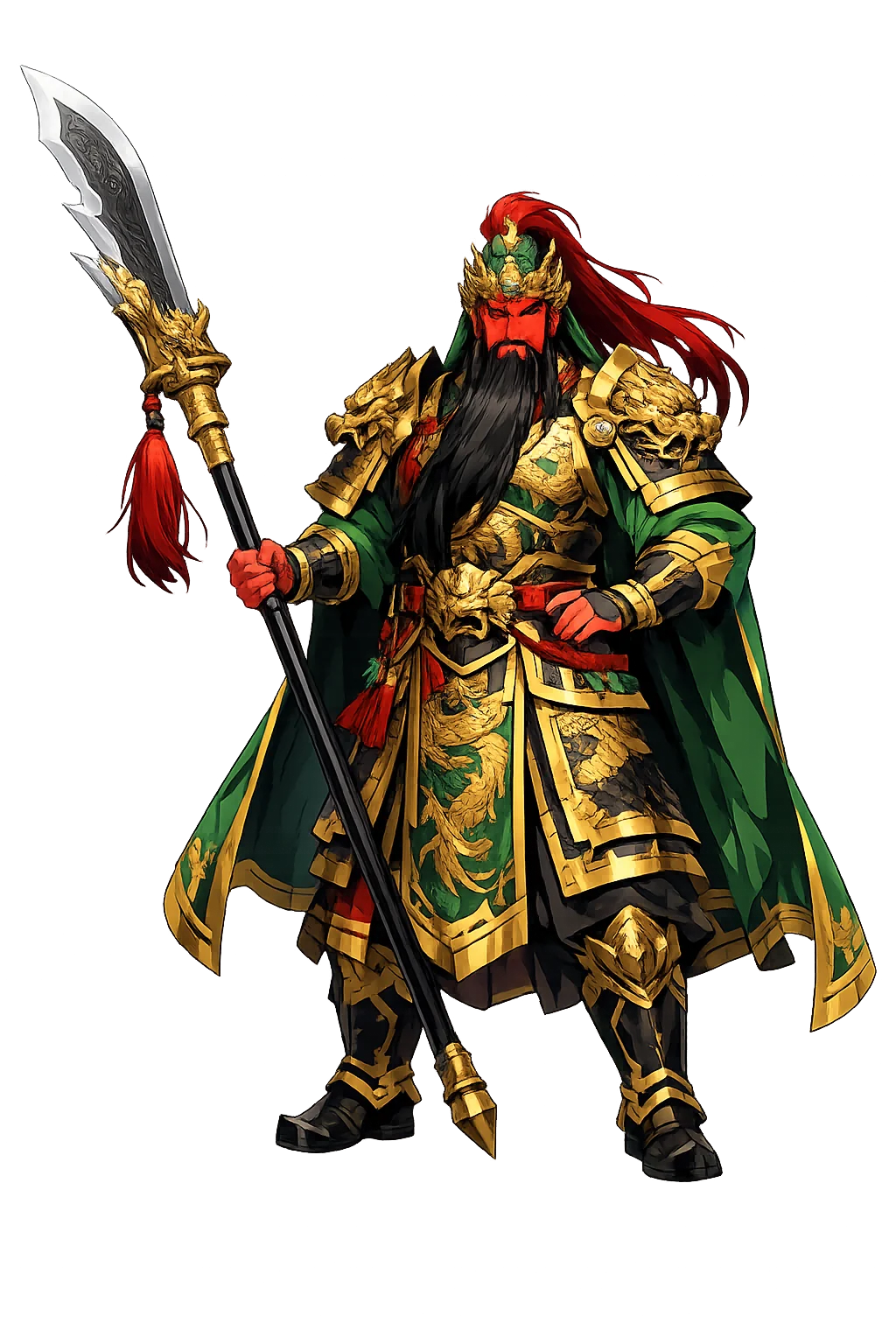
Sacred SymbolsThe crescent halberd, The red face, The green robe, The long beard
02

Etymology & Word Family

From original script to Unicode restoration

Original Script 關帝 Guāndì — ""Emperor Guan" — the deified general Guān Yǔ, god of war, loyalty, and righteousness"
Unicode Restoration Guāndì Restored stress, length, and script
Modern ASCII guandi Plain-ASCII fallback

Guāndì 關帝 — "Emperor Guan" — carries the first tone on guān and the falling fourth on dì. The name is a title, not a personal name: the deified Guān Yǔ of the Three Kingdoms, raised by eight centuries of imperial investitures to the rank of Emperor. The restoration keeps the macron that marks his tone.

03

Unicode Character Breakdown

Character-by-character philological analysis

CharacterUnicodeNameBlockPhonetic Role
GU+0047Latin Capital Letter GBasic LatinSame
uU+0075Latin Small Letter UBasic LatinSame
āU+0101Latin Small Letter A with MacronLatin Extended-AFirst tone (high level)
nU+006ELatin Small Letter NBasic LatinSame
dU+0064Latin Small Letter DBasic LatinSame
ìU+00ECLatin Small Letter I with GraveLatin-1 SupplementFalling fourth tone

The Tier 1 classification reflects how much of the original phonology this restoration preserves — stress and vowel length for Greek names, distinctive letters and diacritics for every other tradition.

04

Cultural Significance

From ancient cult to modern Unicode

Ancient Domain

Guāndì is China's god of the kept oath: the historical general Guān Yǔ (d. 220 CE) whose loyalty outlasted his dynasty, deified by emperors, merchants, and triads alike until his red-faced statue stood in more temples than any other figure in the Chinese world.

Guāndì in Later Traditions

He is the one deity all three teachings claim: Taoism's Guān Shèng Dì Jūn (Holy Emperor), Buddhism's Sānghārāma, Confucianism's co-Sage. The diaspora carried him everywhere — his altar stands in Yokohama's Kanteibyō, in San Francisco's oldest Chinatown temples, and in every Hong Kong police station, where officers and triads bow to the same red face: the god both sides trust because both sides fear to lie before him.

Modern Legacy

His temples outnumber Confucius' in the Chinese world; his birthday (24th day of the 6th lunar month) is a national observance from Shanxi to Singapore. The "Guān Gōng" of business is the unwritten clause of every contract; his image guards mahjong parlors, restaurants, and police stations alike. The Romance's peach-garden oath remains East Asia's template for sworn brotherhood, quoted in films, games (Dynasty Warriors made him a global icon), and every oath of office sworn with a hand on his name.

Unicode Restoration as Cultural Act

Restoring Guāndì in a domain name is more than orthographic accuracy. It is a statement that the internet should recognize the full range of human writing — not only the ASCII keyboard.

05

Frequently Asked Questions

Common questions about Guāndì, War, Loyalty, Protection, and Unicode restoration

01How do you pronounce Guāndì?

In reconstructed pronunciation, Guāndì is /kwán.tî/ — approximately gwahn-DEE — level tone, then a firm falling tone..

02What does Guāndì mean?

Guāndì means "Emperor Guan" — the deified general Guān Yǔ, god of war, loyalty, and righteousness in the chinese tradition.

03What are the symbols of Guāndì?

Guāndì is associated with The crescent halberd (Martial honor wielded with precision — war in service of the oath), The red face (Righteousness made visible; loyalty that cannot hide), The green robe (The gift he refused to surrender to Cáo Cāo — fidelity to the old lord), The long beard (The beautiful beard he protected with a silk bag — dignity kept).

04Why restore Guāndì in Unicode?

Plain ASCII guandi strips the stress, length, and script that make the name specific. Unicode restoration returns the name to its original written dignity.

05What is the most important myth about Guāndì?

The Romance of the Three Kingdoms opens with the oath: in a peach garden, Guān Yǔ swore with Liú Bèi and Zhāng Fēi to die on the same day as brothers. He kept it past reason — through capture, through Cáo Cāo's gold and titles, riding a thousand miles back to his sworn lord with the general's seal hung on his gate. Loyalty, in China, has a face, and it is his.

06

Scholarly Sources

The philological foundations of this restoration

Every claim on this page is grounded in established scholarship. The orthographic restorations follow disciplinary convention. The etymological chain follows the best available reference works. This is not invention — it is resurrection through scholarship.

Lexicography & Philology

  • Sanguozhi
  • Chinese folk religion
  • Birrell
  • Chinese folklore
  • Fengshen Yanyi
  • Cambridge

Primary Texts

  • Primary sources in the chinese tradition for Guāndì.

Archaeology & Art History

  • Material evidence — iconography, inscriptions, and temple archaeology — for Guāndì and related cults.
  • The Guān Lín tomb-temple at Luoyang (where Cáo Cāo buried his head with honors) and the Guān Dì Miào at his birthplace in Yuncheng, Shanxi — the largest Guandi complex, repeatedly rebuilt since the Sui — anchor his cult geography. Ming-Qing Guandi temples survive in every southern port city; Yokohama's Kanteibyō (1862) preserves the diaspora form. His statues' iconography — red face, green robe, crescent blade, the beard-bag — is among the most standardized in world religion.

Religious Studies

  • Sanguozhi
  • Chinese folk religion
  • Fengshen Yanyi
  • Birrell
  • Chinese folklore
  • Cambridge
Return

The Surface Awaits

You have traced the name from its earliest attestation to its Unicode restoration. Now return to the myth. The story is where the name lives.

Back to Lore
Guāndì mascot