PuniCodex

Extended Lore

गङ्गा Gaṅgā

Etymology · Phonology · Orthography · Cultural Legacy · Primary Sources

Tier 1 Gaṅgā.com
Gaṅgā — Sacred River, Purification
01

Quick Facts

Essential information about Gaṅgā, Sacred River, Purification

Original Scriptगङ्गा
Unicode RestorationGaṅgā
Reconstructed Pronunciation/ɡɐ́ŋ.ɡaː/
PantheonSanskrit
DomainSacred River, Purification
Meaning‘swiftgoer’, the river Ganges (personified and considered as the eldest daughter of Himavat and Menā, R. i, 36, 15; as the wife of Śāntanu and mother of Bhīṣma, MBh. i
ClassificationTier 1
Primary DomainGaṅgā.com
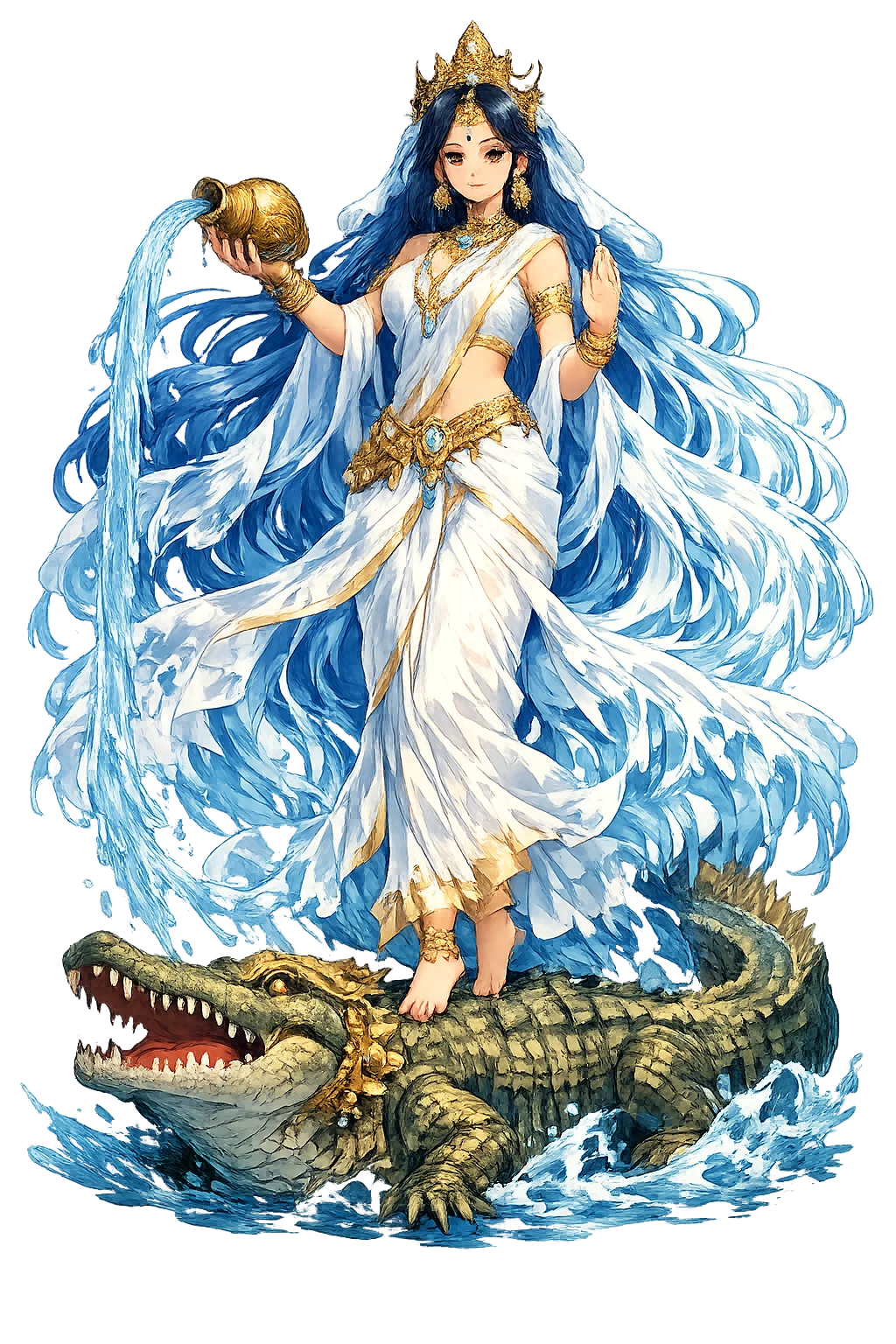
Sacred SymbolsThe makara, The locks of Śiva, The water pot
02

Etymology & Word Family

From original script to Unicode restoration

Original Script गङ्गा Gaṅgā — "‘swiftgoer’, the river Ganges (personified and considered as the eldest daughter of Himavat and Menā, R. i, 36, 15; as the wife of Śāntanu and mother of Bhīṣma, MBh. i"
Unicode Restoration Gaṅgā Restored stress, length, and script
Modern ASCII ganga Plain-ASCII fallback

Sanskrit gaṅgā carries the retroflex ṅ of IAST — the nasal of the velum, written with the underdot. The restoration Gaṅgā keeps both: the retroflex nasal and the long final ā. Hindi speech says "Ganga"; the scholarly form is hers. The retroflex ṅ is the velum's own nasal — the sound before g in song — which plain English softens to n.

03

Unicode Character Breakdown

Character-by-character philological analysis

CharacterUnicodeNameBlockPhonetic Role
GU+0047Latin Capital Letter GBasic LatinSame
aU+0061Latin Small Letter ABasic LatinSame
U+1E45Latin Small Letter N with Dot AboveUnknownN with dot above
gU+0067Latin Small Letter GBasic LatinSame
āU+0101Latin Small Letter A with MacronLatin Extended-AMacron: long a

The Tier 1 classification reflects which ancient features stress, length, or script are preserved in this restoration.

04

Cultural Significance

From ancient cult to modern Unicode

Ancient Domain

Gaṅgā is the river that is a goddess: brought down from heaven by the sage Bhagīratha to save his ancestors, caught in Śiva's matted locks so the earth would survive her fall, and worshipped ever since at every ford — the holiest water in the world to a billion people.

Gaṅgā in Later Traditions

Southeast Asia keeps her as the goddess of the Tonlé Sap and the Mekong's sacred waters; Bali's holy-water temples invoke her as the source of tīrtha; and the Buddhist tradition places her descent in the heavens' own cosmology, where she flows from the foot of Viṣṇu. The Māori scholar's comparison to river-gods worldwide finds its purest form in her: a river that is simultaneously a goddess, a mother, and a sacrament.

Modern Legacy

Ganga Dussehra and the Kumbh Mela — the largest gatherings of humans on the planet — are hers. "Ganga jal" (her water) is kept in Hindu homes for births, weddings, and deaths. The Namami Gange cleanup program is India's largest river-restoration project, and the legal personhood briefly granted to her and Yamunā in 2017 made world jurisprudence. She brands everything from ships to satellites: the river that is also, unforgettably, a person.

Unicode Restoration as Cultural Act

Restoring Gaṅgā in a domain name is more than orthographic accuracy. It is a statement that the internet should recognize the full range of human writing — not only the ASCII keyboard.

05

Frequently Asked Questions

Common questions about Gaṅgā, Sacred River, Purification, and Unicode restoration

01How do you pronounce Gaṅgā?

In reconstructed pronunciation, Gaṅgā is /ɡɐ́ŋ.ɡaː/ — approximately GUNG-gah — retroflex nasal, long final vowel..

02What does Gaṅgā mean?

Gaṅgā means ‘swiftgoer’, the river Ganges (personified and considered as the eldest daughter of Himavat and Menā, R. i, 36, 15; as the wife of Śāntanu and mother of Bhīṣma, MBh. i in the sanskrit tradition.

03What are the symbols of Gaṅgā?

Gaṅgā is associated with The makara (Her crocodile mount — the river's power held and guided), The locks of Śiva (The buffer between heaven's force and earth's frame), The water pot (The kamaṇḍalu of pure water — purification carried).

04Why restore Gaṅgā in Unicode?

Plain ASCII ganga strips the stress, length, and script that make the name specific. Unicode restoration returns the name to its original written dignity.

05What is the most important myth about Gaṅgā?

King Sāgara's sixty thousand sons were burned to ash by the sage Kapila's glance; only Gaṅgā's water could free their souls. Generation after generation prayed, until Bhagīratha won the boon: the heavenly river would descend. But her fall would shatter the earth — so Śiva stood on Himālaya and took her whole weight on his head, letting her wander a thousand years through the tangles of his hair before she reached the plain, tamed into seven streams.

06

Scholarly Sources

The philological foundations of this restoration

Every claim on this page is grounded in established scholarship. The orthographic restorations follow disciplinary convention. The etymological chain follows the best available reference works. This is not invention — it is resurrection through scholarship.

Lexicography & Philology

  • MW
  • KEWA

Primary Texts

  • The Ṛgveda; the Śatapatha Brāhmaṇa; the early Upaniṣads; the Śiva Purāṇa and Liṅga Purāṇa.

Archaeology & Art History

  • Material evidence — iconography, inscriptions, and temple archaeology — for Gaṅgā and related cults.
  • Her source at Gaumukh (Gangotri glacier) is a measured pilgrimage; the Gangotri temple (18th c., rebuilt) marks it. Haridwar's Har Ki Pauri, Prayāgrāj's trivenī sangam (where she meets Yamunā and the unseen Sarasvatī), and Vārāṇasī's ghāts — 84 landing-places in continuous use for over a millennium — are her living monuments. The glacier's measured retreat (about 20m/year) is tracked as carefully as her temples are kept.

Religious Studies

  • Mahabharata
  • Puranas
  • Monier-Williams
  • MW
  • Ramayana
  • Cambridge
Return

The Surface Awaits

You have traced the name from its earliest attestation to its Unicode restoration. Now return to the myth. The story is where the name lives.

Back to Lore
Gaṅgā mascot