PuniCodex

Extended Lore

दुर्गा Durgā

Etymology · Phonology · Orthography · Cultural Legacy · Primary Sources

Tier 1 Durgā.com
Durgā — Protection, Strength, War
01

Quick Facts

Essential information about Durgā, Protection, Strength, War

Original Scriptदुर्गा
Unicode RestorationDurgā
Reconstructed Pronunciation/ˈd̪ʊr.ɡaː/
PantheonSanskrit
DomainProtection, Strength, War
Meaning‘the inaccessible or terrific goddess’, N. of the daughter of Himavat and wife of Śiva (also called Umā, Pārvatī &c., and mother of Kārttikeya and Gaṇeśa cf. pUjA), TĀr. x, 2
ClassificationTier 1
Primary DomainDurgā.com
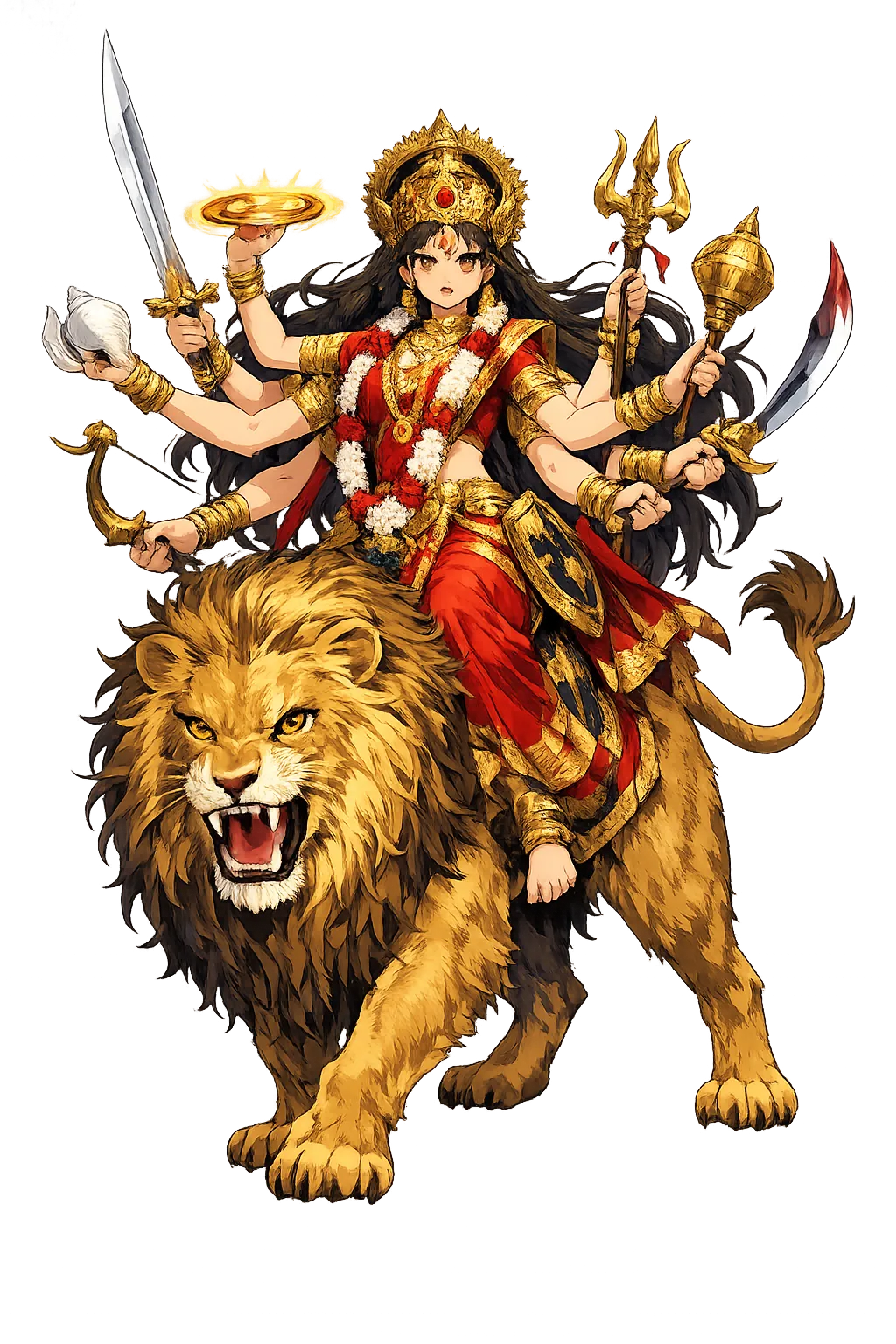
Sacred SymbolsLion or tiger, Trident (triśūla), Buffalo demon (Mahiṣāsura), Ten weapons, Red garments and vermilion
02

Etymology & Word Family

From original script to Unicode restoration

Original Script दुर्गा Durgā — "‘the inaccessible or terrific goddess’, N. of the daughter of Himavat and wife of Śiva (also called Umā, Pārvatī &c., and mother of Kārttikeya and Gaṇeśa cf. pUjA), TĀr. x, 2"
Unicode Restoration Durgā Restored stress, length, and script
Modern ASCII durga Plain-ASCII fallback

Durgā is Tier 1 because the final ā is long. The name means 'she who is difficult to approach' or 'fortress,' a fitting title for the goddess who destroys demons and protects her devotees.

03

Unicode Character Breakdown

Character-by-character philological analysis

CharacterUnicodeNameBlockPhonetic Role
DU+0044Latin Capital Letter DBasic LatinSame
uU+0075Latin Small Letter UBasic LatinShort /u/
rU+0072Latin Small Letter RBasic LatinSame
gU+0067Latin Small Letter GBasic LatinSame
āU+0101Latin Small Letter A with MacronLatin Extended-AMacron: long /aː/

The Tier 1 classification reflects which ancient features stress, length, or script are preserved in this restoration.

04

Cultural Significance

From ancient cult to modern Unicode

Ancient Domain

Durgā is the goddess who is beautiful because she is dangerous. Born from the combined radiance of the gods to defeat the buffalo-demon Mahiṣa, she rides a lion, wields ten weapons, and laughs in the face of cosmic chaos. Her name means 'the inaccessible' or 'the fortress': she is hard for enemies to reach and impossible for devotees to lose.

She is also Pārvatī in her fierce aspect, the mountain-goddess transformed into warrior-queen. Her mythology centers on the insight that divine compassion sometimes takes the form of decisive violence against those who threaten the worlds.

Durgā in Later Traditions

Durgā is inseparable from the wider Devī tradition and from Pārvatī, Kālī, Caṇḍikā, and the ten Mahāvidyās. In Bengal and Assam she is the central goddess of the autumn festival, while in South India she is worshipped as the victorious form of the Goddess. Tantric traditions see her as the supreme śakti, the active power from whom all gods derive their authority. The motif of the goddess defeating a buffalo-demon has been compared to ancient Near Eastern and Mediterranean images of the victorious goddess, though Durgā's specific iconography — ten arms, lion vehicle, weapons from all the gods — is a distinctively Indian synthesis. In Nepal she is worshipped as the protective deity of the kingdom, and her temples are among the most important in the Kathmandu Valley.

Modern Legacy

Durgā is the heart of the autumn festival season in eastern and northeastern India, especially Durgā Pūjā in Bengal, which transforms cities into open-air art galleries and draws millions to the river for her immersion. In North India the same period is celebrated as Navarātrī and Rāma's victory over Rāvaṇa. Her image as Mahiṣāsuramardinī is one of the most recognizable in Hindu art, reproduced in temples, prints, textiles, and political posters. Feminist and nationalist movements alike have claimed her as a symbol of empowered womanhood and resistance to oppression. The name Durgā is widely given to girls, and her lion-riding, weapon-wielding form remains an enduring icon of divine female power.

Unicode Restoration as Cultural Act

Restoring Durgā in a domain name is more than orthographic accuracy. It is a statement that the internet should recognize the full range of human writing — not only the ASCII keyboard.

05

Frequently Asked Questions

Common questions about Durgā, Protection, Strength, War, and Unicode restoration

01How do you pronounce Durgā?

In reconstructed pronunciation, Durgā is /ˈd̪ʊr.ɡaː/ — approximately 'DOOR-gah' — the first vowel is short and rounded like 'u' in 'put'; hold the final 'gah' long..

02What does Durgā mean?

Durgā means ‘the inaccessible or terrific goddess’, N. of the daughter of Himavat and wife of Śiva (also called Umā, Pārvatī &c., and mother of Kārttikeya and Gaṇeśa cf. pUjA), TĀr. x, 2 in the sanskrit tradition.

03What are the symbols of Durgā?

Durgā is associated with Lion or tiger (Her vehicle, representing strength, sovereignty, and the power to destroy evil), Trident (triśūla) (Gift of Śiva, representing the three guṇas and the destruction of the threefold suffering), Buffalo demon (Mahiṣāsura) (The ego and brute force she conquers; his decapitated form lies beneath her feet), Ten weapons (The collective power of all the gods concentrated in her many arms), Red garments and vermilion (The color of power, blood, and auspicious feminine energy).

04Why restore Durgā in Unicode?

Plain ASCII durga strips the stress, length, and script that make the name specific. Unicode restoration returns the name to its original written dignity.

05What is the most important myth about Durgā?

The buffalo-demon Mahiṣāsura had conquered the gods through austerities and battle. Neither Brahmā, Viṣṇu, nor Śiva could defeat him alone. In desperation the gods released their combined energies, which took shape as a blazing woman with ten arms, each holding a weapon given by a god. She rode a lion into battle. For nine days and nights she fought Mahiṣāsura, who shifted between buffalo, lion, elephant, and warrior forms. Finally, as he charged her in buffalo form, she caught him by the mane, pinned him under her foot, and ran her trident through his neck. Heaven was restored, and the gods sang her praises as Mahiṣāsuramardinī, 'Slayer of Mahiṣāsura.'

06

Scholarly Sources

The philological foundations of this restoration

Every claim on this page is grounded in established scholarship. The orthographic restorations follow disciplinary convention. The etymological chain follows the best available reference works. This is not invention — it is resurrection through scholarship.

Lexicography & Philology

  • MW
  • KEWA

Primary Texts

  • Śiva Purāṇa and Devībhāgavata Purāṇa

Archaeology & Art History

  • Material evidence — iconography, inscriptions, and temple archaeology — for Durgā and related cults.
  • Images of Durgā Mahiṣāsuramardinī appear from the Gupta period onward and become especially prominent in medieval temple sculpture across India. The great Durgā temples of Bengal, Odisha, Rajasthan, and the Himalayas preserve elaborate iconographic programs of her battles. Bengal's Durgā Pūjā has produced a vast material culture of clay images (pratimā), decorated pandals, and ritual paraphernalia, some of which is now collected in museums. In Nepal, the Taleju temple in Kathmandu and the Durgā temples of the valley reflect her importance in Newar and royal cult.

Religious Studies

  • Mārkaṇḍeya Purāṇa, Devī-Māhātmya (Mahiṣāsura, Śumbha, and Niśumbha episodes)
  • Coburn, Encountering the Goddess: A Translation of the Devī-Māhātmya
  • Kinsley, Hindu Goddesses: Visions of the Divine Feminine
  • Monier-Williams, Sanskrit-English Dictionary (durgā)
  • Rodrigues, Ritual Worship of the Great Goddess
  • McDaniel, Offering Flowers, Feeding Skulls: Popular Goddess Worship in West Bengal
Return

The Surface Awaits

You have traced the name from its earliest attestation to its Unicode restoration. Now return to the myth. The story is where the name lives.

Back to Lore
Durgā mascot