PuniCodex

Extended Lore

धातृ Dhātṛ

Etymology · Phonology · Orthography · Cultural Legacy · Primary Sources

Tier 1 Dhātṛ.com
Dhātṛ — Creation, Ordinance, Support
01

Quick Facts

Essential information about Dhātṛ, Creation, Ordinance, Support

Original Scriptधातृ
Unicode RestorationDhātṛ
Reconstructed Pronunciation/d̪ʱɑːˈt̪r̩/
PantheonSanskrit
DomainCreation, Ordinance, Support
Meaning'The Ordainer, the Establisher' (from dhā, to place), an Āditya
ClassificationTier 1
Primary DomainDhātṛ.com
Sacred SymbolsThe measuring line, The lotus seat, The syllable dhā
02

Etymology & Word Family

From original script to Unicode restoration

Original Script धातृ Dhātṛ — "'The Ordainer, the Establisher' (from dhā, to place), an Āditya"
Unicode Restoration Dhātṛ Restored stress, length, and script
Modern ASCII dhatr Plain-ASCII fallback

Sanskrit dhātṛ is an agent noun from the root dhā, "to set, place, establish," with the syllabic ṛ of the nominative — the vowel that is also a consonant, written ऋ. The restoration Dhātṛ keeps both the long ā and the vocalic ṛ that dictionaries print. The syllabic ṛ is a vowel made of the consonant itself: dhātṛ, two syllables, the final one vocalized r.

03

Unicode Character Breakdown

Character-by-character philological analysis

CharacterUnicodeNameBlockPhonetic Role
DU+0044Latin Capital Letter DBasic LatinSame letter
hU+0068Latin Small Letter HBasic LatinSame letter
āU+0101Latin Small Letter A with MacronLatin Extended-AMacron marks the long vowel
tU+0074Latin Small Letter TBasic LatinSame letter
U+1E5BLatin Small Letter R with Dot BelowUnknownScript-specific diacritic

The Tier 1 classification reflects which ancient features stress, length, or script are preserved in this restoration.

04

Cultural Significance

From ancient cult to modern Unicode

Ancient Domain

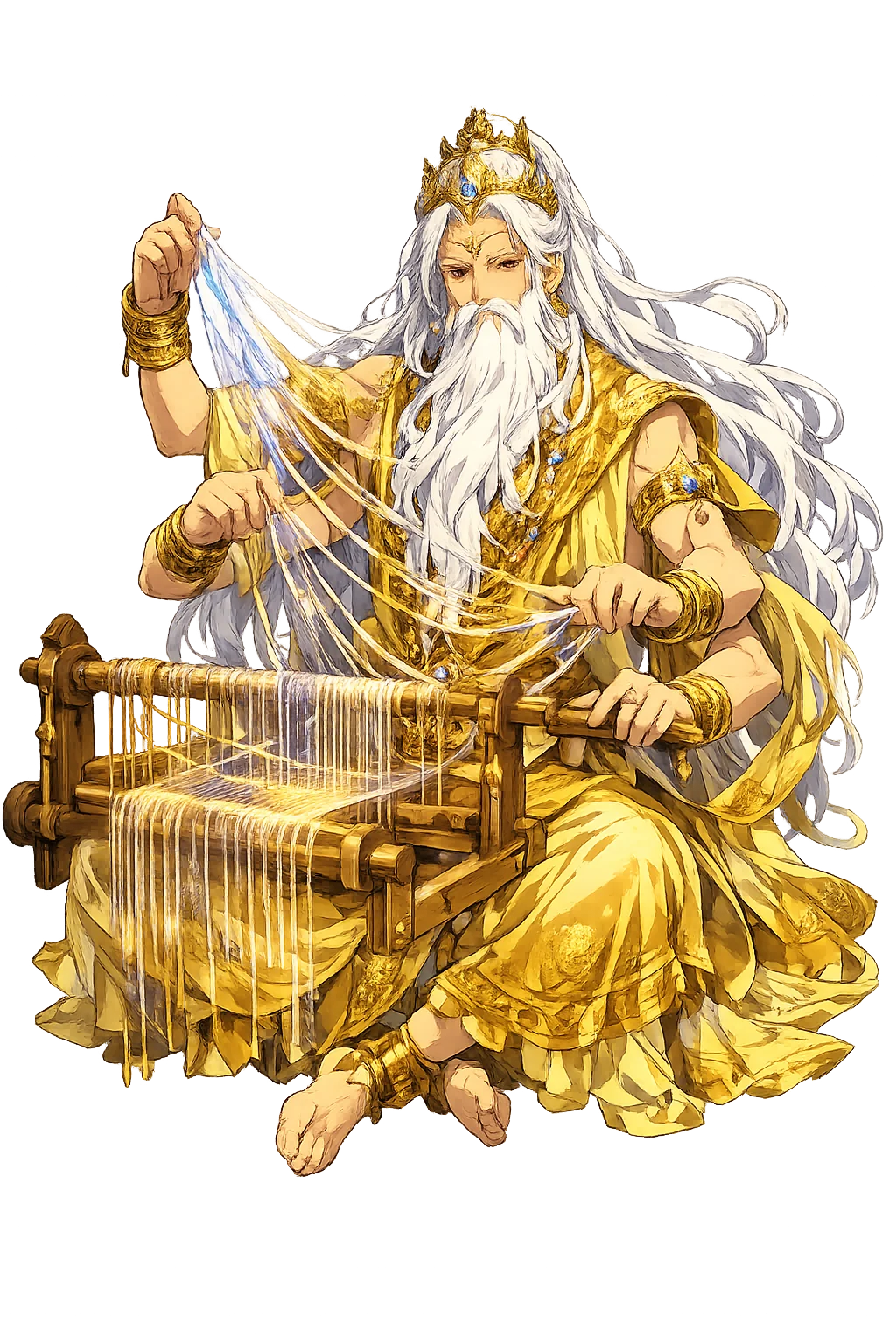
Dhātṛ is the Vedic verb of creation made personal: "the Establisher," the one who sets the sun in the sky and the child in the womb. Where Brahmā would later be a personality, Dhātṛ is still a function radiant with worship — creation as the act of setting-down.

Dhātṛ in Later Traditions

Comparative philology hears his cognates across the Indo-European family: the root *dheh₁- gives Greek títhēmi ("I set") and English "do" — the Establisher's verb is one of the family's deepest. Within India he merges with Brahmā and, in the Smarta synthesis, with the abstract Brahman: the person dissolves into the principle. The Avestan dātā ("the Law-giver") is his Iranian counterpart in office if not in name.

Modern Legacy

His root-word dhātu became a foundational term of two civilizations of learning: Pāṇini's grammar organizes Sanskrit as a list of dhātus (verbal roots), and Āyurveda organizes the body as seven dhātus (tissue-elements). "Dhātṛ" survives as a name for fate in the vernaculars; the formula "dhātā-vidhātā" still opens Hindu birth-rite invocations. The idea that grammar and medicine share one word for "the set-down units" is his unnoticed monument.

Unicode Restoration as Cultural Act

Restoring Dhātṛ in a domain name is more than orthographic accuracy. It is a statement that the internet should recognize the full range of human writing — not only the ASCII keyboard.

05

Frequently Asked Questions

Common questions about Dhātṛ, Creation, Ordinance, Support, and Unicode restoration

01How do you pronounce Dhātṛ?

In reconstructed pronunciation, Dhātṛ is /d̪ʱɑːˈt̪r̩/ — approximately dhah-TRUH; the ṛ is a rolled vocalic r..

02What does Dhātṛ mean?

Dhātṛ means 'The Ordainer, the Establisher' (from dhā, to place), an Āditya in the sanskrit tradition.

03What are the symbols of Dhātṛ?

Dhātṛ is associated with The measuring line (The demarcation by which the formless receives form), The lotus seat (Later iconography's gift to the establishing powers), The syllable dhā (The root as emblem — setting, placing, founding).

04Why restore Dhātṛ in Unicode?

Plain ASCII dhatr strips the stress, length, and script that make the name specific. Unicode restoration returns the name to its original written dignity.

05What is the most important myth about Dhātṛ?

The hymn of creation names the sequence: from fervour was born order and truth, from them the night and the ocean; from the ocean the year, apportioning nights and days. "The Establisher (Dhātṛ), as he had made the sun and moon, established heaven and earth, the mid-air and the light" — creation as a series of settings, each thing fixed where it belongs.

06

Scholarly Sources

The philological foundations of this restoration

Every claim on this page is grounded in established scholarship. The orthographic restorations follow disciplinary convention. The etymological chain follows the best available reference works. This is not invention — it is resurrection through scholarship.

Lexicography & Philology

  • Rigveda
  • Monier-Williams
  • Macdonell

Primary Texts

  • Rigveda

Archaeology & Art History

  • Material evidence — iconography, inscriptions, and temple archaeology — for Dhātṛ and related cults.
  • An aniconic god leaves no temples: Dhātṛ's material trace is the textual tradition — the Ṛgveda manuscripts (among the world's oldest continuously transmitted texts, UNESCO Memory of the World) and the ritual manuals that prescribe his invocation. The birth-rites (garbhādhāna and jātakarman) where he and Vidhātṛ are called to establish the child's fortune are performed, archaeologically invisible but ethnographically continuous, to this day.

Religious Studies

  • Brāhmaṇas
  • Monier-Williams
  • Macdonell
  • MW
  • Pokorny
Return

The Surface Awaits

You have traced the name from its earliest attestation to its Unicode restoration. Now return to the myth. The story is where the name lives.

Back to Lore
Dhātṛ mascot