PuniCodex

Extended Lore

दक्ष Dakṣa

Etymology · Phonology · Orthography · Cultural Legacy · Primary Sources

Tier 1 Dakṣa.com
Dakṣa — Skill, Creation, Order
01

Quick Facts

Essential information about Dakṣa, Skill, Creation, Order

Original Scriptदक्ष
Unicode RestorationDakṣa
Reconstructed Pronunciation/ˈd̪ɐk.ʂɐ/
PantheonSanskrit
DomainSkill, Creation, Order
Meaning'The skilled, the able' (from dakṣa), a Prajāpati
ClassificationTier 1
Primary DomainDakṣa.com
Sacred SymbolsThe sacrificial post, The goat, The rosary
02

Etymology & Word Family

From original script to Unicode restoration

Original Script दक्ष Dakṣa — "'The skilled, the able' (from dakṣa), a Prajāpati"
Unicode Restoration Dakṣa Restored stress, length, and script
Modern ASCII daksa Plain-ASCII fallback

Sanskrit dakṣa — "able, skilled, dexterous" — carries the kṣa cluster written with the conjunct क्ष, a single glyph for k plus ṣ. Indo-Europeanists connect the word to the root *deks-, "right hand, skill": Latin dexter is its cousin, and "dexterity" its English echo. The kṣa conjunct is a single articulation — k releasing directly into the retroflex ṣ — which romanization splits in two.

03

Unicode Character Breakdown

Character-by-character philological analysis

CharacterUnicodeNameBlockPhonetic Role
DU+0044Latin Capital Letter DBasic LatinSame letter
aU+0061Latin Small Letter ABasic LatinSame letter
kU+006BLatin Small Letter KBasic LatinSame letter
U+1E63Latin Small Letter S with Dot BelowUnknownScript-specific diacritic
aU+0061Latin Small Letter ABasic LatinSame letter

The Tier 1 classification reflects which ancient features stress, length, or script are preserved in this restoration.

04

Cultural Significance

From ancient cult to modern Unicode

Ancient Domain

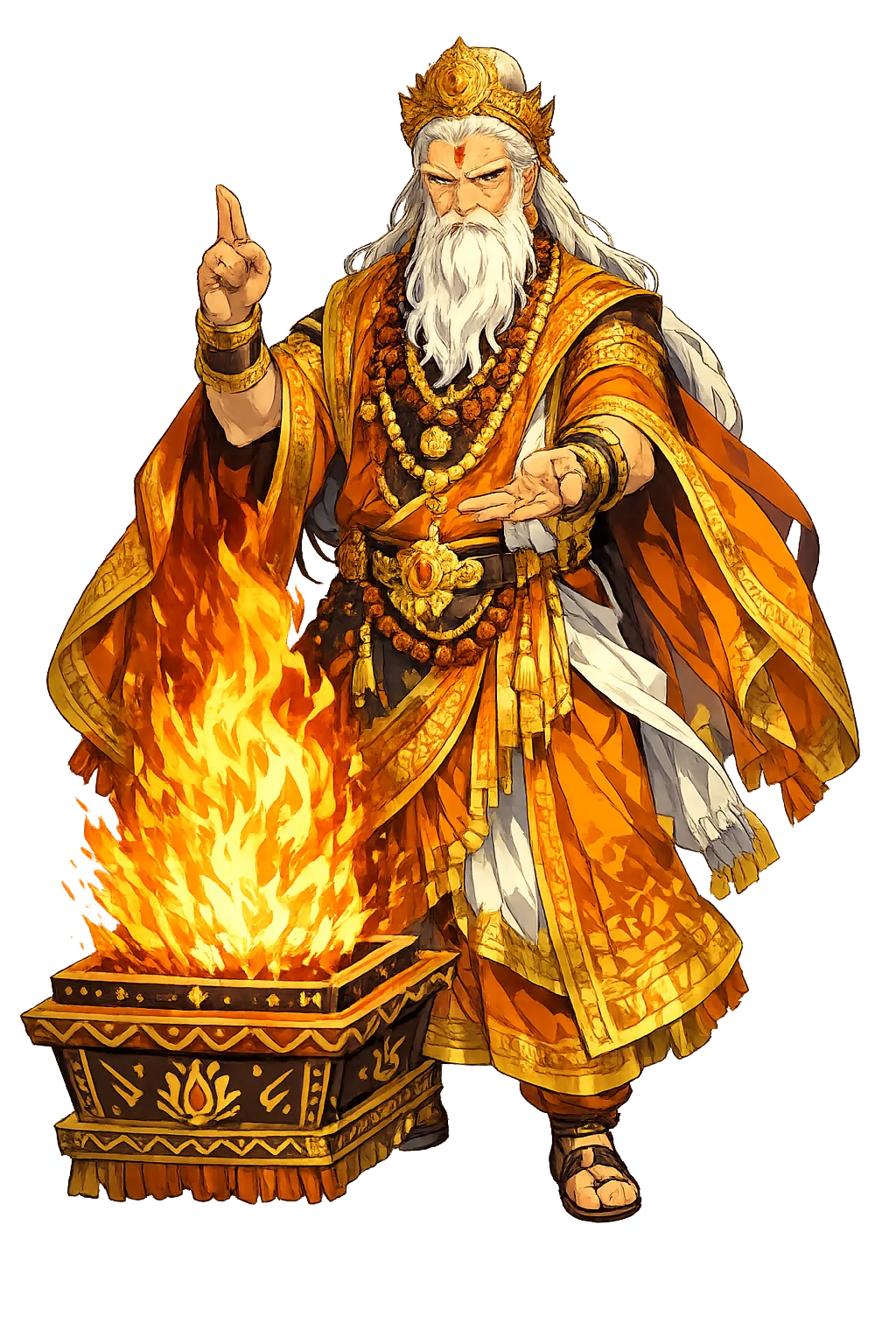
Dakṣa is the Prajāpati of competence: the "skilled one" whose sixty daughters married the Moon, Dharma, and the sage Kaśyapa to people the world — and whose flawless sacrifice, performed without Śiva, became the great cautionary tale of Indian religion.

Dakṣa in Later Traditions

As Prajāpati he absorbed and was absorbed by Brahmā: the Mahābhārata and Purāṇas shift "lord of progeny" between them until the offices blur. His daughter-lineages map the whole Purāṇic cosmos — through Kaśyapa's wives descend gods, demons, birds, and serpents; through Dharma's, the virtues. The Śakta tradition reframed his sacrifice entirely: not a tale of Śiva's wrath but of the Goddess's sovereignty, with Satī as the first self-offering.

Modern Legacy

The Dakṣa-yajña cycle is among the most retold stories in India — sculpture, dance-drama, and television epics return to it constantly — and the Śakti Pīṭha pilgrimage map it generates still organizes Śakta devotion. His name lives in the language: dakṣa/daksh remains the word for the capable professional, and the dakṣiṇā, the ritual fee "of the skilled hand," is paid at every Hindu rite today.

Unicode Restoration as Cultural Act

Restoring Dakṣa in a domain name is more than orthographic accuracy. It is a statement that the internet should recognize the full range of human writing — not only the ASCII keyboard.

05

Frequently Asked Questions

Common questions about Dakṣa, Skill, Creation, Order, and Unicode restoration

01How do you pronounce Dakṣa?

In reconstructed pronunciation, Dakṣa is /ˈd̪ɐk.ʂɐ/ — approximately DUCK-shah; the ṣ is the retroflex sh..

02What does Dakṣa mean?

Dakṣa means 'The skilled, the able' (from dakṣa), a Prajāpati in the sanskrit tradition.

03What are the symbols of Dakṣa?

Dakṣa is associated with The sacrificial post (The yūpa of his cosmic rite — order raised, then ruined by pride), The goat (His second head — humility grafted onto skill), The rosary (The Prajāpati's counting of creatures and years).

04Why restore Dakṣa in Unicode?

Plain ASCII daksa strips the stress, length, and script that make the name specific. Unicode restoration returns the name to its original written dignity.

05What is the most important myth about Dakṣa?

His youngest daughter Satī loved Śiva — the ash-smeared wanderer whom Dakṣa considered no fit match for a Prajāpati's house. She married him anyway. When Dakṣa later held the greatest sacrifice of the age, he invited every god and every daughter except Śiva and Satī: the omission was deliberate, public, and meant.

06

Scholarly Sources

The philological foundations of this restoration

Every claim on this page is grounded in established scholarship. The orthographic restorations follow disciplinary convention. The etymological chain follows the best available reference works. This is not invention — it is resurrection through scholarship.

Lexicography & Philology

  • Rigveda
  • Mahabharata
  • Monier-Williams

Primary Texts

  • Shiva Purana
  • Rigveda

Archaeology & Art History

  • Material evidence — iconography, inscriptions, and temple archaeology — for Dakṣa and related cults.
  • The Kankhal complex at Haridwar — the Daksha Mahadev temple and the Śrī Daksheśvara site on the Ganga — marks the traditional ground of the great sacrifice, continuously rebuilt from early times and renovated in 1810 and 1962. Satī's pīṭhas, from Kamakhya to Hinglaj, give the myth the largest sacred geography of any Indian story. Iconography shows him goat-headed in the act of worship — the humbled adept — in Purāṇic panels across the Deccan and the South.

Religious Studies

  • Mahabharata
  • Puranas
  • Monier-Williams
  • MW
Return

The Surface Awaits

You have traced the name from its earliest attestation to its Unicode restoration. Now return to the myth. The story is where the name lives.

Back to Lore
Dakṣa mascot