PuniCodex

Extended Lore

Κίρκη Kírkē

Etymology · Phonology · Orthography · Cultural Legacy · Primary Sources

Tier 1 Kírkē.com
Kírkē — Sorceress, Aeaea, Transformations
01

Quick Facts

Essential information about Kírkē, Sorceress, Aeaea, Transformations

Original ScriptΚίρκη
Unicode RestorationKírkē
Reconstructed Pronunciation/kír.kɛː/
PantheonGreek
DomainSorceress, Aeaea, Transformations
MeaningFalcon, bird of prey
ClassificationTier 1
Primary DomainKírkē.com
Sacred SymbolsThe wand (rhábdos), The cup, Swine, Wolves and lions, The loom
02

Etymology & Word Family

From original script to Unicode restoration

Original Script Κίρκη Kírkē — "Falcon, bird of prey"
Unicode Restoration Kírkē Restored stress, length, and script
Modern ASCII circe Plain-ASCII fallback

Kírkē is the boundary case of the Greek list. The Greek Κίρκη carries both features the mechanical tier rule watches for — the acute pitch of the first syllable and the long final eta — and the restoration Kírkē preserves both against the Latinized 'Circe,' which shed them. This entry follows the catalog's Tier-2 assignment; a strict reading of the rule would promote her to the first rank, and her double signature is recorded here so the classification never hardens into doctrine.

03

Unicode Character Breakdown

Character-by-character philological analysis

CharacterUnicodeNameBlockPhonetic Role
KU+004BLatin Capital Letter KBasic LatinKappa
íU+00EDLatin Small Letter I with AcuteLatin-1 SupplementAcute on iota
rU+0072Latin Small Letter RBasic LatinRho
kU+006BLatin Small Letter KBasic LatinKappa
ēU+0113Latin Small Letter E with MacronLatin Extended-AEta: long epsilon

The Tier 1 classification reflects how much of the original phonology this restoration preserves — stress and vowel length for Greek names, distinctive letters and diacritics for every other tradition.

04

Cultural Significance

From ancient cult to modern Unicode

Ancient Domain

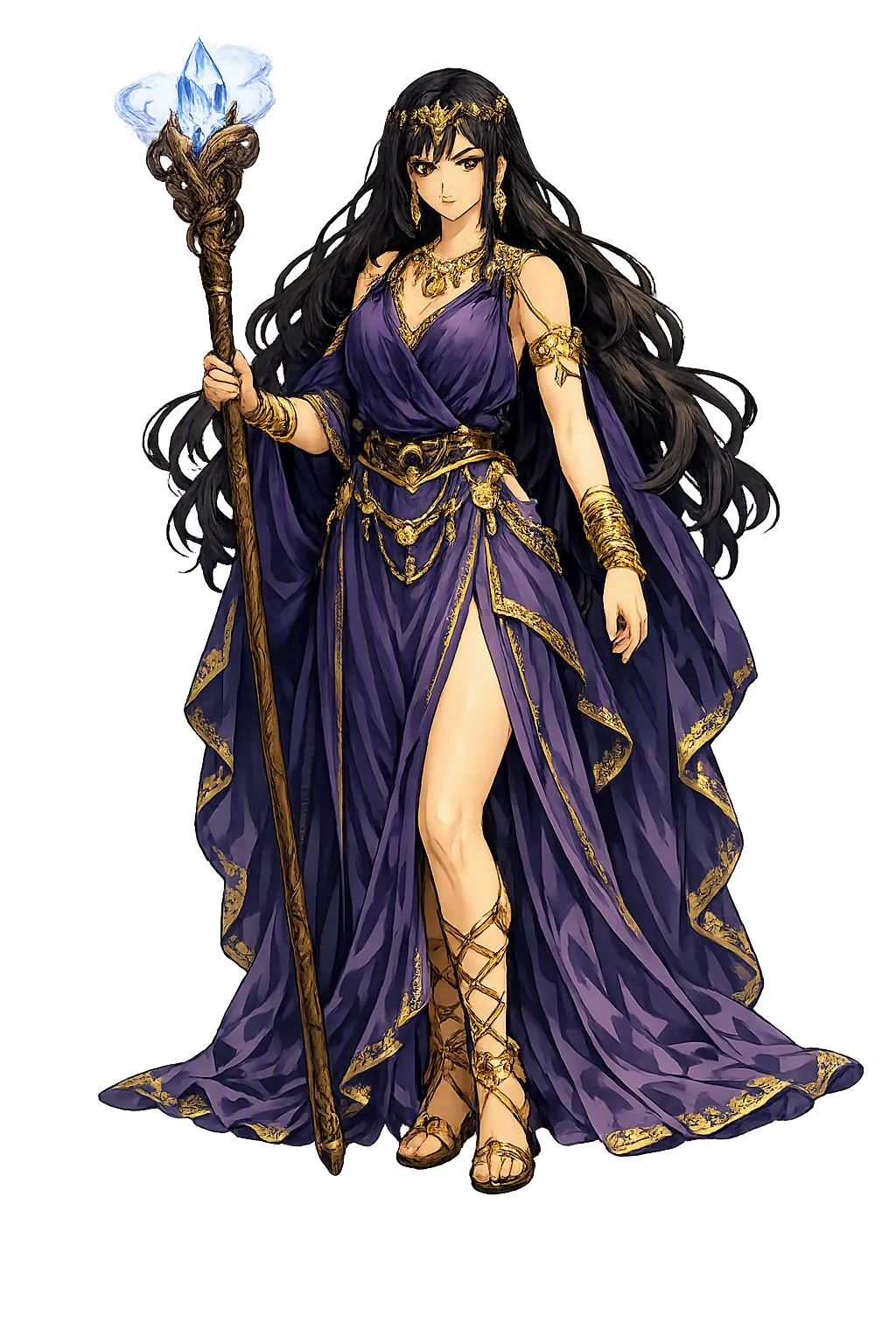
Kírkē is the daughter of Hēlios and the Oceanid Perse, sister of Aiētēs and Pasiphaē, aunt of Médeia — the Sun's own child keeping house alone on Aiaia, an island at the edge of the charted world. Homer calls her a dread goddess endowed with speech (δεινὴ θεὸς αὐδήεσσα) and polýpharmakos, mistress of many drugs. She is the first great enchantress of Western literature, and her wand does not kill men: it unmakes them, penning the human mind inside the bodies of beasts.

Kírkē in Later Traditions

Rome did not need to invent a Latin Kírkē; it simply moved her in. Hesiod had already posted her sons to the Tyrrhenian coast, and Virgil's Aeneas skirts 'the shores of Circe's land,' where the daughter of the Sun sings ceaselessly in her groves while the groans of her transformed men roll out across the water (Aeneid 7.10–24). The promontory of Circeii claimed her temple (Strabo 5.3.6), and Horace calls Tusculum 'the hills of Telegonus the parricide' (Odes 3.29.8) — her son naturalized as a founder of Latin towns. From there she passes into the European imagination as the archetype of the enchantress: the witch with a pedigree, a loom, and a cup.

Modern Legacy

English keeps her as an adjective: Circean — bewitching, dangerously seductive, charming in the way that unmakes a man. Cape Circeo still bears her name on the Tyrrhenian coast, and if the old derivation of her name from kírkos ('ring; hawk') holds, she shares a root with Latin circus — and so with English circle and circus. The nineteenth century painted her endlessly — Waterhouse's Circe Offering the Cup to Ulysses (1891) and Circe Invidiosa (1892) are the icons — and every island sorceress with a wand and a potion since is her descendant. Restoring Kírkē restores the falcon in the enchantress's name.

Unicode Restoration as Cultural Act

Restoring Kírkē in a domain name is more than orthographic accuracy. It is a statement that the internet should recognize the full range of human writing — not only the ASCII keyboard.

05

Frequently Asked Questions

Common questions about Kírkē, Sorceress, Aeaea, Transformations, and Unicode restoration

01How do you pronounce Kírkē?

In reconstructed pronunciation, Kírkē is /kír.kɛː/ — approximately 'KEER-keh' — high pitch on the first syllable, a trilled rho, and a long open final vowel; English 'SUR-see' has wandered far from the falcon's name..

02What does Kírkē mean?

Kírkē means Falcon, bird of prey in the greek tradition.

03What are the symbols of Kírkē?

Kírkē is associated with The wand (rhábdos) (With a single stroke she pens the crew in the sties — the original witch's wand of European literature (Odyssey 10.238)), The cup (Barley, cheese, and pale honey in Pramneian wine, with the pharmaka stirred into the food (Odyssey 10.234–235)), Swine (Her transformed company: beast in head, voice, bristle, and shape — 'but the mind remained as before' (Odyssey 10.239–243)), Wolves and lions (Mountain beasts charmed by her evil drugs that fawn like dogs at her door (Odyssey 10.212–219)), The loom (The sailors first hear her singing at a great immortal web — goddesses' work, delicate and glorious (Odyssey 10.221–223)).

04Why restore Kírkē in Unicode?

Plain ASCII circe strips the stress, length, and script that make the name specific. Unicode restoration returns the name to its original written dignity.

05What is the most important myth about Kírkē?

In Odyssey 10 (208–243), Eurylochus leads twenty-two scouts to Kírkē's hall, past mountain wolves and lions that fawn like dogs — creatures she herself had charmed with evil drugs. She mixes the men a potion of barley, cheese, and pale honey in Pramneian wine, hides pharmaka in the food, strikes them with her wand, and pens them in the sties. They take the heads, the voice, the bristles, and the shape of swine — 'but their mind remained as firm as before' (10.240). Homer does not say she made them beasts; he says the men went on thinking inside the beast, the most quietly horrifying line in the poem. Odysseus comes for them armed with the moly Hermes gives him (10.275–306) — the black-rooted, milk-flowered herb that is hard for mortals to dig, but the gods can do all things.

06

Scholarly Sources

The philological foundations of this restoration

Every claim on this page is grounded in established scholarship. The orthographic restorations follow disciplinary convention. The etymological chain follows the best available reference works. This is not invention — it is resurrection through scholarship.

Lexicography & Philology

  • Liddell, H. G., Scott, R., & Jones, H. S. A Greek-English Lexicon. Oxford: Clarendon Press, 9th ed. 1996.
  • Pape, W., & Benseler, G. E. Wörterbuch der griechischen Eigennamen. Braunschweig: Vieweg, 1884.
  • Beekes, R. S. P. Etymological Dictionary of Greek. Leiden: Brill, 2010.

Primary Texts

  • Homer
  • Odyssey
  • Hesiod
  • Theogony
  • Apollodorus
  • Ovid
  • Virgil

Archaeology & Art History

  • Material evidence — iconography, inscriptions, and temple archaeology — for Kírkē and related cults.
  • No excavated sanctuary of Kírkē herself survives; her cult was Roman and coastal. Strabo (5.3.6) reports that the promontory of Circeii — modern Monte Circeo in Lazio — was believed to have once been an island, as Homer's Aiaia was, and that a temple of Circe was pointed out there; the marshy plain behind the cape still shows how the 'island' silted into the mainland. Archaic art took her up earlier than almost any other Homeric episode: Boeotian black-figure vases of the sixth century BCE paint Odysseus drawing his sword on her amid men already bristling into beasts, and an archaic painter is named 'the Circe Painter' for the scene.

Religious Studies

  • Proclus
Return

The Surface Awaits

You have traced the name from its earliest attestation to its Unicode restoration. Now return to the myth. The story is where the name lives.

Back to Lore
Kírkē mascot