
Why Chíron belongs in your address bar
Every address bar is a choice. When you type Chíron, you are not typing a novelty; you are restoring a name that the early DNS, built for English typewriters, could not carry. The plain ASCII form chiron is a leftover of that constraint, not the name itself. This post is the long version of the restoration: where the name comes from, how the Greek tradition wrote it, how it is pronounced, what the myths and the material record preserve, and why its Unicode form now lives as a working domain. The claim throughout is simple — the original spelling is not decoration. It is the name.
At a Glance
- Restored name: Chíron
- ASCII form: chiron
- Meaning: "Hand"
- Domain of influence: Wise Centaur, Teacher
- Pantheon: Greek
- Classification: Tier 1
- Original script: Χείρων (Greek)
- Live domain: cheírōn.com
Overview
Chíron (chiron) — Wise Centaur, Teacher · Hand — belongs to the Greek tradition, where it is catalogued under the domain "Wise Centaur, Teacher". The name means "Hand".
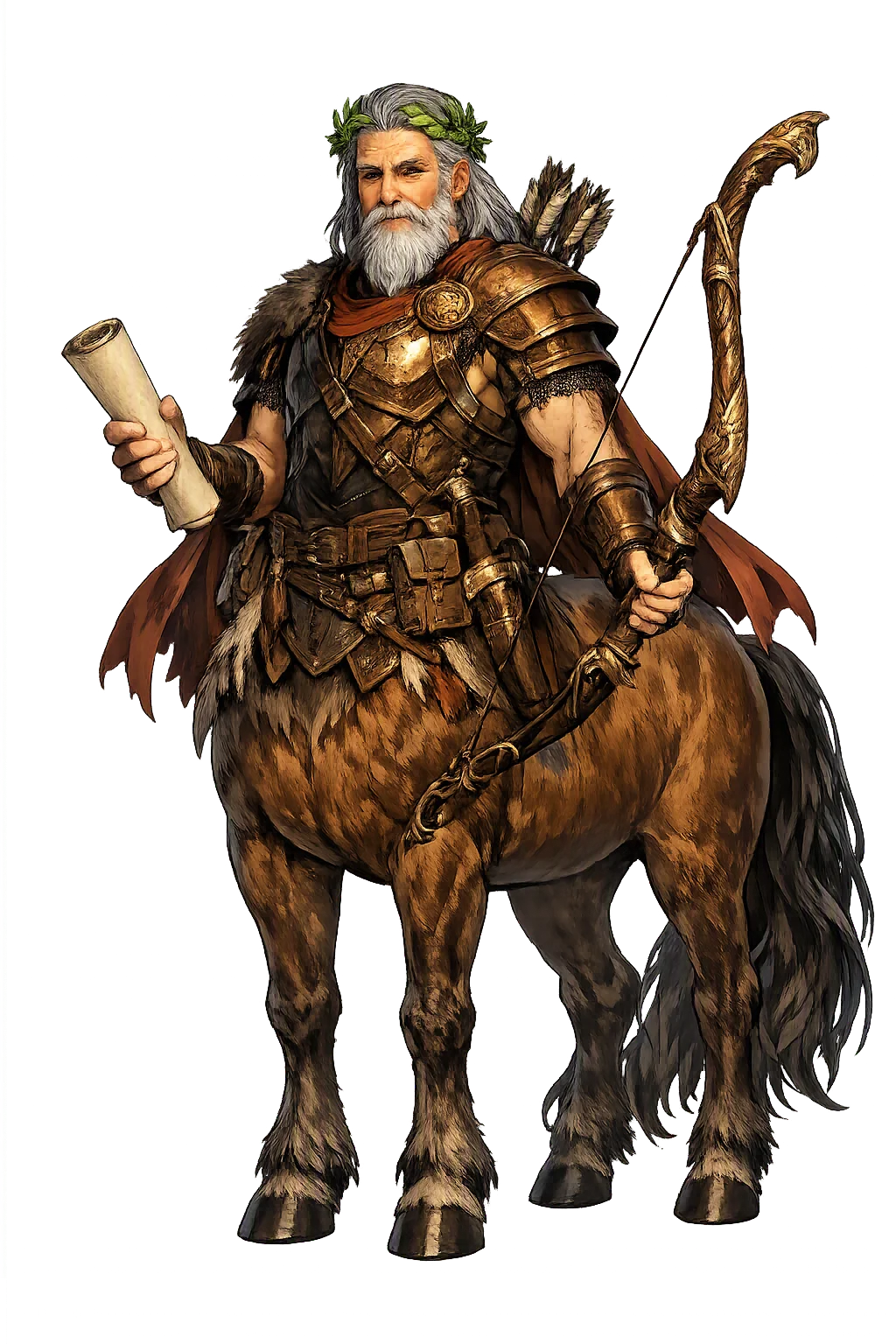
Cheírōn is the exception among the wild κένταυροι: the immortal son of Kronos who dwells in a cave on Mount Pelion and turns raw princes into heroes. Where his kin are drunkards and rapine, Homer calls him δικαιότατος Κενταύρων — the most just of centaurs. He is the teacher: medicine for Asklepios, the lyre and the remedies for Achilles, the whole heroic craft for Iason and Herakles.
PuniCodex restores the name as Chíron and serves its temple at cheírōn.com. The original carries both stress and vowel length, and exactly one historically valid Unicode restoration exists, which places the name in Tier 1. The plain ASCII form chiron survives as a modern convenience imposed by the early domain-name system; the restoration, not the fallback, is the form the project defends as philologically complete.
The Name
The name is attested in Greek as Χείρων. Etymologically it means "Hand".
The ASCII form chiron survives only because the early domain-name system could not carry diacritics; it is a technological compromise, not an ancient spelling. The Unicode restoration Chíron recovers the stress accent of the original directly in the address bar. The original carries both stress and vowel length, and exactly one historically valid Unicode restoration exists, which places the name in Tier 1.
The letter-by-letter transformation runs:
- c → C — C uppercase
- h → h — h same
- i → í — Acute on i
- r → r — r same
- o → o — o same
- n → n — n same
Attested and derived spellings of the name:
- Cheírōn — owned form: Owned domain form — acute on í plus macron on ō, the fullest scholarly rendering of Χείρων
The project holds the domain cheírōn.com (xn--chern-1sa78d.com) as the canonical home of this name.
The Original Script
The name is written in Greek as Χείρων. This original script is the form against which the ASCII fallback chiron and the PuniCodex restoration Chíron are measured: the restoration preserves its pitch accent of the written form, so that a reader typing the modern address still speaks the ancient name.
Pronunciation
The reconstructed pronunciation of the name is /kʰéː.rɔːn/ — Attic Greek Reconstruction.
Phoneme by phoneme:
- Kh- — aspirated k (χ), a hard stop released with a strong breath — not the fricative of modern Greek
- -eí- — long close ē (ει), carrying the high pitch of the acute accent
- -rōn — long open ō (ω) with final n
For the modern speaker, the closest approximation is: 'KHEH-rōn' — long ē, long ō, the pitch rising on the first syllable
Kindred and historical forms of the name:
- Greek — χείρ (kheír), 'hand' — the traditional association of the name, possibly a folk etymology
- PIE — if the link holds, χείρ descends from PIE *ǵʰésr- 'hand' (cf. Hittite keššar); the name's own derivation remains uncertain — Beekes treats the connection cautiously
Tier 1: the Greek original Χείρων carries both stress (the acute on ει) and long vowels (ει and ω). The restored form Cheírōn preserves both marks — the accent and the macron — that plain ASCII 'Cheiron' erases.
Mythology
Cheírōn stands at the hinge of two orders: Titan-born yet honored by the Olympians, beast-bodied yet the very image of wisdom. His myths are the myths of transmission — what one generation hands to the next.
Son of Kronos and Philyra (Birth)
Kronos lay with the Oceanid Philyra in the shape of a horse, and from that union was born a child of double nature — half god, half horse: Apollodorus, Library 1.2.4. Pindar likewise names him the son of Philyra and Kronos, making Cheírōn the half-brother of Zeus (Pythian 4.102–103). Abandoned by his mother, who in shame was changed into a linden tree in later telling, he was reared by Apollo and Artemis, from whom he learned the arts he would pass on. Thus the wisest of teachers begins as the child of deception and rejection.
Tutor of the Heroes (The School of Pelion)
Pindar gives the roll of his pupils: in his cave Cheírōn reared Iason, gentle-handed Asklepios, whom he taught the craft of remedies, and Achilles, whom he fed on the marrow of lions and wild boars to make him fierce (Nemean 3.43–58). Homer twice seals the bond: Achilles carries remedies 'that Cheiron gave to his father in friendship' (Iliad 4.218–219), and is the man 'whom Cheiron taught, the most just of the centaurs' — δικαιότατος Κενταύρων (Iliad 11.831–832). Actaeon and Herakles also passed through his tutelage. In Pindar's grief for Hieron, the poet wishes Cheírōn still lived in his cave, that another healer might come to Sicily (Pythian 3.1–7).
The Spear for Peleus (The Gift)
When Peleus married the sea-goddess Thetis, the wedding feast was held on Pelion at Cheírōn's cave, and the centaur gave the bridegroom a spear of mountain ash cut from Pelion's peak (Iliad 16.143–144). That spear passed to Achilles, and at Troy no other Achaean could wield it — Patroklos himself left it behind when he donned Achilles's armor, 'heavy, huge, and strong.' The teacher's gift thus runs through the whole Iliad: it is the one weapon that marks the hero he made. The marriage it honored also produced the child Cheírōn would raise.
The Immortal Who Chose Death (The Wound and the Stars)
When Herakles fought the wild centaurs at the cave of Pholos, one of his arrows — tipped with the hydra's incurable venom — struck Cheírōn's knee (Apollodorus, Library 2.5.4). The poison that the great healer had no remedy for burned in his own flesh; immortal, he could neither heal nor die. Sophocles remembers the shaft as the one 'wherewith Cheiron was struck' (Trachiniae 714–716). At last he surrendered his immortality and was allowed to die, and Zeus set him among the stars — Ovid watches the father of heroes' education take his place in the sky (Fasti 5.379–414; cf. Hyginus, Astronomica 2.38). The teacher's last lesson is mortality itself.
Symbols & Iconography
The iconography associated with Chíron concentrates in a small set of recurring attributes, each a compressed statement about the name:
- The Pelian Ash Spear — The great spear of ash wood that Cheírōn cut on Pelion's peak and gave to Peleus at his wedding — the same spear Achilles alone could wield (Iliad 16.143–144). The teacher's gift that arms the hero.
- The Cave on Mount Pelion — His dwelling and school, the legendary academy of heroes where the gods themselves celebrated the wedding of Peleus and Thetis (Pindar, Pythian 9.29–30).
- The Lyre — The instrument of the education he gave Achilles, who in Iliad 9 (186–189) is found in his hut singing the glories of heroes to the lyre.
- Herbs and Remedies (φάρμακα) — The healing lore he taught Asklepios and gave to Peleus's line; Achilles treats wounds with remedies 'that Cheiron gave his father' (Iliad 4.219, 11.831–832).
- The Hydra-Poisoned Arrow — Herakles's stray arrow, dipped in the Lernaean hydra's venom, that struck his knee and gave the immortal an unhealable wound (Apollodorus, Library 2.5.4).
- The Stars — Zeus set him in the sky — remembered as Centaurus or Sagittarius — after he surrendered his immortality and died (Ovid, Fasti 5.379–414; Hyginus, Astronomica 2.38).
Ancient art settled early on how to tell Cheírōn from his wild kin, and held to it for a thousand years: he is the centaur civilization made visible.
- The labelled guest at the wedding — on the François Vase by Kleitias (c. 570 BC; Florence, Museo Archeologico Nazionale 4209), ΧΙΡΩΝ is named in paint among the gods processing to the marriage of Peleus and Thetis — the union whose child he would raise.
- The civilized centaur — convention gives him human front legs and a draped torso where other centaurs are bare horse and fury; over his shoulder a branch hung with game marks the hunting he taught.
- The lyre — the attribute of the music-master; Attic vases show Peleus consigning the infant Achilles to his care, and the type culminates in the great fresco from the Basilica of Herculaneum, Cheírōn guiding the boy's hand upon the strings (Naples, MAN inv. 9109).
- The herbs — his pharmacopoeia remains literary rather than figured (Iliad 4.219); the game-laden branch and the staff keep the teacher-hunter visible where medicine cannot be painted.
- The star-figure — Roman celestial globes render him as the kneeling Centaur at the altar, as on the Farnese Atlas (Naples, MAN inv. 6374): the cave-school of Pelion translated to the sky.
Epithets & Cult Titles
Homer fixed Cheírōn's title in a single line, and later poetry is a commentary upon it. His 'epithets' are not cult-titles — no temple ever received them — but verdicts: the tradition keeps naming him by what he was.
- δικαιότατος Κενταύρων (dikaiótatos Kentaúrōn) — 'most just of the Centaurs'; the defining judgment, recalled when Patroclus' skill with healing herbs is traced back through Achilles to Cheírōn (Iliad 11.832).
- Φιλλυρίδης (Phillyrídēs) — 'son of Philyra'; Pindar invokes him by his mother, the nymph who bore him to Krónos in horse-shape (Pythian 3.1).
- φίλα φρονέων (phíla phronéōn) — 'with kindly intent'; Homer's phrase for the spirit in which he passed his gentle herbs to the house of Asclepius (Iliad 4.219) — justice expressed as gentleness.
- ἐκ δικαιοτάτου στόματος (ek dikaiotátou stómatos) — 'from his most just mouth'; Pindar's description of the smile with which the Centaur answers Apollo's question about Cyrene (Pythian 9).
- Κένταυρος (Kéntauros) — 'the Centaur' pure and simple: his title after death, when the catasterism tradition set him among the stars in honor of his justice.
The Homeric Hymns
No hymn to Cheírōn survives, and the silence is itself the lesson. The thirty-three hymns of the Homeric collection address gods with altars — powers invoked to come, to hear, and to give. Cheírōn, though a son of Krónos, is mortal; he kept no precinct, and so no rhapsode ever opened with 'I begin to sing of Cheírōn.' What the tradition gave him instead was wisdom literature: the Χείρωνος Ὑποθῆκαι (Precepts of Cheírōn), a Hesiodic didactic poem counselling the young Achilles, known now only from fragments. The nearest the hymnic voice comes to him is a wish: Pindar opens Pythian 3 longing that Cheírōn, the son of Philyra, were alive again — not the invocation of a present power but grief for an absent one. His end explains the absence. Pierced by Heracles' stray arrow, unable to die though longing to, he ceded his immortality to Prometheus and was released; Zeus set him among the stars. A god is hymned because he endures. Cheírōn chose an end — and became not a prayer but a constellation.
Oracle Sites & Sanctuaries
No oracle ever spoke for Cheírōn, and no city built him a temple; his holiness was of another kind. His dwelling was the cave on Mount Pelion — not a sanctuary with treasury and tripod but a school, where the sons of kings came to learn the lyre, the hunt, and the herbs. Pindar grants the cave its one oracular moment: Apollo, uncertain whether he may love the huntress Cyrene, puts the question to the Centaur, and Cheírōn smiles and answers — a prophecy delivered in a schoolroom, not a shrine. Thessalian religion did surround him: on Pelion chosen men climbed in fresh fleeces at midsummer to Zeus Aktaios against the Dog Star's heat, and the Centaur's cave belonged to that sacred mountain. After death his cult is stellar rather than civic — no priesthood, but a constellation that sailors steered by. The absence of an oracle is therefore exact and meaningful: Cheírōn does not reveal the future; he forms the men who will have to meet it.
Archaeology & Evidence
No great temple of Cheírōn is known; he is a daimonic tutor, not an Olympian with a state cult, though a cave above Portaria on Mount Pelion is traditionally identified as the Cheironeion, his school. His real monument is the art: Attic black- and red-figure vases repeatedly show Peleus handing the infant Achilles into the centaur's arms, and Roman sarcophagi of the 'education of Achilles' (2nd–3rd c. CE) show him teaching the lyre. The sculpted centauromachies — the Olympia west pediment and the Parthenon south metopes — preserve the wild centaur type against which his justice was defined.
Realm & Domain
Cheírōn is the exception among the wild κένταυροι: the immortal son of Kronos who dwells in a cave on Mount Pelion and turns raw princes into heroes. Where his kin are drunkards and rapine, Homer calls him δικαιότατος Κενταύρων — the most just of centaurs. He is the teacher: medicine for Asklepios, the lyre and the remedies for Achilles, the whole heroic craft for Iason and Herakles.
The Tutor's Craft
The Healing Hand
The Hunter's Art
Across Cultures
Rome changed Cheírōn least of all the Greek figures: he keeps his name as Chiron in Latin, too singular to be merged with any Italian power. What Rome absorbed was his catasterism — Latin poets and star-cataloguers fixed him in the sky, debating whether the Centaurus or the Sagittarius was his (Ovid, Fasti 5; Hyginus, Astronomica 2.38). In later tradition he remains the named exception among his kind: Dante makes him chief of the centaurs who guard the violent in Inferno 12, still 'Chiron, who nursed Achilles.' The word 'centaur' (κένταυρος) traveled into every European language, but Cheírōn travels as himself.
Within the Greek tradition, closely related names in the corpus include Achérōn, Achilleús, Adámas, Aḗr, Aithḗr, and Anánkē.
Cultural Legacy
His name lives in the sky: the minor planet 2060 Chiron, discovered in 1977 between Saturn and Uranus, was named for him and gave its class of objects — the centaurs, bodies orbiting among the giant planets — their collective name. Modern astrology adopted him as the emblem of the wounded healer, the one whose incurable hurt becomes the source of healing for others. Ancient herbalists named the plant centaury (κενταύριον, Centaurium) after the centaur's healing lore. And the old association of his name with χείρ, the hand, echoes — though by the word's own root, not by his name — in 'surgery,' from χειρουργία, 'hand-work.'
The Scholarly Record
The account of Chíron given in this edition rests on the witnesses and reference works listed below. Lexica and etymological dictionaries secure the form and meaning of the name; the literary and religious texts supply the narrative evidence.
- Liddell-Scott-Jones Greek-English Lexicon, 9th ed. with 1996 supplement, 1940. Full text
- Etymological Dictionary of Greek, 2 vols., Brill, 2010. Full text
- Wörterbuch der griechischen Eigennamen, 3rd ed., 1863. Full text
- Homer, Iliad / Odyssey, Loeb Classical Library / Oxford Classical Texts, 750 BCE. Full text
- Homer, Iliad, Oxford Classical Texts (Monro & Allen); Loeb, 750 BCE. Full text
- Pindar, Victory Odes (Olympian, Pythian, Nemean, Isthmian), Loeb Classical Library, 438 BCE. Full text
- Sophocles, Tragedies, Loeb Classical Library / Oxford Classical Texts, 406 BCE. Full text
- Apollodorus, Bibliotheca, Loeb Classical Library (Frazer), 150.
- Ovid (Publius Ovidius Naso), Metamorphoses / Fasti / Heroides, Loeb Classical Library, 17. Full text
- Hyginus.
A Meditation
Cheírōn is the Greek answer to a question the centauromachy asks in stone at Olympia and on the Parthenon: can nature be educated? He is a κένταυρος — the very type of ungoverned appetite — who is instead called most just. That he is Kronos's son and Zeus's half-brother matters: he belongs to the older, Titan order, yet serves the new one by raising its heroes, as if the wild past could be redeemed only by becoming a teacher. His unhealable wound completes the thought — the master of remedies cannot master his own pain, and immortality becomes not a privilege but a sentence. That he must surrender deathlessness to find release is among the most quietly radical moments in Greek myth: even an immortal may long for the human portion.
The Unicode Restoration
Chíron is classified as Tier 1: the original carries both stress and length, and only one valid Unicode restoration exists. The ASCII fallback chiron still resolves everywhere, but it is the restored form that carries the name's full information. Across the 6 characters of the name, the restoration adjusts 1: 1 mark of stress (í). That is the whole thesis of this temple: the marks are the message.
The Domain Name
The restored name is live as a working domain: cheírōn.com, which the DNS carries in punycode form as xn--chern-1sa78d.com — an ASCII-compatible encoding that lets a non-ASCII name travel the global network without breaking older infrastructure. The visitor sees Chíron; the machines see the encoding. That duality is the engineering compromise on which the entire restoration rests, and it is why a name written the way its own tradition wrote it in Greek can now be typed into any browser on earth.
Why This Restoration Matters
Restoring Chíron is part of a larger effort to make the web multilingual by default. The PuniCodex project does not ask users to learn a new alphabet; it asks the infrastructure to respect the alphabets that already exist. Every section of this post — the script, the sound, the myths, the evidence — converges on the same point: the marks in Chíron are information, and information deserves an address of its own. A single Unicode domain is a small proof, but it is a proof that scales: every name restored makes the next one easier, and every visit to cheírōn.com is a vote for the restored form.
Explore Further
This post is one doorway into the temple. The home page carries the full character breakdown and the ambient canvas; the lore page tells the myths in long form; the Scholarly Edition preserves the sources, pronunciation data, and revision history; and the patron wall supports the restoration directly. For the wider map, browse the Lexicon, explore the Pantheon, or return to the PuniCodex blog.
Related Names
Sources
The full scholarly apparatus — every citation, revision, and review — lives in the Scholarly Edition. Key references for this post:
- Liddell-Scott-Jones Greek-English Lexicon, 9th ed. with 1996 supplement, 1940.
- Etymological Dictionary of Greek, 2 vols., Brill, 2010.
- Wörterbuch der griechischen Eigennamen, 3rd ed., 1863.
- Homer, Iliad / Odyssey, Loeb Classical Library / Oxford Classical Texts, 750 BCE.
- Homer, Iliad, Oxford Classical Texts (Monro & Allen); Loeb, 750 BCE.
- Pindar, Victory Odes (Olympian, Pythian, Nemean, Isthmian), Loeb Classical Library, 438 BCE.
- Apollodorus, Bibliotheca, Loeb Classical Library (Frazer), 150.
- Hyginus.
- Hesiod, fr. 283 Merkelbach–West (the Precepts of Cheírōn).
- Pindar, Pythian 3.1–5 (the wish that Cheírōn were alive).
- Lexicon authorities for this entry: Pindar, LSJ.