Unicode restoration and ASCII comparison
Ọbalúayé
The name survives only in scholarly transliteration. Ọbalúayé is the standard Yoruba romanisation, documented in academic sources — “Father of the world”. Its acute stress marks preserve distinctions lost in plain ASCII.
No indigenous writing system is securely attested for individual yoruba names. The form shown is a modern scholarly transliteration.
babaluaye
Reduced to plain babaluaye, the name loses everything that made it specific: acute stress marks. What remains is an ASCII string that machines can parse but that no longer speaks with its original voice.
Ọbalúayé
The Unicode restoration recovers what ASCII flattened. Ọbalúayé restores acute stress marks, returning the name to its original written dignity. The domain encodes to Punycode, but the browser displays the truth.
Ọbalúayé.com → xn--balay-fsa0j098y.com
The non-ASCII characters in Ọbalúayé are encoded while the ASCII remains visible. To the DNS, it is Punycode. To humanity, it is Ọbalúayé.
How Ọbalúayé is preserved in writing
No indigenous writing system is securely attested for individual yoruba names. The form shown is a modern scholarly transliteration.
Contribute scholarly provenance →How Ọbalúayé was spoken
Disease, Healing, and the Earth
Ọbalúayé is the orixá who both strikes and heals. He governs infectious disease — especially smallpox — and the earth that receives the body after death. His name means 'king whose scourge is the world,' and his presence is feared because illness arrives without warning and leaves without explanation. Yet he is also the one who can lift what he has sent, and his devotees often become the most skilled healers.
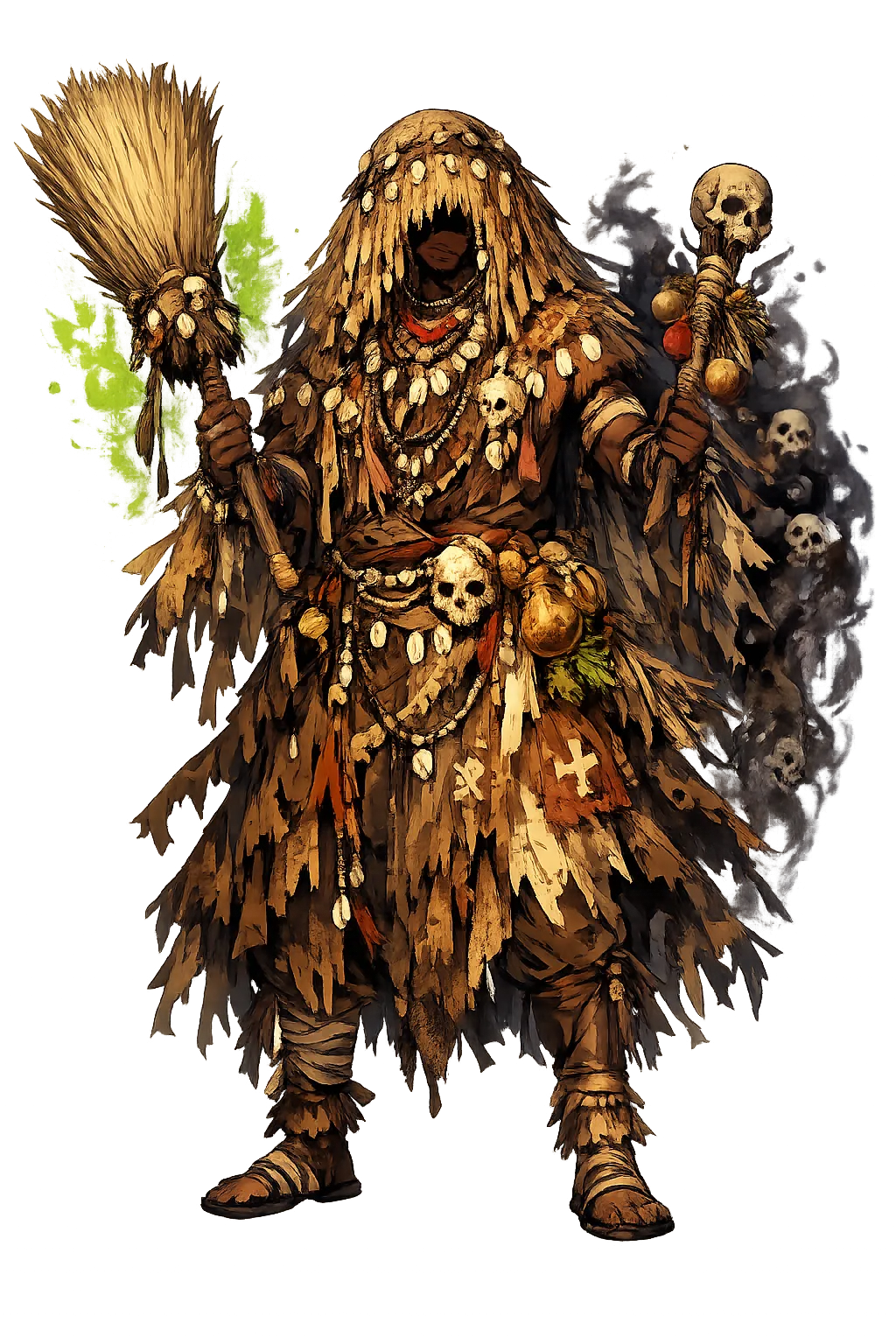
In the diaspora he appears as an old man on crutches, wrapped in burlap, accompanied by dogs. He is poverty, affliction, and survival at once.
Smallpox, leprosy, and epidemic illness walk in his shadow.
The same hand that sends illness can remove it; his priests are herbalists and cleaners.
He rules the soil that receives the dead and the bacteria that break the body down.
Those who survive his illness often become his children for life.
Stories of Ọbalúayé
Ọbalúayé's mythology is less a set of heroic adventures than a meditation on illness, marginality, and the earth's power to break and remake the body.
Ọbalúayé is called 'Father of the World' not because he nurtures it but because his diseases touch everyone, high and low. In some accounts he was once a proud king who was brought low by sickness and learned compassion only after he himself had suffered. His myth teaches that the healer must know the body from the inside of affliction.
Stories of Ọbalúayé often involve a dog who leads a sufferer to a healing herb or a stream. The dog is his messenger, moving between the realm of disease and the realm of cure. The myth encodes the practical work of finding medicine: one must follow signs that do not speak in human language.
In Cuban Santería, Babalú Ayé is depicted as an old beggar at the crossroads, leaning on crutches, accompanied by dogs. He receives offerings of roasted corn, tobacco, and dry wine. The image preserves the Yoruba sense that illness can reduce anyone to dependence — and that dependence, rightly borne, becomes a form of holiness.
Ọbalúayé is the god nobody wants until they need him. He is smallpox scars, crutches, the cough that will not stop, the fever that empties the world. And yet he is also the one who knows the herb, the cool stream, the moment when the crisis turns.
Enter Extended Lore